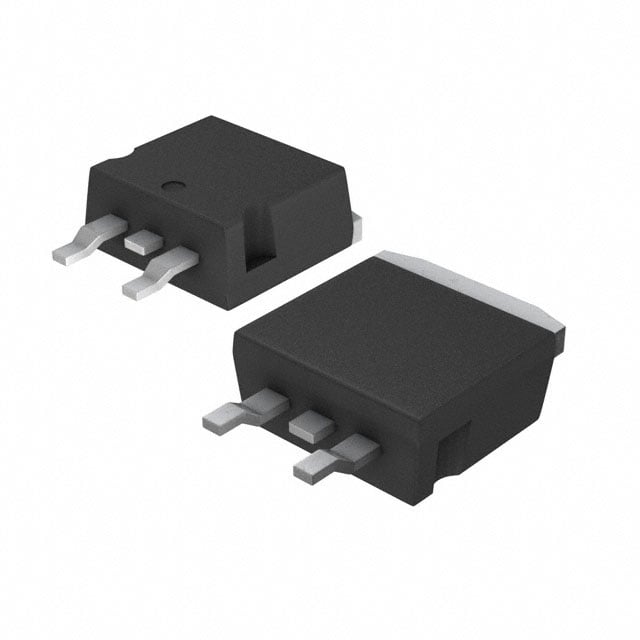
Q1: What is the primary function of the STMicroelectronics L78S12CV?
A1: The STMicroelectronics L78S12CV is a linear voltage regulator designed to provide a stable 12V output from a higher input voltage, typically used in various electronic systems that require reliable power regulation.
Q2: What is the input voltage range for the STMicroelectronics L78S12CV?
A2: The STMicroelectronics L78S12CV operates with an input voltage range of 14V to 40V, providing a regulated 12V output.
Q3: What is the maximum output current for the STMicroelectronics L78S12CV?
A3: The STMicroelectronics L78S12CV can provide a maximum output current of 2A, making it suitable for moderate power requirements in electronics.
Q4: Is the STMicroelectronics L78S12CV suitable for high-efficiency applications?
A4: While the STMicroelectronics L78S12CV is a linear regulator, it is not as efficient as switching regulators. It is best suited for low-to-moderate power applications where noise performance is important.
Q5: Does the STMicroelectronics L78S12CV include overcurrent protection?
A5: Yes, the STMicroelectronics L78S12CV includes overcurrent protection, ensuring that the regulator shuts down or limits current in case of excessive load conditions to protect both the device and the system.
Q6: Does the STMicroelectronics L78S12CV have thermal protection?
A6: Yes, the STMicroelectronics L78S12CV includes thermal overload protection, which helps prevent overheating and damage in the event of excessive temperature rise.
Q7: What is the dropout voltage of the STMicroelectronics L78S12CV?
A7: The dropout voltage of the STMicroelectronics L78S12CV is typically 2V at 1A of output current, meaning the input voltage needs to be at least 14V to maintain a stable 12V output.
Q8: Is the STMicroelectronics L78S12CV adjustable?
A8: No, the STMicroelectronics L78S12CV is a fixed 12V regulator and does not offer adjustable output voltage. For adjustable voltage, other models in the L78 series would be required.
Q9: Can the STMicroelectronics L78S12CV be used in automotive applications?
A9: Yes, the STMicroelectronics L78S12CV is suitable for automotive applications, as it can handle a wide input voltage range, which is useful for automotive systems with varying supply voltages.
Q10: What type of package is the STMicroelectronics L78S12CV available in?
A10: The STMicroelectronics L78S12CV is available in a TO-220 package, which is designed for easy heat dissipation in higher current applications.
Q11: Does the STMicroelectronics L78S12CV require external capacitors?
A11: Yes, the STMicroelectronics L78S12CV requires external capacitors on both the input and output to ensure stable operation, as specified in the datasheet.
Q12: What are the typical applications for the STMicroelectronics L78S12CV?
A12: Typical applications include powering low-to-medium power electronic devices, such as microcontrollers, sensors, communication equipment, and automotive electronics.
Q13: How does the STMicroelectronics L78S12CV regulate its output voltage?
A13: The STMicroelectronics L78S12CV uses a linear voltage regulation mechanism, where the difference between the input and output voltage is dissipated as heat, ensuring a stable 12V output.
Q14: Does the STMicroelectronics L78S12CV have short-circuit protection?
A14: Yes, the STMicroelectronics L78S12CV has built-in short-circuit protection to prevent damage to the regulator and the circuit during a short-circuit event.
Q15: What is the typical quiescent current for the STMicroelectronics L78S12CV?
A15: The typical quiescent current for the STMicroelectronics L78S12CV is around 5mA, which is relatively low and ensures minimal power consumption when the device is in operation.
Q16: What is the typical output voltage tolerance for the STMicroelectronics L78S12CV?
A16: The typical output voltage tolerance for the STMicroelectronics L78S12CV is ±2%, meaning the output voltage will typically stay within ±2% of the nominal 12V.
Q17: Can the STMicroelectronics L78S12CV be used in low-voltage systems?
A17: The STMicroelectronics L78S12CV is not suitable for systems with input voltages lower than 14V, as its dropout voltage typically requires a higher input voltage to maintain a stable 12V output.
Q18: Is the STMicroelectronics L78S12CV suitable for power-sensitive applications?
A18: While the STMicroelectronics L78S12CV is reliable for general-purpose use, its linear regulation design makes it less efficient for power-sensitive applications compared to switching regulators, especially when input voltages are significantly higher than the output.
Q19: Can the STMicroelectronics L78S12CV be used in industrial equipment?
A19: Yes, the STMicroelectronics L78S12CV is suitable for use in industrial equipment that requires stable 12V regulation and where the efficiency trade-off of a linear regulator is acceptable.
Q20: What is the maximum operating temperature of the STMicroelectronics L78S12CV?
A20: The maximum operating temperature of the STMicroelectronics L78S12CV is typically 125°C, making it suitable for use in a variety of environments, including automotive and industrial applications.