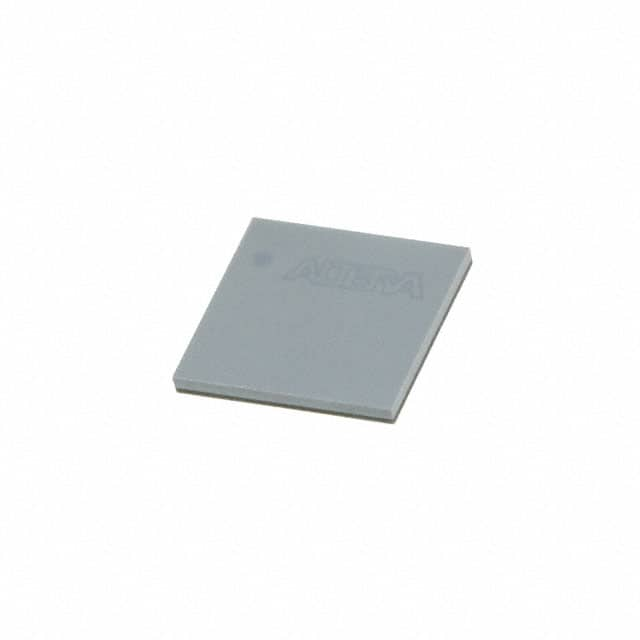
The Intel 10M50DAF484C7G is a member of the Intel MAX 10 FPGA family, which is designed to provide a flexible and efficient solution for a wide range of applications, including industrial automation, automotive systems, communications, and consumer electronics. This FPGA (Field Programmable Gate Array) is particularly well-suited for applications that require low power consumption, high performance, and a variety of integrated features. Below is a detailed overview of its specifications, features, and applications.
## Key Features
1. Low Power Consumption: The MAX 10 family is optimized for low power operation, making the 10M50DAF484C7G ideal for battery-powered and energy-efficient applications. It is designed to operate with minimal power while delivering high performance.
2. High Performance: The device offers a balance of performance and power efficiency, with a maximum operating frequency that can reach up to 200 MHz, depending on the design and application.
3. Embedded Memory: The FPGA includes embedded memory blocks, which can be used for data storage and buffering, enhancing the performance of data-intensive applications. The 10M50DAF484C7G features up to 2.5 Mbits of embedded memory.
4. Flexible I/O Configuration: The device supports a wide range of I/O standards, including LVTTL, LVCMOS, and HSTL, allowing for versatile interfacing with various components.
5. Configurable Logic Blocks (CLBs): The architecture includes a significant number of configurable logic blocks, allowing for the implementation of complex digital circuits.
6. Integrated Analog Features: The MAX 10 FPGAs include integrated analog-to-digital converters (ADCs) and digital-to-analog converters (DACs), enabling mixed-signal applications.
7. Development Tools: Intel provides a comprehensive suite of development tools, including the Intel Quartus Prime software, which facilitates design entry, simulation, and programming of the FPGA.
## Specifications
- Device Family: MAX 10
- Part Number: 10M50DAF484C7G
- Logic Elements (LEs): 50,000
- Maximum Operating Frequency: Up to 200 MHz
- Embedded Memory: Up to 2.5 Mbits of embedded memory
- I/O Pins: 484 user I/O pins
- I/O Voltage Levels: Supports multiple I/O standards, including 1.2V, 1.5V, 1.8V, 2.5V, and 3.3V
- Package Type: 484-pin FBG (Fine Pitch Ball Grid Array)
- Operating Temperature Range: Commercial (0°C to 85°C) and Industrial (-40°C to 100°C) options available
- Power Supply Voltage: Core voltage of 1.2V, with I/O voltage options depending on the I/O standard used
## Pin Configuration
The 10M50DAF484C7G is housed in a 484-ball FBG package. The pin configuration includes:
- Power Pins: VCC and GND pins for core and I/O power supply.
- User I/O Pins: Configurable pins that can be used for various input/output functions.
- Dedicated Configuration Pins: Pins for configuration and programming the FPGA.
- Clock Pins: Dedicated pins for clock input, supporting various clocking schemes.
## Applications
The Intel 10M50DAF484C7G FPGA is suitable for a wide range of applications, including:
- Industrial Automation: Used in control systems, robotics, and process automation for real-time data processing and control.
- Automotive Systems: Ideal for applications such as advanced driver-assistance systems (ADAS), infotainment systems, and vehicle networking.
- Communications: Employed in networking equipment, wireless communication systems, and signal processing applications.
- Consumer Electronics: Utilized in devices such as smart home products, gaming consoles, and multimedia systems.
- Mixed-Signal Applications: The integrated ADCs and DACs make it suitable for applications requiring both digital and analog processing.
## Conclusion
The Intel 10M50DAF484C7G FPGA from the MAX 10 family offers a compelling combination of low power consumption, high performance, and flexibility, making it an excellent choice for a variety of applications. Its rich feature set, including embedded memory, configurable logic blocks, and support for multiple I/O standards, allows designers to implement complex digital systems efficiently. With the support of Intel%27s development tools, engineers can quickly bring their designs to market, making the 10M50DAF484C7G a valuable asset in the rapidly evolving landscape of digital electronics.