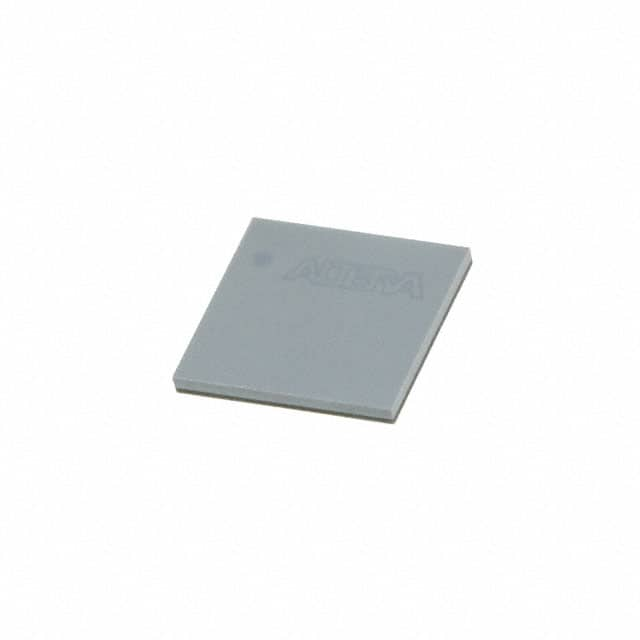
Intel 10M02DCV36I7G Overview
The Intel 10M02DCV36I7G is part of the MAX 10 FPGA family, which is designed for cost-effective, low-power applications requiring medium-density logic and a compact footprint. This FPGA provides a versatile solution for embedded systems, industrial applications, and consumer electronics. The MAX 10 series is optimized for designs where low power consumption, efficient logic, and a relatively smaller form factor are essential. This FPGA integrates programmable logic, embedded memory, and high-speed I/O features, making it ideal for real-time control systems, signal processing, and communication applications.
Key Specifications
* Logic Elements (LEs): The 10M02DCV36I7G features approximately 2,000 logic elements (LEs). These logic elements enable users to implement a wide range of logic functions, from simple combinational logic to more complex state machines, controllers, and arithmetic operations.
* Embedded Memory: The device includes 128 Kbits of embedded memory. This memory can be used for buffering data, storing intermediate results, and implementing small data storage systems, such as FIFO buffers or registers.
* I/O Pins: The FPGA is equipped with 36 I/O pins, providing flexibility for interfacing with external components such as sensors, actuators, displays, and communication peripherals. These pins can be configured as either input or output, supporting various logic families.
* Clock Speed: The 10M02DCV36I7G supports a maximum system clock frequency of 200 MHz, making it suitable for high-speed processing tasks that require fast clock rates and low latency.
* Package Type: This device is available in a 36-pin QFN (Quad Flat No-lead) package. This package type offers a compact footprint, making it ideal for space-constrained applications while ensuring reliable mechanical stability and electrical performance.
* Power Consumption: The MAX 10 family, including the 10M02DCV36I7G, is designed for low power operation. This device typically consumes under 1W of power, which is ideal for battery-powered applications and other energy-sensitive systems.
* Operating Voltage: The core voltage is 1.2V, which helps reduce overall power consumption. The I/O voltage range is 1.8V to 3.3V, allowing compatibility with various logic levels.
* Operating Temperature Range: The 10M02DCV36I7G operates in an industrial temperature range of -40°C to +100°C, ensuring stable operation even in harsh environmental conditions.
* Configuration: The device uses flash-based configuration, allowing for faster startup and reconfiguration times compared to traditional SRAM-based FPGAs. This also means that the FPGA retains its configuration without requiring external memory to store configuration data.
Architecture and Features
* MAX 10 Architecture: The 10M02DCV36I7G utilizes the MAX 10 architecture, which provides efficient logic resources, low power consumption, and fast configuration times. This architecture is tailored for embedded systems, communication devices, and control applications where cost and power efficiency are crucial.
* Non-Volatile Memory: A key feature of the MAX 10 family is its integrated non-volatile memory (NVM). This built-in flash memory enables the FPGA to retain its configuration without the need for an external configuration device. This eliminates the need for additional external memory chips and streamlines the system design.
* Low Power Design: The MAX 10 FPGA is designed with low power in mind, supporting various power-saving modes to extend battery life in portable devices. It uses a combination of reduced-voltage operation and power gating techniques to minimize energy consumption during idle periods.
* Flexible I/O Configuration: The I/O pins on the 10M02DCV36I7G are highly configurable and support a range of signaling standards, including LVTTL, LVCMOS, and HSTL. This makes the device versatile for a variety of applications requiring different voltage levels and interfacing protocols.
* Embedded Multipliers: The 10M02DCV36I7G includes embedded multipliers, which are essential for arithmetic-heavy applications such as signal processing, filtering, and mathematical computations. These multipliers provide hardware acceleration for these tasks, significantly improving system performance.
* Clock Management: The device integrates a PLL (Phase-Locked Loop) and clock multiplexer, providing flexible clock distribution and clock signal conditioning for complex designs that require high precision and synchronization across multiple system components.
* JTAG Interface: The 10M02DCV36I7G supports JTAG (Joint Test Action Group) for boundary scan testing and configuration. This interface allows users to configure the FPGA, perform device diagnostics, and test interconnections in a system using standard test equipment.
Applications
* Embedded Systems: The 10M02DCV36I7G is well-suited for a wide range of embedded systems, particularly in consumer electronics and industrial control systems. It can be used in applications like sensor interfaces, motor control, home automation, and wearable devices, where a compact and energy-efficient solution is needed.
* Signal Processing: The FPGA’s embedded multipliers and logic resources make it ideal for signal processing applications, such as audio processing, sensor data processing, and filtering. Its ability to handle parallel operations helps accelerate real-time data processing tasks.
* Communication Systems: With its flexible I/O configuration and clock management features, the 10M02DCV36I7G is suitable for communication systems, including modems, protocol converters, and network devices. It can handle various communication protocols like SPI, I2C, and UART.
* Control and Monitoring: The 10M02DCV36I7G is often used in control systems that require fast decision-making and real-time feedback, such as industrial automation, robotics, and environmental monitoring. It can process input from sensors, execute control algorithms, and drive actuators.
* Automotive Applications: The wide operating temperature range and low power consumption make the 10M02DCV36I7G ideal for automotive applications. It can be used in systems like vehicle control modules, sensor interfaces, and infotainment systems.
* Prototyping: Due to its low cost, ease of configuration, and reprogrammability, the 10M02DCV36I7G is an excellent choice for rapid prototyping of digital systems. Engineers can quickly test new designs and iterate on their ideas without the need for custom silicon development.
Conclusion
The Intel 10M02DCV36I7G is a low-power, cost-effective FPGA that offers substantial logic resources, flexible I/O options, and embedded memory in a compact package. Its efficient architecture and non-volatile memory make it an excellent choice for embedded systems, signal processing, communication devices, and control applications. With its ability to handle a variety of digital functions, low power consumption, and industrial-grade operating temperature range, the 10M02DCV36I7G provides a versatile and reliable solution for a wide range of commercial and industrial applications. Its small package size, combined with advanced configuration features, makes it particularly well-suited for compact, energy-efficient designs.