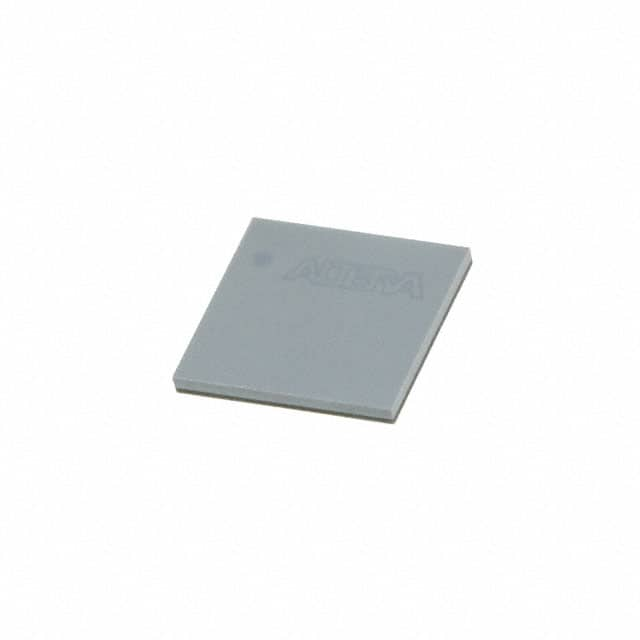
## In-Depth Overview of the 10M50DAF256I7G
## Introduction
The 10M50DAF256I7G is a field-programmable gate array (FPGA) from Intel%27s (formerly Altera) MAX 10 series. This FPGA is designed for a range of applications requiring programmable logic, such as digital signal processing, embedded systems, and custom hardware accelerators. The MAX 10 series is known for its cost-effectiveness and ease of use, making it suitable for various industrial and consumer electronics applications.
## Key Features
1. FPGA Architecture:
- The 10M50DAF256I7G belongs to the MAX 10 FPGA family, which is designed for low power, high efficiency, and versatile functionality. The MAX 10 architecture supports a wide range of applications, providing a balance between performance and cost.
2. Capacity and Resources:
- Logic Elements: The 10M50DAF256I7G contains 50,000 logic elements (LEs). These LEs are the basic building blocks of the FPGA and consist of a combination of lookup tables (LUTs) and flip-flops, which are used to implement complex combinatorial and sequential logic functions.
- Memory Blocks: The FPGA includes on-chip memory blocks, which can be configured as RAM, ROM, or FIFO buffers. This feature allows for efficient data storage and retrieval within the FPGA itself.
3. I/O Capabilities:
- I/O Pins: The 10M50DAF256I7G features a total of 256 I/O pins. These pins are configurable and can be used for various purposes, including interfacing with external peripherals, sensors, or communication interfaces.
- High-Speed I/O: The FPGA supports high-speed I/O operations, which are essential for applications requiring rapid data transfer or high-frequency signal processing.
4. Speed Grade:
- The device is rated with a speed grade of 7, which indicates its operational speed and performance level. A higher speed grade generally corresponds to faster logic operations and higher clock frequencies.
5. On-Chip Flash Memory:
- Configuration Memory: The 10M50DAF256I7G includes on-chip flash memory for configuration purposes. This feature allows for non-volatile storage of the FPGA’s configuration data, which is retained even when the FPGA is powered off. This enables quick reconfiguration upon power-up.
6. Power Consumption:
- Low Power Operation: One of the key advantages of the MAX 10 series is its low power consumption. The 10M50DAF256I7G is designed to operate efficiently with minimal power, making it suitable for battery-operated and power-sensitive applications.
7. Embedded Features:
- Embedded Multipliers: The FPGA includes embedded multipliers, which are useful for digital signal processing tasks. These multipliers enable efficient arithmetic operations, such as multiplication and division, which are commonly used in signal processing algorithms.
8. Development Tools:
- Intel Quartus Prime Software: The FPGA is supported by Intel’s Quartus Prime software, which provides a comprehensive development environment for designing, simulating, and programming the FPGA. The software includes various tools for synthesis, placement, routing, and verification of FPGA designs.
9. Temperature Range:
- Industrial Temperature Range: The 10M50DAF256I7G is available in an industrial-grade temperature range, typically from -40°C to +100°C. This wide temperature range ensures reliable operation in harsh environmental conditions and industrial settings.
10. Package and Form Factor:
- Package Type: The 10M50DAF256I7G is housed in a 256-pin Fine Pitch Ball Grid Array (FBGA) package. This package type offers a compact form factor and high pin density, which is beneficial for applications where space is at a premium.
## Applications
1. Industrial Automation:
- The 10M50DAF256I7G is used in industrial automation systems for tasks such as process control, data acquisition, and real-time monitoring. Its low power consumption and reliability make it suitable for industrial environments.
2. Consumer Electronics:
- In consumer electronics, the FPGA can be used for custom hardware accelerators, such as video processing units or custom interfaces. Its programmability allows designers to tailor the hardware to specific application needs.
3. Embedded Systems:
- The FPGA is commonly used in embedded systems where programmable logic is needed for custom processing tasks. Applications include robotics, medical devices, and automotive systems.
4. Digital Signal Processing (DSP):
- With embedded multipliers and high-speed I/O capabilities, the 10M50DAF256I7G is well-suited for DSP applications. This includes audio and video processing, as well as telecommunications.
5. Networking and Communication:
- The FPGA’s high-speed I/O capabilities and configurable logic make it ideal for networking and communication applications, such as packet processing, protocol conversion, and data routing.
6. Data Acquisition Systems:
- The on-chip memory and efficient processing capabilities of the 10M50DAF256I7G are beneficial for data acquisition systems that require high-speed sampling and data handling.
## Development and Support
- Documentation and Resources:
- Intel provides extensive documentation for the 10M50DAF256I7G, including datasheets, user guides, and application notes. These resources are available on Intel’s website and offer detailed information on the FPGA’s features, electrical characteristics, and usage.
- Evaluation Kits:
- Evaluation kits and development boards are available to help designers quickly prototype and test their designs with the 10M50DAF256I7G. These kits typically include the FPGA, associated peripherals, and software tools.
- Technical Support:
- Intel offers technical support through its support channels, including online forums, customer service, and technical support teams. Engineers can seek assistance with design challenges, troubleshooting, and optimization.
## Conclusion
The 10M50DAF256I7G FPGA from Intel’s MAX 10 series offers a versatile and cost-effective solution for a wide range of applications. Its features, including a significant number of logic elements, high-speed I/O capabilities, on-chip flash memory, and low power consumption, make it suitable for industrial, consumer, and embedded systems. With support from Intel’s Quartus Prime software and various development resources, the 10M50DAF256I7G provides a robust platform for implementing custom logic and processing tasks. Its reliability, flexibility, and efficiency make it a valuable component in modern electronic designs.