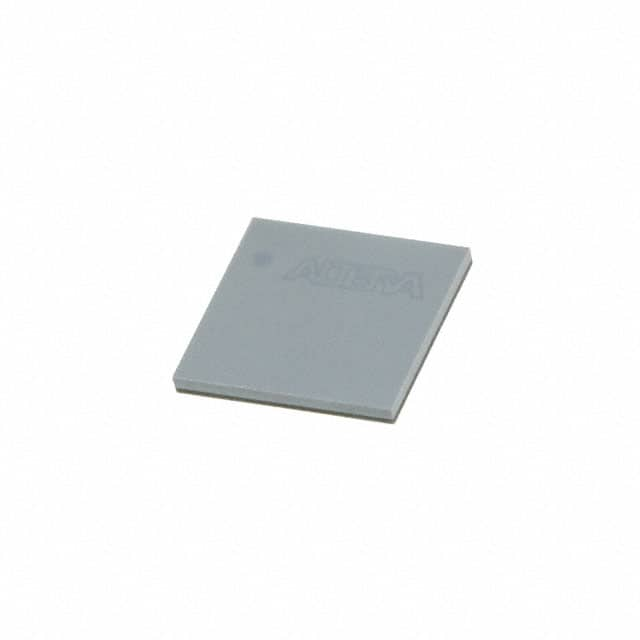
## Intel 10M40DAF672I7G Overview
The Intel 10M40DAF672I7G is part of Intel's 10M series of FPGAs, offering a balance between performance, flexibility, and power efficiency. This device is designed to serve a wide array of applications, including industrial automation, communications, automotive, and consumer electronics, where high-performance programmable logic and integration are crucial.
## Key Features
* Device Family: Intel 10M Series
* Logic Elements (LEs): The 10M40DAF672I7G includes approximately 40,000 logic elements, which makes it suitable for medium to high-complexity applications. These logic elements are configured to perform a wide range of digital functions such as signal processing, arithmetic, and control.
* Embedded Memory: It features up to 1.1 Mbits of embedded memory, which is ideal for data storage and fast retrieval in high-speed applications.
* I/O Pins: The device provides up to 672 I/O pins, offering high flexibility in terms of interfacing with external peripherals, sensors, and devices.
* Package Type: The FPGA is housed in a 672-pin Fine Pitch Ball Grid Array (FBGA) package, a compact and highly reliable package designed for high-density applications.
## Performance Specifications
* Core Voltage: Operates at a core voltage of 1.2V, which is standard for the 10M series and provides an optimal balance of power efficiency and performance.
* Operating Frequency: The FPGA can achieve a maximum operating frequency of up to 250 MHz, which is suitable for many high-speed digital signal processing tasks.
* Speed Grade: Available in multiple speed grades, ranging from -6 to -8, depending on the specific application requirements. These speed grades allow users to select the optimal performance for their use cases.
## Logic and Programmability
* Logic Elements (LEs): With 40,000 logic elements, the device can be tailored to implement complex algorithms, signal processing pipelines, or high-level control functions. These elements can be configured to perform a wide variety of tasks, from simple logic operations to more complex digital functions.
* Programmable Blocks: It offers a variety of programmable blocks including memory blocks, arithmetic logic units (ALUs), and complex multipliers, making it ideal for digital signal processing and other computationally intensive tasks.
* Partial Reconfiguration: Supports dynamic partial reconfiguration, enabling parts of the FPGA to be reprogrammed without affecting the entire device. This feature provides higher system uptime and flexibility in application-specific configurations.
## Integrated Features
* DSP Blocks: The 10M40DAF672I7G integrates digital signal processing (DSP) blocks, allowing for efficient implementation of algorithms such as filters, fast Fourier transforms (FFT), and matrix multiplications. These blocks enhance the FPGA’s capability in high-speed, high-throughput applications like audio/video processing, communications, and more.
* Phase-Locked Loop (PLL): PLLs are included to provide clock management and frequency synthesis, ensuring stable operation in high-speed environments.
* Multipliers: Embedded multipliers enable the FPGA to perform fast and efficient arithmetic operations, crucial for applications such as video encoding/decoding, image processing, and scientific computing.
## Power Consumption
* Low Power Operation: The Intel 10M40DAF672I7G is designed for low power consumption, making it ideal for power-sensitive applications. The device has various power-saving features, including dynamic voltage and frequency scaling, which optimize power usage depending on workload.
* Power Management Features: It includes advanced power management features, such as low-power standby modes, to help minimize overall power consumption when the FPGA is not under heavy load.
## Applications
The Intel 10M40DAF672I7G is well-suited for a variety of high-performance applications, including:
* Communications: It is ideal for network infrastructure, including base stations, routers, and switches, where high-speed data processing is crucial.
* Industrial Automation: The FPGA can be used in process control, robotics, factory automation, and machine vision systems, where its flexibility and real-time processing capabilities are valuable.
* Automotive: It supports automotive applications such as advanced driver assistance systems (ADAS), electronic control units (ECUs), and infotainment systems, thanks to its high I/O capabilities and efficient processing power.
* Consumer Electronics: The device can be implemented in digital video/audio processing applications, smart devices, and other consumer electronics that require programmable logic.
* Aerospace & Defense: It can be used in mission-critical applications that require high reliability and real-time processing.
## Other Specifications
* Temperature Range: The operating temperature range is typically between 0°C and 85°C, making the device suitable for commercial-grade environments. It can also be specified for extended temperature ranges for industrial or military-grade applications.
* Configuration Interface: The FPGA is configured via standard interfaces like JTAG and other common programming protocols, making it easy to integrate into development workflows and embedded systems.
## Conclusion
The Intel 10M40DAF672I7G FPGA offers a powerful combination of logic density, embedded memory, and integrated features such as DSP blocks and PLLs. With its high I/O count, low power consumption, and flexible programmability, it is ideal for a wide range of applications, including communications, industrial control, automotive, and more. This FPGA provides the performance needed for demanding applications while maintaining an energy-efficient operation.