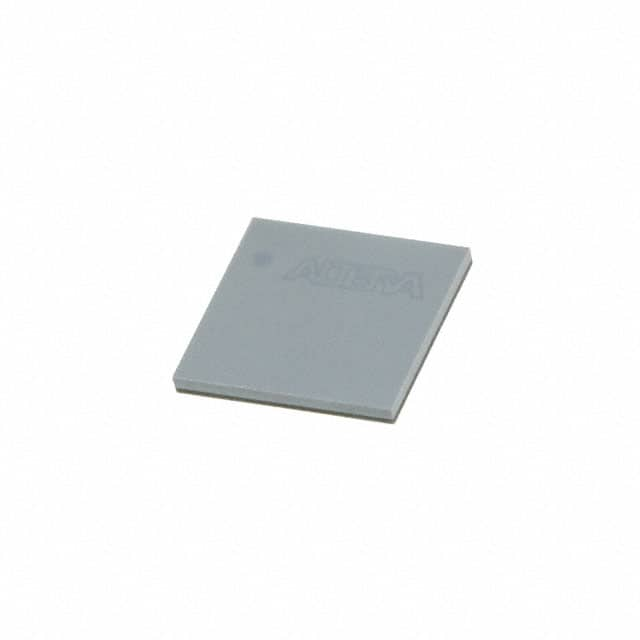
The 10M08DAU324C8G is a versatile FPGA (Field-Programmable Gate Array) device manufactured by Intel (formerly Altera). It belongs to the MAX 10 family, known for offering a mix of features that cater to various applications, from simple logic designs to more complex embedded systems. Here%27s a detailed overview of this specific FPGA model:
## Overview
The 10M08DAU324C8G is part of Intel’s MAX 10 series, which is designed to provide an affordable yet high-performance solution for a range of digital design applications. The MAX 10 family is noted for its ease of use, low power consumption, and integrated features that reduce the need for additional components.
## Key Features
1. Logic Elements:
- Number of Logic Elements (LEs): The 10M08DAU324C8G includes 8,000 logic elements. Each logic element is a basic unit capable of performing a variety of combinatorial and sequential logic functions.
2. Memory:
- Embedded Memory Blocks: The FPGA features embedded memory blocks that can be configured as single-port or dual-port RAM, supporting up to 256 Kbits of total memory.
3. I/O Capabilities:
- I/O Pins: The device has 24 I/O pins available for interfacing with external components. These I/O pins support various voltage standards and can be configured for different signal types, including TTL and CMOS levels.
4. Package and Size:
- Package Type: The 10M08DAU324C8G is housed in a 324-pin TQFP (Thin Quad Flat Package) with a 0.8 mm pitch, making it suitable for integration into compact and high-density designs.
5. Power Consumption:
- Low Power: Designed to operate with low power consumption, the MAX 10 FPGAs are ideal for battery-operated and energy-efficient applications. The device supports a voltage range of 1.8V to 3.3V for I/O.
6. Embedded Features:
- Analog-to-Digital Converter (ADC): The device includes an 8-bit ADC, which allows for the direct conversion of analog signals to digital data within the FPGA.
7. Configuration:
- Flash Configuration: The FPGA incorporates a non-volatile configuration memory, allowing for instant-on operation and eliminating the need for external configuration memory. This feature simplifies the design and reduces component count.
8. Clocking:
- Clock Management: It features multiple clock management resources, including phase-locked loops (PLLs) and clock dividers, which are essential for generating and managing clock signals across the FPGA.
9. Development and Tools:
- Development Software: Intel provides the Quartus Prime software suite for FPGA design, which includes tools for logic synthesis, placement and routing, and simulation. The software facilitates an efficient design flow from conception to implementation.
10. Security:
- Device Security Features: The MAX 10 FPGA series includes built-in security features to protect the design against unauthorized access and tampering. This includes support for design encryption and secure key management.
## Applications
1. Consumer Electronics:
- The FPGA can be used in consumer electronics for implementing custom logic functions, signal processing, and interfacing with various peripherals.
2. Automotive:
- Suitable for automotive applications where robust and reliable logic solutions are required, including infotainment systems and advanced driver-assistance systems (ADAS).
3. Industrial Control:
- Ideal for industrial control systems where real-time processing and custom logic are needed, such as motor control and data acquisition systems.
4. Communications:
- Useful in communications equipment for tasks such as protocol processing, data modulation, and demodulation.
5. Embedded Systems:
- Can be integrated into embedded systems for applications requiring programmable logic and embedded processing capabilities.
## Summary
The 10M08DAU324C8G FPGA from Intel’s MAX 10 family offers a comprehensive set of features designed for a wide range of applications. With its substantial number of logic elements, embedded memory, low power consumption, and integrated analog-to-digital conversion, it provides a robust and flexible solution for digital logic design. The built-in non-volatile memory and ease of configuration further simplify the development process, making it an excellent choice for applications in consumer electronics, automotive, industrial control, and communications.