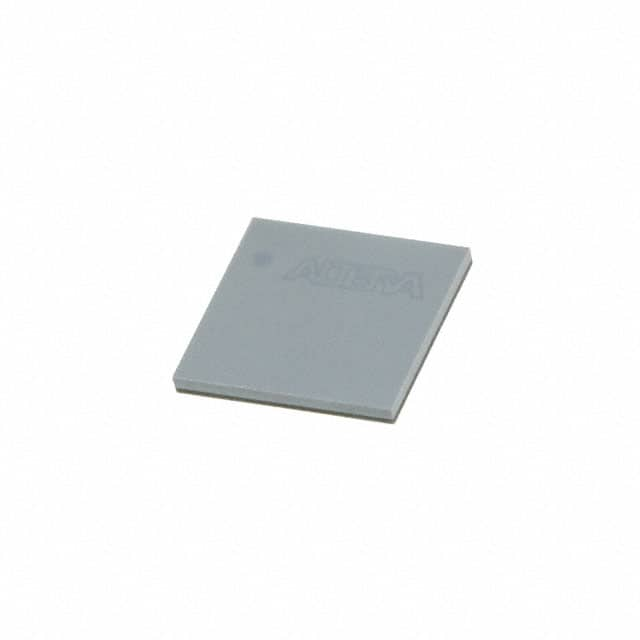
The Intel 10M08DAF484I7G is a member of the Intel MAX 10 FPGA family, which is designed for a variety of applications, including industrial, automotive, communications, and consumer electronics. This FPGA (Field Programmable Gate Array) offers a unique combination of features, including embedded memory, digital signal processing capabilities, and a flexible architecture that allows for extensive customization.
## Key Specifications:
1. Architecture:
- FPGA Family: MAX 10
- Logic Elements: The 10M08DAF484I7G contains approximately 8,000 logic elements, which can be configured to implement a wide range of digital functions.
- Embedded Memory: It includes up to 256 Kbits of embedded memory blocks, which can be used for data storage and buffering.
2. Performance:
- Maximum Operating Frequency: The device can operate at frequencies up to 200 MHz, depending on the design and configuration.
- I/O Standards: Supports various I/O standards, including LVCMOS, LVTTL, and HSTL, allowing for compatibility with a wide range of external devices.
3. Package Information:
- Package Type: The 10M08DAF484I7G is housed in a 484-pin F484 package, which provides a compact footprint suitable for space-constrained applications.
- Dimensions: The package dimensions are designed to facilitate easy integration into PCB designs.
4. Power Supply:
- Operating Voltage: The device operates at a core voltage of 1.2V, with I/O voltage options ranging from 1.2V to 3.3V, allowing for flexibility in power management.
- Power Consumption: The MAX 10 FPGAs are designed for low power consumption, making them suitable for battery-operated and energy-efficient applications.
5. Configuration and Programming:
- Configuration Options: The 10M08DAF484I7G supports various configuration methods, including JTAG, AS (Active Serial), and passive serial modes, allowing for easy programming and reconfiguration.
- Embedded Flash Memory: This FPGA features embedded flash memory, enabling non-volatile storage of configuration data, which allows the device to retain its configuration even when powered off.
6. Digital Signal Processing (DSP):
- DSP Blocks: The device includes dedicated DSP blocks that can be used for high-performance arithmetic operations, such as multiplication and accumulation, which are essential for applications like audio processing and communications.
7. Development Support:
- Development Tools: Intel provides a comprehensive suite of development tools, including the Intel Quartus Prime software, which supports design entry, synthesis, simulation, and programming of the FPGA.
- Reference Designs: A variety of reference designs and application notes are available to help developers get started quickly and efficiently.
8. Applications:
- The Intel 10M08DAF484I7G is suitable for a wide range of applications, including:
- Industrial automation and control systems
- Automotive applications (e.g., sensor fusion, control systems)
- Communication systems (e.g., base stations, routers)
- Consumer electronics (e.g., video processing, gaming)
- IoT devices and edge computing solutions
## Conclusion:
The Intel 10M08DAF484I7G FPGA from the MAX 10 family offers a powerful and flexible solution for a variety of embedded applications. With its combination of logic elements, embedded memory, DSP capabilities, and low power consumption, it is well-suited for developers looking to create innovative designs in diverse fields. The support from Intel%27s development tools and resources further enhances its appeal, making it an excellent choice for both new and experienced designers in the FPGA space. Whether for industrial, automotive, or consumer applications, the 10M08DAF484I7G provides the necessary features and performance to meet modern design challenges.