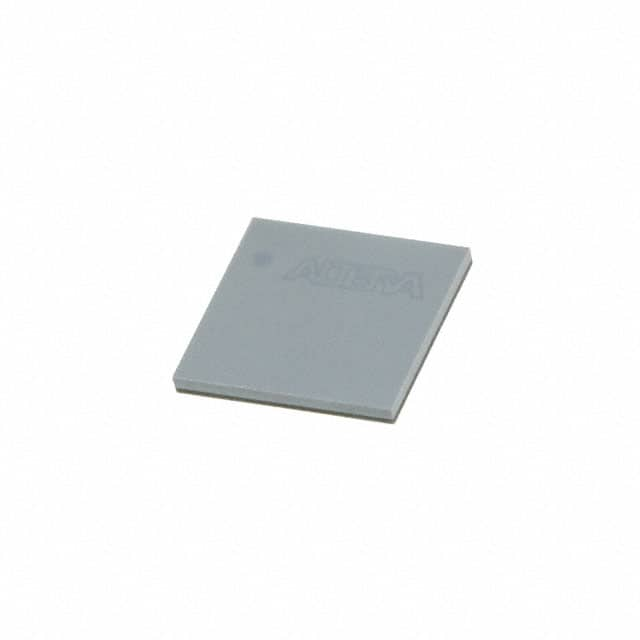
The 10M08DAF256I7G is an FPGA (Field-Programmable Gate Array) device produced by Intel (formerly Altera). This particular model is part of the MAX 10 family, which is known for its low-power, cost-effective solutions suitable for a range of applications, from consumer electronics to industrial systems. Below is a detailed overview of the 10M08DAF256I7G, including its architecture, features, and typical applications.
## Overview
The 10M08DAF256I7G is a MAX 10 FPGA device that provides a balance between performance, power efficiency, and cost. It is designed to offer a flexible and customizable hardware solution with a wide range of logic resources and I/O capabilities. The device is housed in a 256-ball BGA (Ball Grid Array) package, which helps in managing space and thermal performance.
## Architecture and Features
1. Logic Elements:
- LEs (Logic Elements): The 10M08DAF256I7G includes 8,000 logic elements. These are the basic building blocks of the FPGA, consisting of look-up tables (LUTs), flip-flops, and multiplexers that can be configured to implement complex logic functions.
- Embedded Multipliers: The FPGA includes embedded multipliers to facilitate high-speed arithmetic operations. This feature is particularly useful in signal processing and data manipulation tasks.
2. Memory:
- Embedded Memory Blocks: The FPGA provides embedded memory blocks, which can be used for implementing various types of memory functions, such as FIFO buffers and RAM blocks.
- User Flash Memory: Integrated user flash memory allows for the storage of configuration data and other user-specific information, enhancing the device%27s versatility and functionality.
3. I/O Features:
- I/O Pins: The 10M08DAF256I7G features a large number of I/O pins, which can be configured for various signaling standards and protocols. This flexibility supports a broad range of peripheral interfacing requirements.
- High-Speed I/O: The device supports high-speed I/O interfaces, which are crucial for applications requiring rapid data transfer and communication.
4. Configuration and Programming:
- JTAG Interface: The FPGA supports JTAG (Joint Test Action Group) for in-system programming and debugging. This standard interface facilitates easy configuration and testing during development.
- Passive Configuration: In addition to JTAG, the device can be configured using passive methods, providing additional flexibility in deployment.
5. Clock Management:
- Clock Management: The 10M08DAF256I7G incorporates advanced clock management features, including phase-locked loops (PLLs) and clock dividers. These components are essential for generating and distributing clock signals with precise timing across the FPGA.
6. Power Management:
- Power Supply: The FPGA operates at a typical core voltage of 1.8V, which helps in maintaining power efficiency.
- Power Modes: Various power-saving modes are supported, allowing the device to operate in a low-power state when full performance is not required.
## Applications
1. Consumer Electronics:
- Portable Devices: The FPGA%27s low power consumption and small form factor make it suitable for use in portable electronic devices such as handheld gadgets and wearables.
2. Industrial Automation:
- Control Systems: The device can be used in industrial control systems for tasks such as signal processing, control logic, and communication interface management.
3. Automotive:
- In-Vehicle Systems: The FPGA’s robustness and reliability make it suitable for automotive applications, including advanced driver-assistance systems (ADAS) and in-vehicle networks.
4. Communications:
- Networking Equipment: Its high-speed I/O capabilities and logic resources make it a good fit for networking applications, such as routers and switches, where real-time processing and data handling are critical.
5. Consumer Appliances:
- Embedded Systems: The FPGA can be used in various consumer appliances for functions like digital signal processing and interface management.
## Development and Support
1. Development Tools:
- Intel Quartus Prime Software: The FPGA is supported by Intel’s Quartus Prime design software, which provides comprehensive tools for design entry, synthesis, simulation, and programming.
- IP Cores: Intel offers a range of intellectual property (IP) cores that can be integrated into designs to accelerate development and simplify complex tasks.
2. Documentation and Resources:
- Datasheets and Reference Manuals: Detailed datasheets and reference manuals are available, providing information on electrical characteristics, pin configurations, and programming details.
- Technical Support: Intel provides technical support through documentation, forums, and direct assistance to help developers with their projects and address any issues that may arise.
## Conclusion
The 10M08DAF256I7G MAX 10 FPGA offers a versatile and cost-effective solution for a wide range of embedded applications. Its blend of logic resources, memory capabilities, and I/O flexibility makes it a valuable tool for engineers and designers seeking to implement customized hardware solutions. Whether used in consumer electronics, industrial systems, or automotive applications, the 10M08DAF256I7G provides the performance and flexibility needed to meet diverse design requirements.