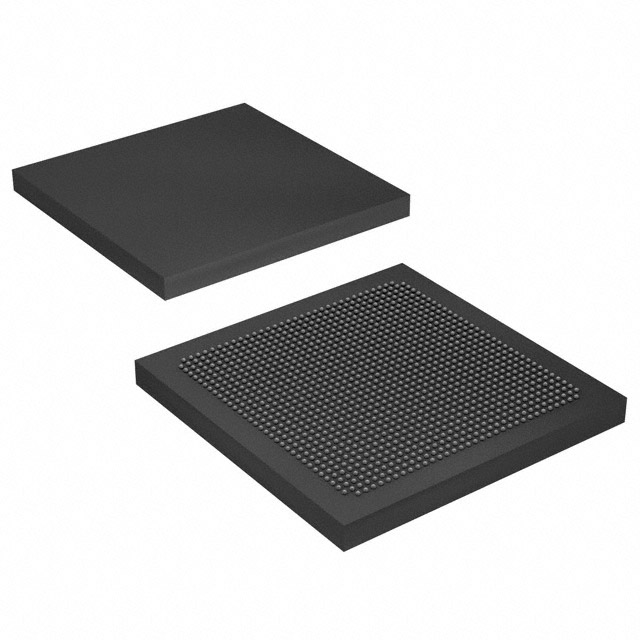
The Intel 10AX066H3F34E2SG is a member of the Intel Agilex FPGA family, designed to provide high performance, flexibility, and efficiency for a wide range of applications, including data centers, telecommunications, automotive, and industrial systems. This FPGA (Field Programmable Gate Array) is particularly known for its advanced architecture, which combines high-speed processing capabilities with low power consumption. Below is a detailed overview of the 10AX066H3F34E2SG, including its specifications and features.
## Overview
The Intel 10AX066H3F34E2SG FPGA is built on Intel%27s 10nm process technology, which allows for a high density of logic elements and memory resources. This device is designed to meet the demands of modern applications that require high bandwidth, low latency, and efficient power management. The Agilex family is known for its versatility, making it suitable for a variety of use cases, from edge computing to cloud infrastructure.
## Key Features
1. High Logic Density: The 10AX066H3F34E2SG features a significant number of logic elements, enabling the implementation of complex designs and algorithms.
2. Embedded Memory: The FPGA includes a substantial amount of embedded memory, which can be used for data storage, buffering, and caching, enhancing performance in data-intensive applications.
3. Digital Signal Processing (DSP) Blocks: The device is equipped with dedicated DSP blocks that facilitate efficient implementation of signal processing algorithms, such as filtering and FFT operations.
4. High-Speed Transceivers: The FPGA supports high-speed transceivers capable of handling various data rates, making it suitable for high-bandwidth applications such as 5G communications and data center interconnects.
5. Flexible I/O Options: The 10AX066H3F34E2SG supports a wide range of I/O standards, allowing for compatibility with different communication protocols and interfaces.
6. Low Power Consumption: Designed with power efficiency in mind, the Agilex family, including the 10AX066H3F34E2SG, operates at lower voltages, which helps reduce overall power consumption.
7. Advanced Security Features: The device includes built-in security features to protect against unauthorized access and ensure data integrity.
8. Development Tools: Intel provides a comprehensive suite of development tools, including the Intel Quartus Prime software, which facilitates design entry, simulation, and programming of the FPGA.
## Specifications
- Logic Elements: Approximately 660,000 logic elements.
- Embedded Memory: Up to 2.5 Mbits of embedded memory.
- DSP Blocks: 1,440 dedicated DSP blocks, each capable of performing 18x18 multiplications.
- I/O Pins: Up to 480 user I/O pins, supporting various I/O standards (e.g., LVTTL, LVCMOS, HSTL).
- Maximum Operating Frequency: Up to 1.5 GHz, depending on the design and configuration.
- Power Supply Voltage: Core voltage typically around 1.2V, with I/O voltage options ranging from 1.2V to 3.3V.
- Package Options: Available in various packages, including FFG and FCP packages, with different pin counts and dimensions.
- Temperature Range: Commercial grade (0°C to 85°C) and industrial grade (-40°C to 100°C) options available.
## Applications
The Intel 10AX066H3F34E2SG FPGA is suitable for a wide range of applications, including:
- Telecommunications: Used in base stations, routers, and switches for data processing and protocol handling.
- Data Centers: Employed in high-performance computing, data analytics, and cloud infrastructure.
- Automotive: Implemented in advanced driver-assistance systems (ADAS) and infotainment systems.
- Industrial Automation: Utilized in control systems, robotics, and machine vision applications.
- Consumer Electronics: Found in devices such as smart TVs, gaming consoles, and home automation systems.
## Conclusion
The Intel 10AX066H3F34E2SG FPGA is a powerful and versatile device that offers a rich set of features for a variety of applications. With its high logic density, embedded memory, DSP capabilities, and low power consumption, it provides designers with the tools needed to create efficient and high-performance systems. The support from Intel%27s development tools further enhances its usability, making it an excellent choice for engineers looking to implement complex digital designs in modern electronic applications.