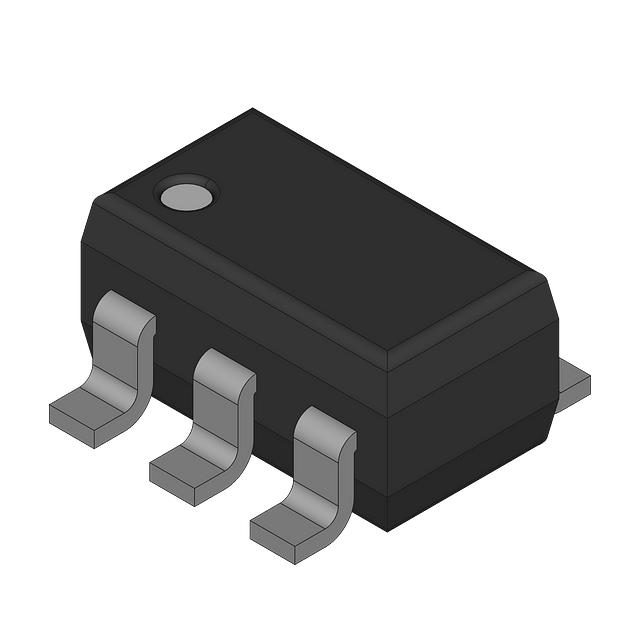
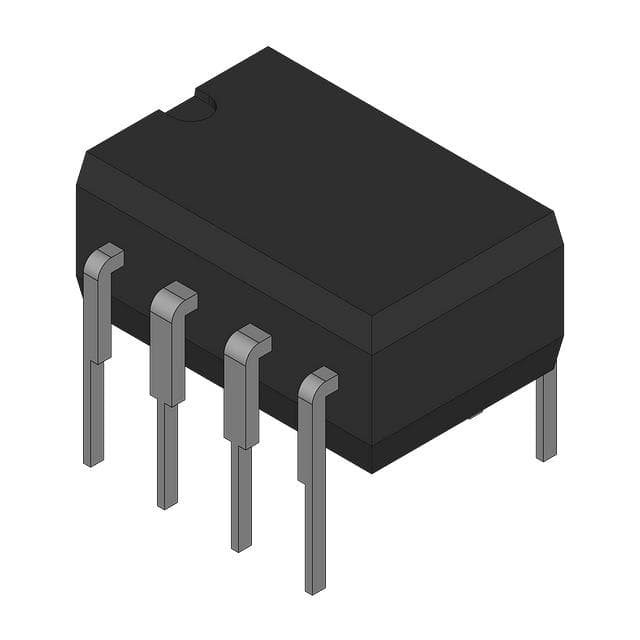
The Texas Instruments LMC6684BIN is a low-power, rail-to-rail input and output quad operational amplifier designed for precision analog signal processing in low-voltage and battery-powered systems. It integrates four independent CMOS operational amplifiers in a single package, optimized for operation from single-supply or dual-supply configurations with extremely low quiescent current consumption. The device is part of TI’s LMC family of CMOS amplifiers, which emphasizes high input impedance, rail-to-rail operation, and minimal power dissipation while maintaining adequate bandwidth for general-purpose analog applications.
## Device Function and System Positioning
The LMC6684BIN is classified as a quad CMOS operational amplifier. Its primary function is to perform analog signal conditioning tasks such as amplification, buffering, filtering, and analog computation in multi-channel systems. Each of the four amplifiers operates independently but shares a common bias network and supply rails.
In system architectures, the device is typically used in multi-channel sensor interfaces, portable instrumentation, and low-power signal conditioning front-ends. Its rail-to-rail input and output capability allows it to process signals that span the entire supply voltage range, making it suitable for single-supply systems operating at low voltages.
The “BIN” suffix denotes a specific package and temperature grade combination, typically indicating an 8-pin or 14-pin small outline package variant depending on family configuration, optimized for industrial-grade operation.
## Electrical Characteristics and Key Parameters
The LMC6684BIN operates over a wide supply voltage range from 2.7 V to 15 V in single-supply mode, or ±1.35 V to ±7.5 V in dual-supply configurations. This flexibility allows integration into both modern low-voltage digital systems and legacy analog environments.
A key characteristic is its ultra-low input bias current, typically in the femtoampere to picoampere range, due to CMOS input stage architecture. This makes it suitable for high-impedance sensor interfaces such as photodiodes, piezoelectric sensors, and capacitive sensors.
The typical input offset voltage is in the low millivolt range, ensuring acceptable DC accuracy for general-purpose analog applications. Input common-mode voltage range extends beyond both supply rails, enabling true rail-to-rail input operation.
The output stage also supports rail-to-rail swing, typically within millivolts of both supply rails under light load conditions, maximizing dynamic range in low-voltage systems.
The typical unity-gain bandwidth is approximately 1.5 MHz, providing sufficient frequency response for audio-range and moderate-speed signal conditioning applications. The slew rate is typically around 1 V/µs, which limits high-speed signal fidelity but is adequate for low-frequency analog processing.
Quiescent current per amplifier is extremely low, typically in the microampere range, making the total supply current highly suitable for battery-powered applications where energy efficiency is critical.
## Input Stage Architecture and Performance Behavior
The LMC6684BIN uses a CMOS input stage architecture, which provides extremely high input impedance and extremely low input bias currents compared to bipolar input amplifiers. This enables direct interfacing with high-impedance signal sources without significant loading effects.
Rail-to-rail input capability is achieved through a complementary input differential pair structure, allowing the amplifier to maintain linear operation even when input voltages approach either supply rail.
However, performance parameters such as offset voltage and gain linearity may vary near the supply rails, which is typical for CMOS input amplifiers.
## Output Stage Characteristics
The output stage is designed to provide rail-to-rail output swing under light load conditions. The output can typically source and sink several milliamperes of current, although output voltage swing becomes limited under heavier load conditions due to on-resistance of the internal output transistors.
The output stage is stable for capacitive loads within specified limits, though external compensation may be required for highly capacitive or unstable load conditions.
## Frequency Response and Stability
The LMC6684BIN is internally compensated for unity-gain stability. Its dominant pole compensation ensures stable operation across a wide range of feedback configurations.
The gain-bandwidth product of approximately 1.5 MHz supports low-frequency signal processing applications such as sensor conditioning, active filtering in the audio range, and low-speed control loops.
Phase margin is optimized for unity-gain stability, allowing straightforward implementation in buffer configurations without external compensation components.
## Power Consumption and Efficiency
One of the defining features of the LMC6684BIN is its extremely low power consumption. The per-amplifier quiescent current is on the order of microamperes, resulting in very low total device power dissipation even in always-on systems.
This makes the device particularly suitable for battery-operated or energy-harvesting systems where long operational lifetime is required.
## Package and Mechanical Characteristics
The “BIN” configuration is typically supplied in a standard industrial-grade plastic package suitable for surface-mount or through-hole adaptation depending on variant. The package is designed for compact PCB layouts and supports operation across the full industrial temperature range.
Thermal dissipation is minimal due to low quiescent current, so thermal constraints are generally not a limiting factor in system design.
## Typical Applications
The LMC6684BIN is widely used in low-power analog systems requiring multiple operational amplifiers, including:
* Multi-channel sensor signal conditioning systems
* Battery-powered instrumentation and portable measurement devices
* Active filtering circuits in low-frequency analog systems
* Photodiode and high-impedance sensor amplification
* Analog buffering in mixed-signal embedded systems
* Industrial monitoring systems with low power constraints
Its quad configuration enables dense analog signal processing with minimal power and board area consumption.
## Summary
The Texas Instruments LMC6684BIN is a quad low-power CMOS operational amplifier featuring rail-to-rail input and output capability, extremely low input bias current, and microampere-level quiescent current consumption. It is optimized for low-voltage, battery-powered, and high-impedance analog applications requiring multiple signal conditioning channels. With moderate bandwidth, unity-gain stability, and high input impedance, it provides a highly efficient solution for multi-channel analog processing in energy-constrained systems.