The Texas Instruments CD74AC164M96 is an 8-bit serial-in/parallel-out shift register designed for efficient and high-speed data transfer. Below is a detailed breakdown of its features, specifications, and applications.
## General Description
The CD74AC164M96 is a member of the AC logic family and is specifically engineered to handle fast data shifting with minimal propagation delay. It provides a parallel load capability and can be used for digital signal processing, data conversion, and other high-speed logic applications. The device features both serial and parallel outputs, making it versatile for different digital system designs.
## Key Features
* 8-bit shift register: The IC includes an 8-bit shift register with serial input and parallel output.
* High-speed operation: Designed to operate at higher speeds, offering low propagation delay for fast data shifting.
* Parallel load capability: Allows for data to be loaded in parallel directly into the register, providing more flexible data handling.
* Wide voltage range: It operates over a broad range of supply voltages, making it adaptable for different power systems.
* Low Power Consumption: It features low quiescent current consumption, which makes it suitable for battery-operated systems.
* Enhanced Noise Immunity: Designed to function reliably in environments with varying voltage levels and electrical noise.
## Specifications
* Device Type: 8-bit serial-in/parallel-out shift register
* Supply Voltage (Vcc): 4.5V to 5.5V
* Operating Temperature Range: -40°C to +85°C
* Logic Family: AC (Advanced CMOS)
* Output Type: Three-state outputs
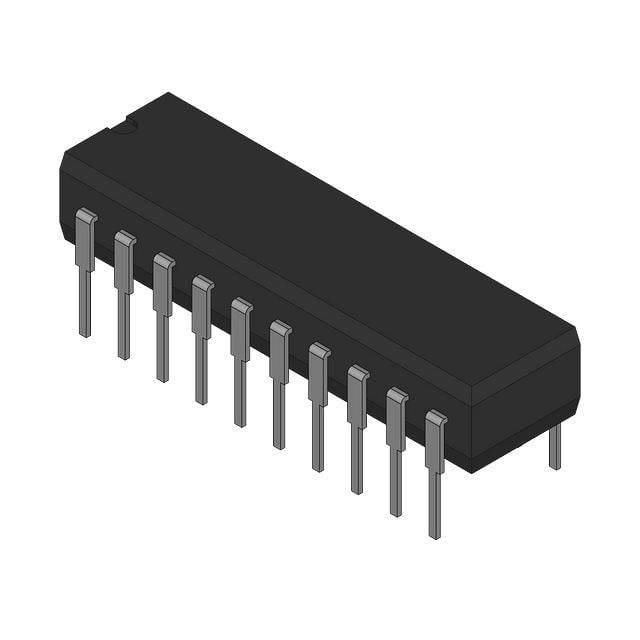
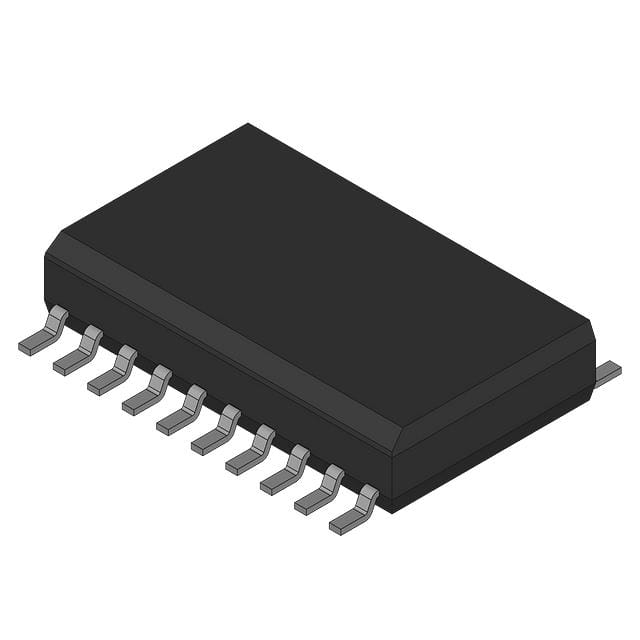
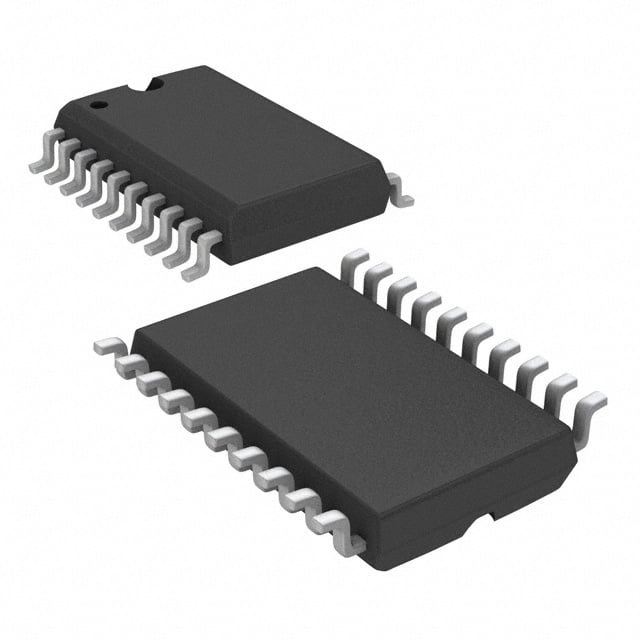
* Package Type: 16-pin narrow-body, surface-mount package (SOIC-16)
* Output Drive Current: 6mA (high level), 6mA (low level)
* Propagation Delay (tPLH, tPHL): Typically 8ns at 5V, 5ns at 3.3V
* Power Dissipation: 1.5mW typically
* Input Voltage High (Vih): 2V min at Vcc = 4.5V, 2.5V min at Vcc = 5.5V
* Input Voltage Low (Vil): 1.5V max at Vcc = 4.5V, 1.5V max at Vcc = 5.5V
* Fanout: 10 LSTTL loads
* Data Propagation Delay: 8ns (typical at 5V)
* Shift Operation Mode: Serial input, parallel output
* Reset Function: Active-low reset pin to initialize the shift register
## Pin Configuration
1. Pin 1 (Serial Input): Receives the serial data input.
2. Pin 2 to Pin 9 (Parallel Outputs Q0 to Q7): Provide the parallel outputs for the shifted data.
3. Pin 10 (Clock): Receives the clock signal to trigger the shifting of data.
4. Pin 11 (Clear): Used to reset the shift register, clearing all data to a known state.
5. Pin 12 (Clock Enable): Controls whether the clock signal is active for shifting data.
6. Pin 13 to Pin 16 (Ground): Used to ground the IC.
## Typical Application Circuits
The CD74AC164M96 is commonly used in applications requiring efficient data transfer and processing, such as:
* Data buses and parallel-to-serial conversion: It converts parallel data into serial format for communication systems.
* Microcontroller interfacing: Often employed to expand I/O capabilities of microcontrollers by providing additional data lines.
* Timing circuits and frequency dividers: Used in timing applications to shift data based on clock inputs.
* Memory systems: In data storage systems to manage the transfer of bits.
## Performance Characteristics
* Speed: With a maximum propagation delay of 8ns, it offers high-speed data shifting for real-time processing.
* Voltage Compatibility: The CD74AC164M96 is compatible with both TTL and CMOS logic levels, enhancing its versatility in mixed-signal systems.
* Temperature Stability: The device remains operational in a wide temperature range, from -40°C to +85°C, suitable for industrial and automotive environments.
* Low Power Consumption: With a typical power dissipation of 1.5mW, it helps minimize energy usage in low-power devices.
## Advantages
* Compact Design: The 16-pin package allows for integration into systems with limited space, especially in compact, high-density boards.
* Versatility: Its combination of serial-in, parallel-out shifting and parallel load capabilities makes it suitable for a wide range of applications, including digital logic circuits, microprocessor-based designs, and communication systems.
* Noise Resistance: Due to its robust CMOS technology, it offers higher resistance to electrical noise and voltage fluctuations.
## Limitations
* Speed vs. Power: Although designed for high-speed operation, its power consumption may be higher compared to lower-speed shift registers, which might be a consideration in extremely low-power applications.
* Limited I/O Pins: For designs requiring more than 8 bits of parallel output, multiple devices may be necessary, potentially increasing circuit complexity.
## Conclusion
The Texas Instruments CD74AC164M96 is a versatile and high-speed shift register that plays a crucial role in various digital systems requiring fast data processing and manipulation. With its broad voltage range, low power consumption, and robust performance characteristics, it is a reliable choice for numerous applications in both consumer and industrial electronics.