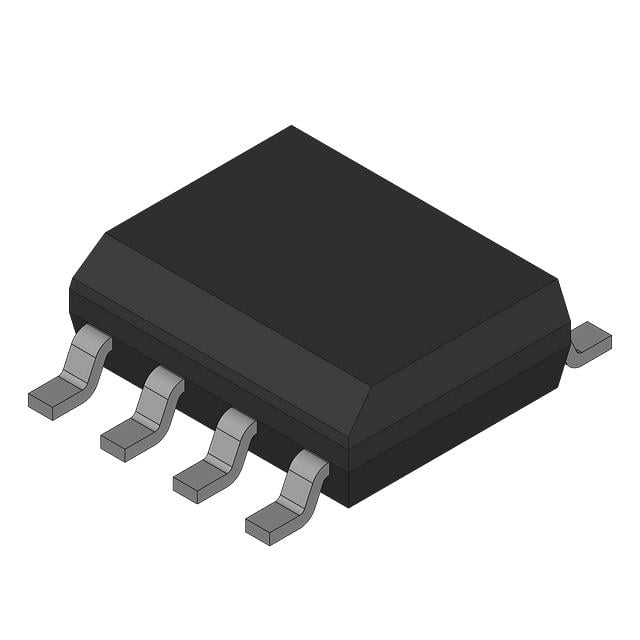
Overview of Texas Instruments LM393PWR
The LM393PWR is a dual comparator integrated circuit (IC) manufactured by Texas Instruments. It is widely used in various applications requiring voltage comparison, such as signal conditioning, analog-to-digital conversion, and threshold detection. The LM393 features two independent, high-speed comparators with open-collector outputs, making it suitable for interfacing with various logic levels and enabling flexibility in design.
Key Specifications
1. Supply Voltage Range:
- The LM393PWR operates over a wide supply voltage range from 2V to 36V (or ±1V to ±18V). This versatility allows it to be used in various applications, accommodating different power supply configurations.
2. Input Voltage Range:
- The input voltage range for the LM393 is from 0V to VCC (the positive supply voltage). This characteristic enables the device to handle a variety of input signals while ensuring reliable operation.
3. Output Type:
- The LM393 features an open-collector output configuration. This allows the output to be connected to different voltage levels and enables wired-AND configurations, which can be beneficial in multi-device communication systems.
4. Propagation Delay:
- The typical propagation delay for the LM393 is approximately 200 ns at a supply voltage of 5V. This fast response time makes it suitable for high-speed applications where quick signal processing is essential.
5. Input Offset Voltage:
- The input offset voltage is typically around 2 mV at room temperature. This low offset voltage ensures accurate comparisons between input signals, minimizing errors in applications that require precision.
6. Common Mode Input Voltage Range:
- The common mode input voltage range extends from 0V to VCC - 2V, allowing for flexibility when interfacing with other components in a circuit.
7. Power Consumption:
- The quiescent current consumption of the LM393 is about 1.5 mA per comparator at a supply voltage of 5V. This low power consumption makes it suitable for battery-operated devices and low-power applications.
8. Temperature Range:
- The operating temperature range for the LM393PWR is from -40°C to +125°C, making it suitable for use in industrial and automotive applications where temperature extremes may be encountered.
9. Package Type:
- The LM393PWR comes in a TSSOP (Thin Shrink Small Outline Package) package type, which provides a compact footprint ideal for space-constrained designs while maintaining good thermal performance.
10. Applications:
- Typical applications include zero-crossing detectors, pulse-width modulation (PWM) control circuits, level shifters, and general-purpose signal comparison tasks.
Applications
The versatility of the Texas Instruments LM393PWR makes it suitable for numerous applications across various industries:
- Signal Conditioning: Used in circuits that require precise comparison of analog signals to detect specific thresholds.
- Analog-to-Digital Conversion: Acts as a comparator stage in ADC circuits to convert analog signals into digital values.
- Voltage Level Detection: Employed in battery management systems or power supplies to monitor voltage levels and ensure safe operation.
- Oscillator Circuits: Can be utilized in oscillator designs where waveform shaping or frequency generation is needed.
- Temperature Sensing Applications: Often found in thermistor circuits where temperature changes need monitoring against set thresholds.
Performance Characteristics
The performance characteristics of the LM393PWR highlight its effectiveness as a dual comparator IC in real-world applications. Its wide supply voltage range allows integration into diverse systems while its fast response time ensures timely signal processing necessary for high-speed operations. Additionally, the open-collector output configuration enhances design flexibility by enabling multiple comparators to interface seamlessly within a circuit.
In conclusion, the Texas Instruments LM393PWR dual comparator provides engineers with a reliable solution for voltage comparison tasks across various electronic designs. Its combination of precision, speed, and low power consumption makes it an ideal choice for applications ranging from consumer electronics to industrial automation systems.