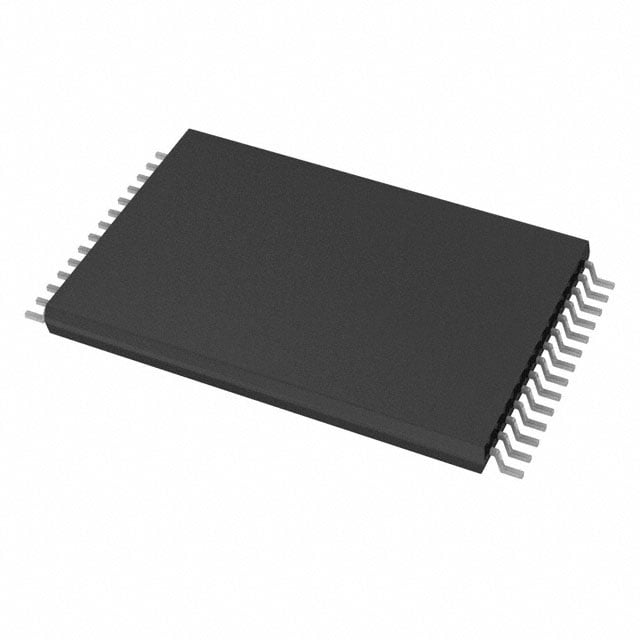
Overview
The ATMEGA8HVA-4TUR is a microcontroller from Microchip Technology, specifically designed for high-voltage applications. It belongs to the ATmega family of AVR-based microcontrollers, featuring an 8-bit RISC architecture. This device is ideal for applications requiring high reliability, low power consumption, and integration of analog and digital functionalities. The ATMEGA8HVA-4TUR is particularly suitable for automotive, industrial, and other high-voltage environments, where traditional microcontrollers might not provide sufficient performance or protection. It integrates various peripherals, including timers, ADCs, and communication interfaces, into a single chip, making it highly versatile for embedded system designs.
Key Features
* High-Voltage Operation: The ATMEGA8HVA-4TUR supports a wide operating voltage range from 4.5V to 5.5V, with a special focus on tolerance to higher voltages compared to standard microcontrollers.
* AVR Architecture: It uses a high-performance 8-bit AVR RISC architecture, enabling faster execution and improved efficiency over traditional CISC microcontrollers.
* Flash Memory: The device comes with 8 KB of in-system programmable Flash memory for storing program code, providing a good balance of size and flexibility.
* RAM and EEPROM: It has 1 KB of SRAM and 512 bytes of EEPROM for data storage and retention, enabling the microcontroller to handle moderate-sized applications effectively.
* I/O Pins: The ATMEGA8HVA-4TUR features 23 general-purpose I/O pins, which can be configured as inputs or outputs based on the application needs.
* Timers: The device integrates three timers (two 8-bit and one 16-bit) with various modes, including PWM (pulse-width modulation) functionality, making it suitable for precise time-based control tasks.
* Analog to Digital Converter (ADC): A 10-bit ADC with 8 channels is integrated into the chip, allowing the microcontroller to read analog signals and convert them into digital values for processing.
* Communication Interfaces: The ATMEGA8HVA-4TUR includes standard communication protocols, such as SPI (Serial Peripheral Interface), UART (Universal Asynchronous Receiver/Transmitter), and I2C (Inter-Integrated Circuit), enabling easy integration into complex systems.
* Watchdog Timer: A built-in watchdog timer helps ensure system stability by resetting the microcontroller in case of software malfunctions, enhancing the reliability of embedded systems.
* Low Power Consumption: The device supports multiple power-saving modes, including idle and sleep modes, to reduce energy consumption in battery-operated systems.
* Temperature Range: The ATMEGA8HVA-4TUR is rated for a temperature range of -40°C to +85°C, making it suitable for automotive and industrial applications.
Electrical Specifications
* Operating Voltage Range: 4.5V to 5.5V
* Operating Current Consumption: Typically 2.1 mA at 5V, with lower consumption in power-down or idle modes
* Flash Memory: 8 KB in-system programmable
* SRAM: 1 KB
* EEPROM: 512 Bytes
* Clock Speed: Maximum 16 MHz
* I/O Pins: 23 programmable I/O pins
* ADC Channels: 8 analog input channels
* ADC Resolution: 10-bit
* Timer Resolution: 8-bit and 16-bit timers, with PWM functionality for precise control
* Communication Interfaces: SPI, I2C, UART
* Watchdog Timer: Integrated, configurable for periodic reset of the microcontroller
* Power Consumption: Low power operation with power-saving modes for battery-powered systems
* Temperature Range: -40°C to +85°C operating temperature range
Functional Description
The ATMEGA8HVA-4TUR integrates an advanced RISC architecture, enabling fast data processing and execution of instructions. The microcontroller operates with high efficiency, allowing users to perform multiple tasks simultaneously using the available I/O pins and peripherals. The Flash memory is in-system programmable, enabling easy firmware updates and system upgrades. The chip features a 10-bit ADC, which is particularly useful in applications requiring precision analog-to-digital conversion, such as sensor interfacing or analog signal processing.
The I/O pins can be individually configured for different functions, including digital input/output, PWM, and analog inputs. With its wide range of peripherals, the ATMEGA8HVA-4TUR is highly adaptable for various embedded applications. The three timers allow for precise control of time-based operations, such as generating PWM signals for motor control, frequency generation, or controlling LEDs in lighting systems.
Applications
* Automotive: The ATMEGA8HVA-4TUR is ideal for automotive applications, such as engine control systems, lighting control, or HVAC (Heating, Ventilation, and Air Conditioning) systems, where high-voltage tolerance, reliability, and precise control are required.
* Industrial Automation: In industrial automation, this microcontroller can be used in motor control, robotic systems, and sensor interface applications that demand reliable operation in harsh environments.
* Consumer Electronics: The device can also be employed in consumer electronic devices like home appliances, air purifiers, or kitchen appliances, where space is limited and cost-effectiveness is essential.
* Battery-Powered Systems: Due to its low power consumption and various power-saving modes, the ATMEGA8HVA-4TUR is well-suited for battery-operated systems, such as remote sensors or portable handheld devices.
* Medical Devices: The microcontroller can be applied in medical devices for real-time processing, sensor integration, and control of medical instruments.
* Home Automation: In home automation, the ATMEGA8HVA-4TUR can serve as the central control unit for various smart devices, providing seamless integration with other sensors, controllers, and wireless communication modules.
Design Considerations
* Voltage Supply: Ensure that the operating voltage is within the specified range (4.5V to 5.5V). External voltage regulation may be required to maintain stable operation in environments with fluctuating input voltages.
* I/O Pin Configuration: Proper configuration of I/O pins is essential to match the application’s needs. Designers should consider the number of inputs and outputs required for the system and select the appropriate microcontroller pins.
* Clock Source: The ATMEGA8HVA-4TUR supports up to 16 MHz clock speed, which is suitable for many low-to-medium-speed embedded applications. However, the clock source must be stable, and external crystals may be needed for applications that require high-frequency precision.
* Power Management: To minimize power consumption, especially in battery-operated devices, designers should implement sleep and idle modes, ensuring that the system only consumes the necessary current when active.
* Peripherals: The availability of timers, ADC, and communication interfaces provides flexibility for various applications. However, careful consideration should be given to which peripherals are required for the design and the optimal allocation of resources.
* Thermal Management: If the device is operating in a high-power environment, ensuring proper heat dissipation is important for preventing thermal overload. Although the ATMEGA8HVA-4TUR operates in a wide temperature range, adequate thermal design will ensure reliable long-term operation.
Summary
The ATMEGA8HVA-4TUR is a powerful, versatile microcontroller ideal for applications requiring high voltage tolerance, low power consumption, and robust performance. With 8 KB of Flash memory, 1 KB SRAM, 512 bytes of EEPROM, and multiple communication interfaces, the ATMEGA8HVA-4TUR is suited for a wide range of embedded system applications. Its high-voltage capabilities and integrated peripherals make it ideal for automotive, industrial, and consumer electronics applications, providing the flexibility needed to meet various system requirements. The microcontroller’s low power modes and robust design ensure long-term reliability in demanding environments.