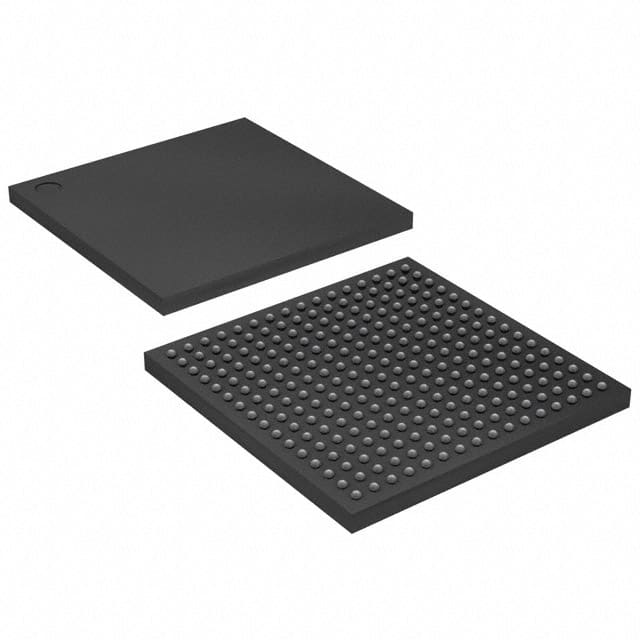
The Xilinx XC7A100T-1FGG484C is a member of the Xilinx Artix-7 family of Field Programmable Gate Arrays (FPGAs). This device is designed for a wide range of applications, including communications, automotive, industrial, and consumer electronics. The Artix-7 series is known for its high performance, low power consumption, and cost-effectiveness, making it an ideal choice for various digital design projects.
## Overview
The XC7A100T-1FGG484C FPGA features a large number of logic cells, configurable I/O, and a rich set of digital signal processing (DSP) capabilities. It is built on a 28nm process technology, which allows for higher performance and lower power consumption compared to previous generations. The device is housed in a 484-ball Fine Pitch Ball Grid Array (FBGA) package, which provides a compact footprint suitable for space-constrained applications.
## Key Features
1. Logic Cells: The XC7A100T contains approximately 101,440 logic cells, providing ample resources for implementing complex digital designs.
2. Configurable I/O: The device supports up to 210 user-configurable I/O pins, allowing for flexible interfacing with various peripherals and components.
3. Digital Signal Processing (DSP): The FPGA includes 74 DSP slices, each capable of performing high-speed arithmetic operations, making it suitable for applications such as image processing, audio processing, and communications.
4. Block RAM: The XC7A100T features 5.4 Mb of Block RAM, which can be used for data storage, buffering, and other memory-intensive applications.
5. High-Speed Transceivers: The device includes high-speed transceivers that support data rates up to 6.6 Gbps, enabling high-performance communication interfaces.
6. Low Power Consumption: The Artix-7 family is designed for low power operation, making it suitable for battery-powered and energy-efficient applications.
7. Flexible Configuration: The XC7A100T can be configured using various methods, including JTAG, SPI, and SelectMAP, providing flexibility in design and deployment.
8. Integrated Clock Management: The device includes clock management features such as phase-locked loops (PLLs) and clock dividers, allowing for efficient clock distribution and management.
## Specifications
- Logic Cells: Approximately 101,440
- DSP Slices: 74
- Block RAM: 5.4 Mb
- Maximum I/O Pins: 210
- Maximum Clock Frequency: Up to 450 MHz
- Transceiver Data Rate: Up to 6.6 Gbps
- Supply Voltage (Vcc): 0.95V (core), 3.3V (I/O)
- Power Consumption: Typically 0.5 W (dynamic), 0.1 W (static)
- Package Type: 484-ball Fine Pitch Ball Grid Array (FBGA)
- Temperature Range: -40°C to 100°C (industrial grade)
## Pin Configuration
The XC7A100T-1FGG484C is housed in a 484-ball FBGA package. The pin configuration includes:
1. VCC: Power supply pins for core and I/O.
2. GND: Ground pins.
3. I/O Pins: Configurable input/output pins for interfacing with external devices.
4. Clock Pins: Dedicated clock input pins for clock management.
5. Configuration Pins: Pins for JTAG, SPI, and SelectMAP configuration.
## Applications
The XC7A100T-1FGG484C is suitable for a wide range of applications, including:
- Communications: Used in high-speed communication systems, including Ethernet, fiber optics, and wireless communication.
- Automotive: Ideal for automotive applications such as advanced driver-assistance systems (ADAS) and infotainment systems.
- Industrial Automation: Employed in industrial control systems, robotics, and machine vision applications.
- Consumer Electronics: Suitable for applications in consumer devices, including video processing, gaming, and smart home technologies.
## Conclusion
The Xilinx XC7A100T-1FGG484C is a powerful and versatile FPGA that offers a combination of high performance, low power consumption, and a rich set of features. Its large number of logic cells, configurable I/O, and integrated DSP capabilities make it an excellent choice for a wide range of applications across various industries. With its compact package and flexible configuration options, the XC7A100T is well-suited for modern digital design challenges, enabling engineers to create innovative solutions in communications, automotive, industrial, and consumer electronics.