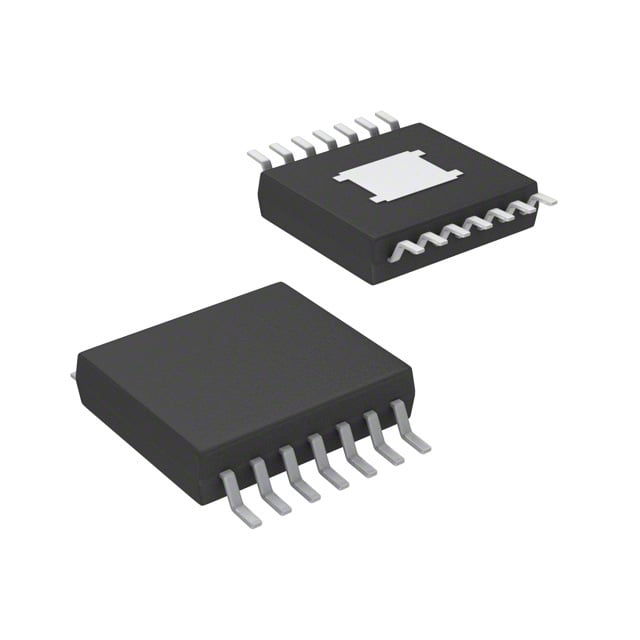
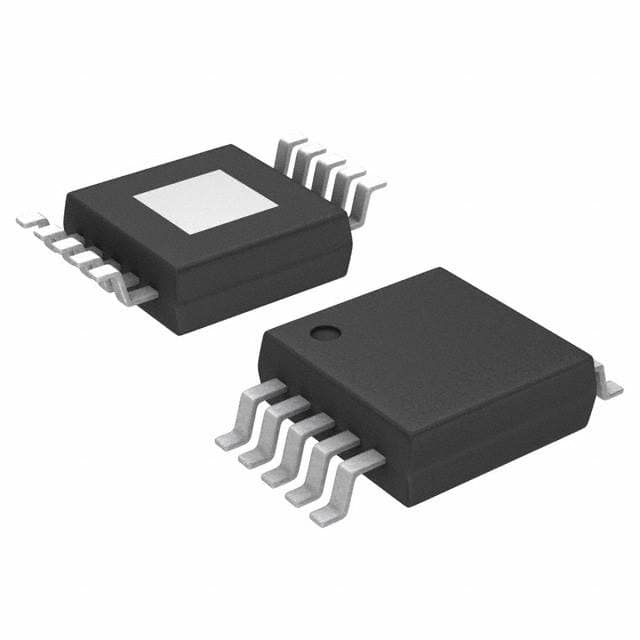
The TPS2124YFPR from Texas Instruments is a dual-channel power multiplexer designed for intelligent power path management in embedded systems. It is classified as a load switch and power path controller that facilitates automatic selection between two power sources, providing seamless switchover without interruption to downstream loads. The device integrates internal high-speed MOSFETs, voltage and current monitoring, and control logic to enable automatic or manual prioritization of input sources, thereby ensuring continuous operation in applications where multiple voltage rails or redundant power sources are present. Its architecture is specifically optimized to handle dynamic power source changes with minimal propagation delay and low on-resistance, delivering efficient and reliable power delivery while maintaining system integrity.
## Functional positioning and device classification
The TPS2124YFPR functions as a dual-channel power multiplexer and load switch with integrated protection and source selection features. Each channel operates as a high-side switch with fast response to voltage transitions, enabling the device to act as an automatic power path controller in systems with multiple supply inputs. It is designed for use in embedded computing, communication systems, and industrial control modules where redundancy, priority power sequencing, and uninterrupted supply to critical loads are required. By integrating the MOSFETs and control logic on-chip, the device eliminates the need for discrete power switching components, reducing board complexity, propagation delays, and overall power losses.
## Electrical and switching characteristics
Each power channel of the TPS2124YFPR incorporates an internal N-channel MOSFET configured for high-side switching. The typical on-resistance per channel is low, minimizing voltage drop and power dissipation when conducting current to downstream loads. The device operates over an input voltage range from 2.7 V to 5.5 V, making it compatible with standard logic-level and system power rails. Forward current handling per channel is specified with defined thermal and conduction limits to ensure reliable operation under continuous load conditions. Maximum voltage tolerances for each input, combined with fast overvoltage and undervoltage response thresholds, prevent downstream circuitry from exposure to damaging voltage excursions.
The device supports both automatic and manual power source selection. In automatic mode, the multiplexer prioritizes one input channel based on voltage level and predefined source preference, dynamically switching to the secondary source if the primary input falls below the undervoltage threshold. Switching propagation delay is characterized in the datasheet, typically in the tens of nanoseconds range, ensuring minimal transient disruption. Rise and fall time control is internally managed to limit inrush currents, avoiding stress on both the load and upstream supply.
## Control and status functionality
The TPS2124YFPR includes enable (EN) pins and status indication signals for each channel. The EN pins allow external control of power paths, while the status pins indicate channel activity, overload events, or fault conditions. Internal protection mechanisms include current limiting, thermal shutdown, and short-circuit detection. Current limiting operates as a constant-current foldback, preventing excessive current from flowing through the MOSFET in fault conditions. Thermal shutdown disables the channel when die temperature exceeds safe operating limits and automatically re-enables it once the temperature falls below the threshold, protecting both the device and connected circuitry.
## Package and thermal considerations
The device is supplied in a compact 14-pin VQFN package, enabling high-density PCB integration with minimal footprint. Thermal resistance parameters are specified to assist in system-level thermal design, ensuring safe dissipation of heat under maximum load conditions. The package’s low-profile design supports automated assembly and is compatible with standard reflow soldering processes. Electrical layout guidelines in the datasheet specify recommended trace widths and thermal vias to optimize heat dissipation and maintain low conduction losses.
## Typical application scenarios
The TPS2124YFPR is widely used in embedded computing platforms, portable electronics, and industrial control systems that require uninterrupted operation and robust power path management. Typical applications include system power redundancy management in microprocessor boards, seamless power switching between battery and external supply in portable devices, and prioritized voltage rail selection in communication or industrial control equipment. Its fast response and low on-resistance make it suitable for applications where minimal voltage drop and transient suppression are critical, such as point-of-load power management for sensitive analog or digital subsystems.
## System-level integration considerations
When integrating the TPS2124YFPR into a system, designers must consider input source sequencing, maximum load current per channel, and thermal dissipation limits. Proper decoupling of input and output rails is recommended to suppress voltage spikes and maintain stable operation. PCB layout should minimize parasitic inductance on high-current traces, particularly in applications with fast switching or high inrush events. Enable signal timing, fault monitoring, and status reporting must be coordinated with system-level power management software to fully leverage automatic source selection and protection features. Designers should also account for combined MOSFET conduction losses and thermal accumulation when multiple channels are active under high load conditions.
## Conclusion
The TPS2124YFPR from Texas Instruments is a dual-channel high-side power multiplexer integrating low on-resistance MOSFETs, automatic and manual source selection, and robust protection mechanisms. It is optimized for embedded and industrial applications requiring seamless power switching, prioritized voltage rail selection, and uninterrupted supply to critical loads. With its integrated control logic, status monitoring, and thermal management features, the device enables designers to implement reliable, compact, and efficient power path management solutions while minimizing board complexity and ensuring system integrity under dynamic operating conditions.