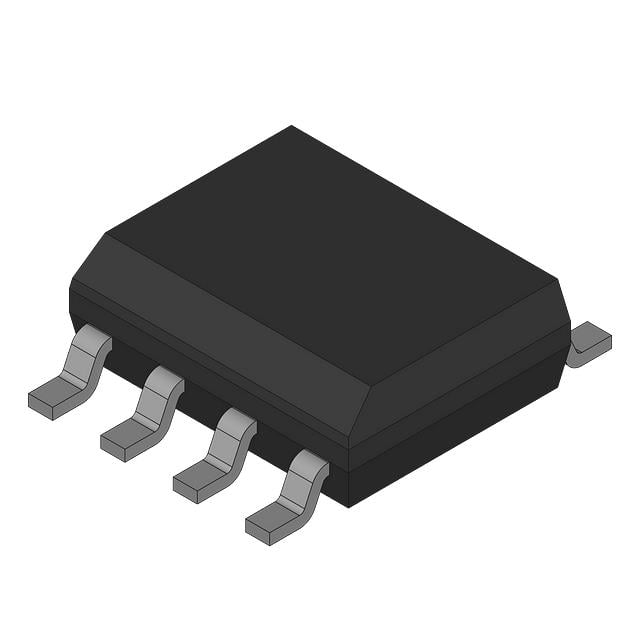
## Texas Instruments LM239DR Overview
The Texas Instruments LM239DR is a quad comparator IC that offers low-power, high-performance operation for a wide range of analog signal processing applications. It features four independent precision comparators, designed for high-speed response, low offset voltage, and wide voltage operation, making it ideal for use in systems requiring fast switching and high accuracy.
## Key Features
1. Comparator Configuration:
* The LM239DR includes four independent comparators, providing flexibility in a variety of signal processing circuits.
* Open-collector output: The device offers open-collector outputs, which can be used with a pull-up resistor, making it suitable for interfacing with logic circuits and various other systems.
2. Low Power Consumption:
* It operates with a low supply current of 1.3 mA (per comparator) at 25°C, making it ideal for power-sensitive applications.
* The LM239DR is designed for low-power operation, ensuring minimal energy consumption when integrated into battery-operated or energy-efficient systems.
3. Wide Supply Voltage Range:
* The IC operates over a wide supply voltage range of 2V to 36V (or ±1V to ±18V), making it suitable for a wide array of applications, from low-voltage systems to higher-voltage power supplies.
4. Hysteresis Capability:
* The comparators in the LM239DR can be configured with hysteresis, providing stability in noisy environments and preventing unwanted oscillations in the output signal.
5. Output Characteristics:
* Open-collector output allows for flexible interface options, including TTL, CMOS, and other logic family circuits.
* The saturation voltage of the output is low, ensuring efficient operation when driving other logic gates or systems.
6. Speed and Response:
* The LM239DR is capable of fast response times, with a propagation delay of 300 ns (typical). This high-speed response ensures that the comparators can accurately track fast-changing input signals, making them suitable for high-speed switching applications.
7. Temperature Stability:
* With a wide operating temperature range of -40°C to +125°C, the LM239DR is suitable for use in industrial, automotive, and other environments with wide temperature variations.
* The device exhibits low input offset voltage (typically 3 mV), contributing to its precision in analog signal processing.
## Performance Specifications
1. Input Voltage Range:
* The input voltage range is from 0V to Vcc-2V, ensuring that the comparators can accept a wide range of signal inputs while maintaining reliability in operation.
2. Supply Current:
* The supply current for each comparator is typically 1.3 mA at 25°C, with a maximum of 2 mA, providing energy-efficient performance in systems with low-power requirements.
3. Propagation Delay:
* Propagation delay is typically 300 ns, which is suitable for most analog and digital signal processing applications that require quick transitions.
4. Output Saturation Voltage:
* The output saturation voltage is typically 0.4V (at 4 mA), ensuring proper logic level interfacing with external circuits.
5. Input Offset Voltage:
* The input offset voltage is typically 3 mV at 25°C, which helps maintain the precision of the comparator’s output when handling small voltage differences.
6. Input Bias Current:
* The typical input bias current is 25 nA, contributing to the low offset voltage and ensuring high-precision operation in low-current applications.
7. Crossover Voltage:
* The crossover voltage is typically 1V between input pins, indicating the voltage threshold at which the comparator switches states from low to high or vice versa.
8. Common-Mode Rejection Ratio (CMRR):
* The CMRR is typically 70 dB, ensuring that the comparator can reject common-mode signals, making it suitable for noisy environments.
## Package and Form Factor
* Package Type: The LM239DR is housed in a SOIC-14 package, making it suitable for surface-mount applications in compact electronic designs.
* Pin Count: The device features 14 pins, with each comparator taking up 2 pins for its input and output, making it easy to integrate into PCB layouts with limited space.
## Applications
1. Analog Signal Processing: Used in signal comparison circuits for detecting thresholds, such as in window comparators, voltage monitoring, and waveform shaping.
2. Zero-Crossing Detectors: Commonly used in zero-crossing detection circuits, which are essential in AC signal processing and phase-locked loops (PLLs).
3. Oscillators: The LM239DR is often used in oscillator circuits, where precise switching behavior is critical to generating stable frequency signals.
4. Temperature Sensing: Due to its low offset voltage and high-speed switching, it is ideal for temperature sensing applications, where rapid voltage comparisons are needed to trigger responses.
5. Automotive and Industrial Applications: The wide voltage range and temperature tolerance make it suitable for industrial control systems, automotive electronics, and systems requiring high reliability.
6. Pulse Width Modulation (PWM): Often used in PWM signal generation for motor control, LED dimming, and power regulation.
## Conclusion
The Texas Instruments LM239DR is a versatile, low-power, high-precision quad comparator, offering excellent performance in both analog and digital systems. With its wide operating voltage range, fast switching times, and low input offset voltage, it is well-suited for use in a variety of applications, including signal processing, power management, and control systems. Whether in industrial, automotive, or consumer electronics, the LM239DR provides reliable and efficient performance for precise voltage comparison and signal conditioning tasks.