Introduction to Texas Instruments LM358AD
The Texas Instruments LM358AD is a dual operational amplifier that is widely used in various analog applications due to its versatility, reliability, and cost-effectiveness. This op-amp is designed for a broad range of applications, including signal conditioning, filtering, and amplification in both consumer and industrial electronics. With its favorable specifications and robust performance characteristics, the LM358AD is a popular choice among engineers and designers.
Key Specifications
1. Number of Amplifiers: The LM358AD contains two independent, high-gain, frequency-compensated operational amplifiers in a single package. This dual configuration allows for efficient use of board space and simplifies circuit design.
2. Supply Voltage Range: The device operates over a wide supply voltage range from 3V to 32V (single supply) or ±1.5V to ±16V (dual supply). This flexibility enables the LM358AD to be used in various applications with different power supply configurations.
3. Input Offset Voltage: The typical input offset voltage is around 2 mV, which ensures accurate signal amplification with minimal error. This low offset voltage is crucial for precision applications where accuracy is paramount.
4. Gain Bandwidth Product: The LM358AD has a gain bandwidth product of approximately 1 MHz, allowing it to amplify signals effectively across a range of frequencies. This characteristic makes it suitable for audio applications as well as other signal processing tasks.
5. Output Current: The output stage of the LM358AD can deliver up to 50 mA of output current per amplifier, making it capable of driving moderate loads without significant distortion or degradation of performance.
6. Common-Mode Rejection Ratio (CMRR): The CMRR is typically greater than 100 dB, which indicates the op-amp's ability to reject common-mode signals and improve the accuracy of differential measurements.
7. Power Supply Rejection Ratio (PSRR): The PSRR for the LM358AD is typically around 100 dB, ensuring that variations in supply voltage have minimal impact on the output voltage stability.
8. Input Impedance: The input impedance is very high, typically around 10^6 ohms (1 MΩ), allowing it to interface seamlessly with high-impedance sources without loading them down.
9. Temperature Range: The operational temperature range for the LM358AD extends from -40°C to +125°C, making it suitable for use in automotive and industrial environments where temperature extremes are common.
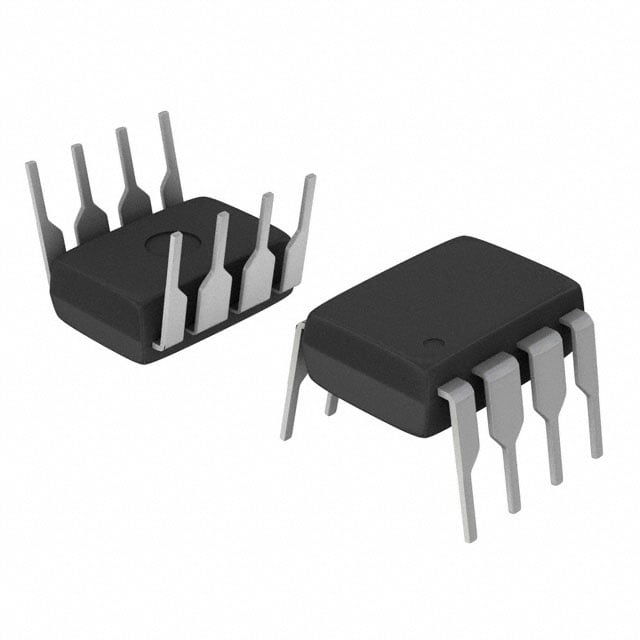
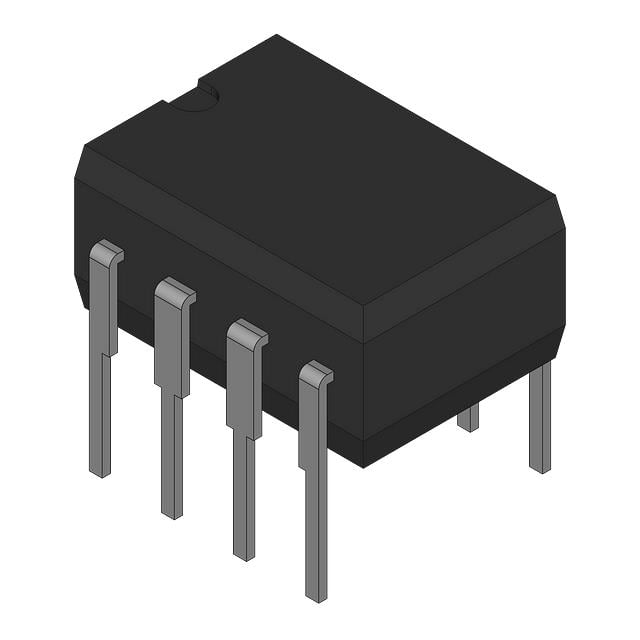
10. Package Options: The LM358AD is available in several package types, including DIP-8 and SOIC-8, providing options for different PCB layouts and assembly processes.
Applications
The versatility of the LM358AD makes it suitable for a wide range of applications:
- Signal Conditioning: Used in sensor interfaces where signals need amplification or filtering before further processing.
- Audio Processing: Commonly found in audio amplifiers and mixers where low noise and high fidelity are required.
- Active Filters: Employed in designing active filter circuits due to its ability to provide precise gain and phase characteristics.
- Comparator Circuits: Can be configured as a comparator in various systems requiring signal level detection.
- Voltage Followers/Buffers: Utilized as a buffer amplifier to isolate different stages within electronic circuits while maintaining signal integrity.
Conclusion
In conclusion, the Texas Instruments LM358AD is a highly versatile dual operational amplifier that offers excellent performance characteristics suitable for various analog applications. Its wide supply voltage range, low input offset voltage, high gain bandwidth product, and robust temperature tolerance make it an ideal choice for engineers looking to implement reliable signal processing solutions across multiple domains. Whether used in consumer electronics or industrial systems, the LM358AD provides dependable performance while simplifying design complexity through its dual-channel architecture and extensive application possibilities. By integrating this op-amp into their designs, developers can achieve high-quality amplification and signal conditioning tailored to their specific needs.