The LM201AD from STMicroelectronics is a high-precision, low-noise operational amplifier designed for general-purpose and instrumentation applications requiring accurate analog signal amplification. Classified as a monolithic bipolar operational amplifier, the LM201AD exhibits low offset voltage, high open-loop gain, and wide bandwidth characteristics, making it suitable for applications where both DC accuracy and moderate-speed response are required. The device operates reliably over standard supply voltage ranges and is optimized for stability in single- and dual-supply configurations. Its internal design emphasizes minimal input offset voltage drift, low input bias currents, and low total harmonic distortion, enabling precise signal conditioning in a variety of analog systems.
## Device Function and Technology Positioning
The LM201AD is a bipolar junction transistor-based operational amplifier with a standard pinout configuration. It is engineered to provide high-precision amplification of differential input signals with a significant common-mode rejection ratio. The device functions as a general-purpose amplifier suitable for active filtering, signal buffering, and analog computation tasks. Its architecture incorporates matched differential input pairs and internal frequency compensation to provide stable operation without requiring external compensation for unity-gain configurations. The device supports both single-supply and dual-supply operation, typically between ±3 V and ±15 V or equivalent single-supply ranges, allowing versatility in system design.
## Electrical Characteristics
Key electrical parameters of the LM201AD include an input offset voltage specified typically at 1 mV with a maximum limit of 5 mV. Input bias currents are specified as low as 20 nA, enabling the device to interface with high-impedance sources while minimizing voltage errors due to input currents. Input offset voltage drift is specified to be within 5 μV/°C, ensuring stability across a standard operating temperature range.
The open-loop voltage gain of the LM201AD is typically 200 V/mV at low frequencies, with a minimum guaranteed value of 100 V/mV, providing sufficient amplification for precision analog applications. The common-mode rejection ratio (CMRR) is typically 90 dB, which ensures the suppression of signals common to both input terminals, preserving differential signal integrity. Power supply rejection ratio (PSRR) is specified at 86 dB, indicating effective isolation of the output from supply voltage variations.
Input resistance is specified in the megaohm range, ensuring minimal loading of the signal source. Output resistance is low, typically under 100 Ω, allowing the amplifier to drive moderate loads directly without significant signal degradation. The output voltage swing approaches within 1–2 V of the supply rails under moderate load conditions, maintaining linearity over a wide dynamic range.
## Dynamic Performance
The LM201AD is characterized by a unity-gain bandwidth of approximately 1 MHz, with a typical slew rate of 0.5 V/μs, providing moderate-speed signal tracking suitable for low-frequency analog signal processing. Phase margin is sufficient to ensure stability in standard feedback configurations. The device exhibits low total harmonic distortion and low noise characteristics, with equivalent input noise voltage specified at 40 nV/√Hz at 1 kHz, making it suitable for low-level signal amplification in measurement systems.
The amplifier is internally frequency compensated, which simplifies circuit design and ensures predictable performance in single-stage feedback configurations. Settling time to 0.1% of the final value is typically 2 μs for a 1 V step, highlighting its capability in moderate-speed precision applications.
## Power Consumption and Thermal Considerations
The LM201AD draws a quiescent current of approximately 1.2 mA per amplifier, which is consistent with standard bipolar precision operational amplifiers. Power dissipation scales with supply voltage and load conditions, and thermal resistance to the ambient is specified for standard packages to ensure safe operation under maximum ratings. The device can tolerate junction temperatures up to 150°C, with thermal derating recommendations provided in the datasheet for continuous operation at elevated temperatures.
## Protection and Reliability Features
The LM201AD is designed with internal short-circuit protection to limit output current under fault conditions. Input stage protection includes limitations on differential input voltage to prevent junction breakdown. While the device does not include rail-to-rail output, it maintains reliable performance within the specified output swing range under nominal supply conditions.
The device is specified for operation across a commercial and industrial temperature range, typically from 0°C to 70°C for commercial grades and −40°C to 85°C for industrial variants. Electrical parameters, including offset voltage and bias current, are characterized across the temperature range to ensure predictable performance in environmental extremes.
## Application Domains
The LM201AD is widely used in precision analog signal conditioning applications such as sensor interfaces, low-noise amplification of voltage signals, and analog computational circuits. It is suitable for active filtering, integrators, summing amplifiers, and instrumentation amplifiers where DC accuracy and low input bias currents are critical. The device also finds application in data acquisition systems, control systems, and audio preamplifiers where low-noise, low-offset amplification is required.
In instrumentation and measurement systems, its high open-loop gain and CMRR enable accurate amplification of small differential signals. The device is also suitable for driving ADC inputs, providing a buffered low-impedance source to precision converters.
## Packaging and Layout Considerations
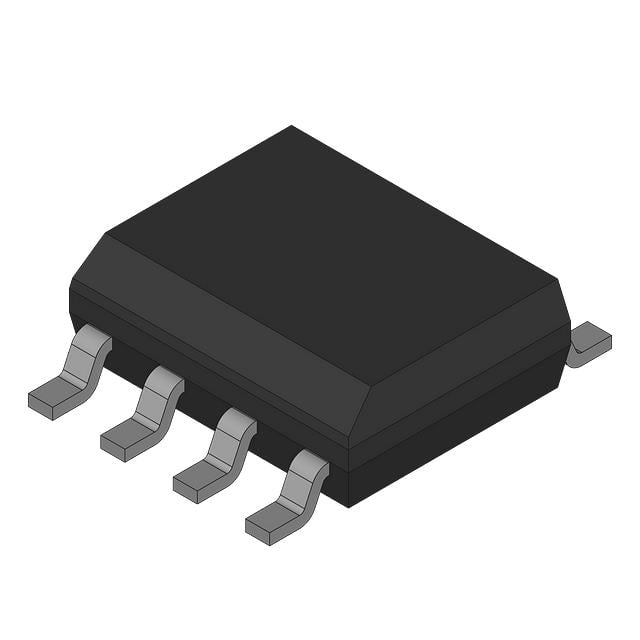
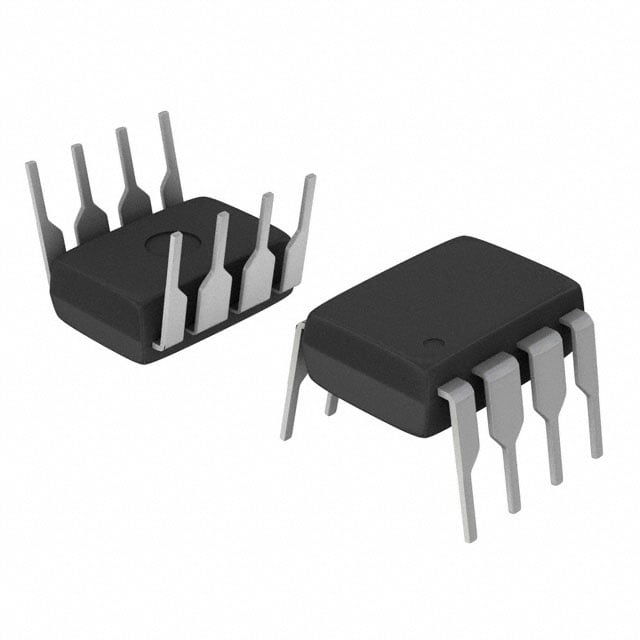
The LM201AD is typically available in standard 8-pin dual in-line packages and small-outline packages, compatible with surface-mount and through-hole technologies. Careful layout is required for high-impedance applications to minimize leakage currents and parasitic capacitance. Decoupling capacitors close to the supply pins are recommended to maintain stability and minimize supply-induced noise.
Proper routing of input traces, avoidance of long high-impedance traces, and grounding strategies are critical in maximizing precision performance, especially when interfacing with sensors or other high-impedance sources.
## Conclusion
The LM201AD is a precision, low-noise bipolar operational amplifier designed for applications requiring high open-loop gain, low input offset voltage, and low input bias currents. Its internally compensated architecture, moderate-speed performance, and wide supply voltage range enable use in analog signal conditioning, sensor interfaces, and general-purpose precision amplification. By combining low noise, high accuracy, and robust electrical performance, the LM201AD provides designers with a reliable component for precision analog circuits in commercial and industrial applications.