The Fairchild Semiconductor LM201ADG is a precision single-channel operational amplifier in the LM101A/LM201A family of externally compensated high-performance operational amplifiers. The device is designed for applications that require low input offset, low bias current, wide supply voltage range, and flexible frequency compensation. Unlike internally compensated operational amplifiers, the LM201ADG allows the designer to select external compensation components according to the specific performance requirements of the application, enabling optimization of bandwidth, stability, and transient response.
## Device Function and Product Positioning
The LM201ADG is a general-purpose precision operational amplifier. It is a single operational amplifier implemented in an 8-pin SOIC package and is intended for linear signal processing applications requiring high open-loop gain and accurate DC performance. The device occupies a position between the higher-grade LM101A and the commercial LM301A, offering precision performance suitable for industrial and instrumentation environments.
A distinguishing feature of the LM201ADG is its non-compensated architecture. External frequency compensation permits designers to tailor the amplifier's dynamic response to the needs of a particular circuit, providing higher slew rates and wider bandwidth under optimized conditions. The amplifier incorporates internal short-circuit protection, Class AB output circuitry, offset-voltage null capability, and protection against latch-up under adverse common-mode conditions, making it suitable for precision analog signal conditioning.
## Confirmed Electrical Characteristics
The LM201ADG supports dual-supply operation over a wide voltage range, typically from ±5 V to ±22 V, corresponding to a total supply span of 10 V to 44 V. Input offset voltage is typically around 700 μV, with tighter limits achievable through external nulling. Input bias current is specified in the tens of nanoamperes, typically around 30 nA, and input offset current is also in the nanoampere range with low drift across temperature.
Supply current is approximately 1.8 mA under normal conditions, providing low power dissipation while maintaining precision performance. The amplifier has a gain-bandwidth product of approximately 1 MHz, with bandwidth and slew rate dependent on external compensation. When properly compensated, slew rates up to 10 V/μs are achievable. Common-mode rejection ratio is specified around 80 dB, and the amplifier supports a wide common-mode input voltage range and differential input voltage range. The device operates over a temperature range from –25°C to +85°C.
## Internal Architecture and Compensation Strategy
The LM201ADG utilizes a bipolar operational amplifier architecture with a differential input stage, intermediate gain stages, and a Class AB output stage. It is externally compensated, allowing designers to select compensation capacitors for desired closed-loop gain and stability. This flexibility enables optimization of bandwidth, phase margin, and transient response for specific applications, an advantage in precision analog systems where fixed-compensation amplifiers may not provide adequate performance.
## Input Stage Characteristics
The input stage is optimized for low offset voltage and low bias current, critical in high-impedance circuits to minimize measurement errors. The amplifier maintains stable operation across the full common-mode input voltage range without latch-up, improving robustness. Offset-voltage null terminals allow external trimming of residual input offset, supporting high-precision DC applications.
## Output Stage and Drive Capability
The Class AB output stage provides linear operation and low distortion. Short-circuit protection is included, safeguarding the device against overload. Output current capability is sufficient to drive analog loads within linear operating limits. Properly selected external compensation ensures stability across the specified operating conditions.
## Frequency Response and Dynamic Performance
External compensation allows designers to optimize frequency response. The amplifier can be configured for unity-gain stability or higher-speed operation at elevated closed-loop gains. Gain-bandwidth product is approximately 1 MHz, and optimized compensation can achieve slew rates approaching 10 V/μs. The device is suitable for precision analog amplification, active filtering, integrators, summing amplifiers, and signal conditioning.
Drift characteristics are predictable, ensuring stable operation across the specified temperature range, supporting long-term precision measurement applications.
## Package Characteristics
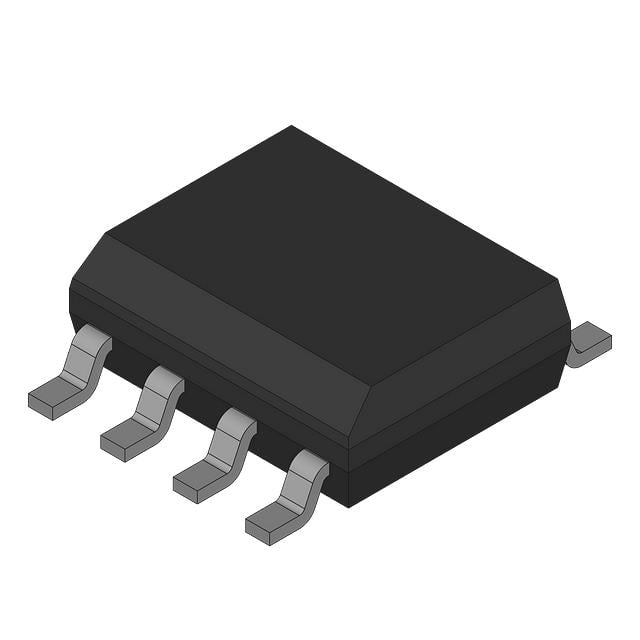
The LM201ADG is supplied in an 8-pin SOIC package for surface-mount assembly, providing compact implementation while maintaining compatibility with standard operational amplifier PCB layouts. The device contains a single operational amplifier channel intended for industrial and commercial electronic equipment requiring reliable analog signal processing.
## Typical Application Areas
The LM201ADG is used in precision analog applications where its operational amplifier functionality is directly relevant. Typical applications include instrumentation amplifiers, active filters, voltage followers, integrators, summing amplifiers, signal conditioning circuits, precision measurement systems, servo amplifiers, and industrial control electronics. Its externally optimized frequency compensation is particularly advantageous where designers require precise control over stability and transient response.
## Conclusion
The LM201ADG is a precision single-channel, externally compensated operational amplifier that combines low input offset voltage, low input bias current, wide supply voltage capability, low power consumption, short-circuit protection, and flexible compensation architecture. Confirmed specifications include operation from ±5 V to ±22 V supplies, approximately 1 MHz gain-bandwidth product, slew rates up to 10 V/μs with appropriate compensation, supply current around 1.8 mA, and operation from –25°C to +85°C. Its externally compensated design makes it particularly valuable in precision analog systems requiring optimized frequency response, high accuracy, and stable long-term performance.