Q1: What is the STMicroelectronics L293DD013TR and its primary function?
A: The STMicroelectronics L293DD013TR is a quadruple half-H driver IC designed to control inductive loads such as DC motors, stepper motors, relays, and solenoids. It integrates high-current output stages with logic-level inputs, allowing low-power control circuitry to safely and efficiently drive higher-power loads.
Q2: What types of motors can be driven by the STMicroelectronics L293DD013TR?
A: The STMicroelectronics L293DD013TR is suitable for driving DC motors and bipolar stepper motors. By configuring its four half-H drivers appropriately, it can control motor direction, braking, and speed (when combined with PWM control).
Q3: What is the typical output current capability of the STMicroelectronics L293DD013TR?
A: The STMicroelectronics L293DD013TR can typically deliver up to 600 mA of continuous output current per channel, with higher peak currents supported for short durations, making it suitable for small to medium-sized motors and inductive loads.
Q4: How does the STMicroelectronics L293DD013TR protect against inductive voltage spikes?
A: The STMicroelectronics L293DD013TR includes integrated clamp diodes that protect the internal output transistors from voltage transients generated by inductive loads. This reduces the need for external flyback diodes and improves overall circuit robustness.
Q5: What supply voltages are supported by the STMicroelectronics L293DD013TR?
A: The STMicroelectronics L293DD013TR supports a dual-supply configuration, with a logic supply voltage for the control inputs and a separate motor supply voltage for the output stages. This separation allows compatibility with standard logic levels while driving higher-voltage loads.
Q6: Can the STMicroelectronics L293DD013TR interface directly with microcontrollers?
A: Yes, the STMicroelectronics L293DD013TR is designed to interface directly with microcontrollers and digital logic devices. Its TTL- and CMOS-compatible inputs allow direct connection without additional level-shifting circuitry in most applications.
Q7: How is motor direction controlled using the STMicroelectronics L293DD013TR?
A: Motor direction is controlled by applying appropriate logic levels to the input pins of the STMicroelectronics L293DD013TR. By changing the input logic states, the polarity of the voltage applied to the motor terminals is reversed, causing the motor to rotate in the opposite direction.
Q8: Does the STMicroelectronics L293DD013TR support PWM speed control?
A: Yes, the STMicroelectronics L293DD013TR supports PWM-based speed control. By applying a PWM signal to the enable or input pins, users can modulate the effective voltage applied to the motor, enabling precise speed control.
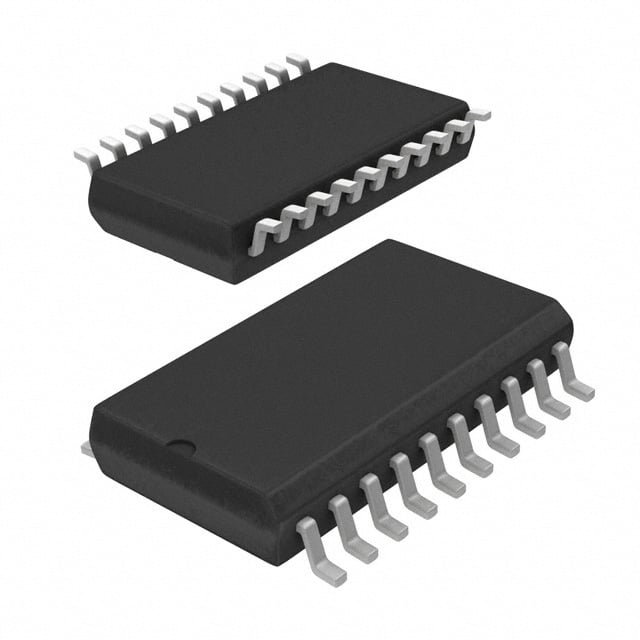
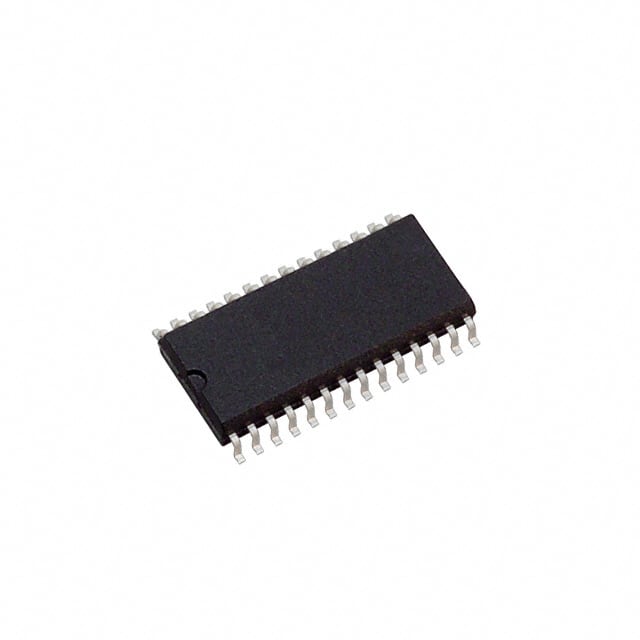
Q9: What package type is used for the STMicroelectronics L293DD013TR?
A: The STMicroelectronics L293DD013TR is supplied in a compact surface-mount package optimized for automated assembly. The package design provides good thermal performance while minimizing board space.
Q10: How does the enable pin function in the STMicroelectronics L293DD013TR?
A: The enable pins in the STMicroelectronics L293DD013TR control whether the corresponding output drivers are active. When an enable pin is asserted, the outputs respond to input logic signals; when deasserted, the outputs are disabled, placing them in a high-impedance state.
Q11: What thermal considerations are important when using the STMicroelectronics L293DD013TR?
A: Proper PCB layout and thermal management are important for the STMicroelectronics L293DD013TR, especially when driving higher currents. Adequate copper area connected to the ground pins helps dissipate heat and maintain reliable operation.
Q12: Can the STMicroelectronics L293DD013TR drive multiple loads simultaneously?
A: Yes, the STMicroelectronics L293DD013TR contains four independent half-H drivers, allowing it to drive multiple loads at the same time or to be combined into full H-bridge configurations for motor control.
Q13: What happens to the outputs of the STMicroelectronics L293DD013TR during power-up or power-down?
A: During power-up and power-down, the STMicroelectronics L293DD013TR is designed to keep outputs in a defined state to prevent unintended motor movement. However, proper sequencing of logic and motor supplies is recommended for optimal system behavior.
Q14: Is the STMicroelectronics L293DD013TR suitable for relay driving applications?
A: Yes, the STMicroelectronics L293DD013TR is well suited for relay driving due to its ability to handle inductive loads and its integrated clamp diodes, which protect the device from relay coil back-EMF.
Q15: How does the STMicroelectronics L293DD013TR handle fault conditions?
A: While the STMicroelectronics L293DD013TR does not include advanced fault reporting, its internal design and protection diodes help safeguard the device against common fault conditions such as inductive transients and brief overcurrent events.
Q16: Can the STMicroelectronics L293DD013TR be used in battery-powered systems?
A: Yes, the STMicroelectronics L293DD013TR can be used in battery-powered applications, provided that the battery voltage falls within the supported motor supply range and sufficient current is available for the load.
Q17: What logic input characteristics does the STMicroelectronics L293DD013TR provide?
A: The STMicroelectronics L293DD013TR features logic inputs with defined threshold levels compatible with standard digital logic families, ensuring reliable switching and noise immunity in electrically noisy motor-control environments.
Q18: How does the STMicroelectronics L293DD013TR compare to discrete transistor H-bridge designs?
A: The STMicroelectronics L293DD013TR simplifies motor driver design by integrating multiple drivers, protection diodes, and logic interfacing into a single IC, reducing component count, PCB area, and design complexity compared to discrete solutions.
Q19: What PCB layout practices are recommended for the STMicroelectronics L293DD013TR?
A: For the STMicroelectronics L293DD013TR, it is recommended to use short, wide traces for motor currents, place decoupling capacitors close to the supply pins, and separate high-current paths from sensitive logic signals to minimize noise and voltage drops.
Q20: In what typical applications is the STMicroelectronics L293DD013TR commonly used?
A: The STMicroelectronics L293DD013TR is commonly used in robotics, small appliances, office equipment, industrial automation, and educational projects where reliable and flexible control of motors or inductive loads is required.