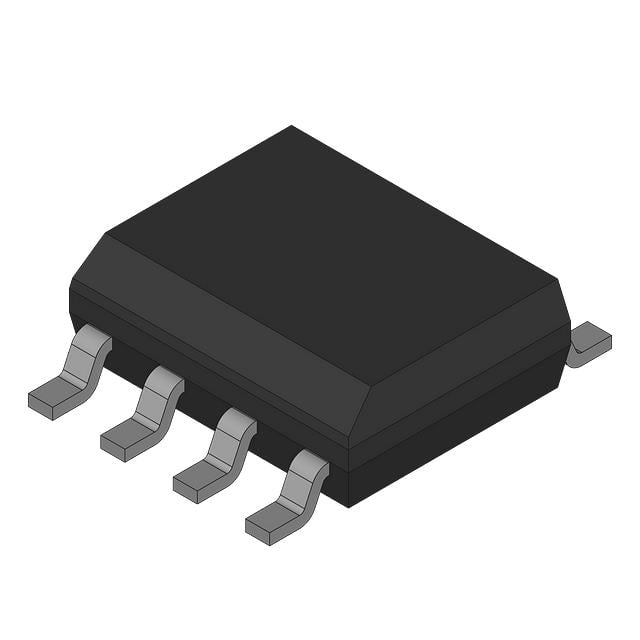
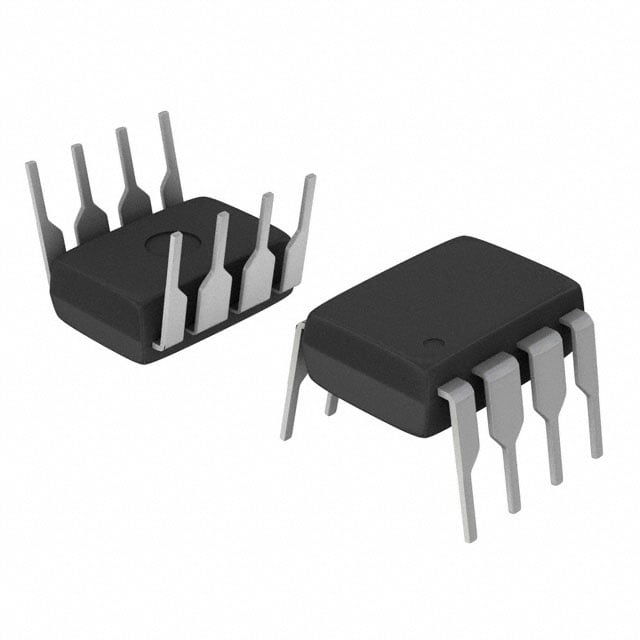
The STMicroelectronics LM2904WHYST is a dual low-power operational amplifier designed for general-purpose analog signal conditioning in industrial and automotive-grade environments. It is part of the LM2904 family, which provides two independent, internally frequency-compensated op-amps in a single monolithic device. The architecture is based on bipolar transistor technology optimized for low input offset voltage, wide supply voltage operation, and stable performance across extended temperature ranges. The LM2904WHYST variant is supplied in a specific automotive-qualified package and ordering configuration, intended for high-reliability applications requiring consistent analog performance under harsh environmental conditions.
## Device Function and Product Positioning
The LM2904WHYST is a dual operational amplifier intended for analog signal amplification, filtering, buffering, and mathematical operations such as summation and integration. Each amplifier within the device operates independently but shares a common power supply structure. The device is designed to operate from a single supply or dual supply configuration, with a wide allowable supply voltage range typically spanning from low-voltage systems up to standard industrial rails.
The product is positioned for cost-sensitive yet reliability-critical applications, particularly in automotive electronics, industrial control systems, and embedded signal processing circuits. The internal compensation network ensures unity-gain stability without external components, enabling straightforward deployment in a wide range of analog circuit topologies.
The “W” and “YST” suffixes indicate automotive-grade qualification and specific package/ordering configurations within STMicroelectronics’ product segmentation, typically associated with enhanced reliability screening and tape-and-reel supply format suitable for automated assembly processes.
## Electrical Characteristics and Confirmed Parameters
The LM2904WHYST operates over a supply voltage range from 3 V to 32 V for single-supply operation or ±1.5 V to ±16 V in dual-supply configuration. This wide operating range allows compatibility with battery-powered systems as well as standard 5 V and 12 V industrial rails.
The device exhibits a typical low quiescent current consumption of approximately 1 mA per amplifier, supporting low-power system designs. Input offset voltage is typically in the range of a few millivolts, with a maximum specification in the order of several millivolts depending on grade, ensuring adequate precision for general-purpose analog conditioning tasks.
Input bias current is typically in the tens of nanoampere range, allowing interfacing with moderately high impedance sensor sources. The input common-mode voltage range includes the negative supply rail and extends up to approximately VCC – 1.5 V, enabling operation in single-supply configurations without requiring level shifting in many applications.
The output voltage swing typically reaches close to both supply rails under light load conditions, with output saturation dependent on load resistance. Output current capability is sufficient for driving resistive loads and moderate capacitive loads, typically up to several tens of milliamperes.
The device features a gain bandwidth product in the vicinity of 1 MHz and a slew rate on the order of 0.3 V/µs, indicating suitability for low-frequency and medium-speed analog signal processing. The open-loop gain is high, typically exceeding 100 dB under low-frequency conditions, ensuring accurate closed-loop gain control in feedback configurations. The common-mode rejection ratio is typically above 70 dB, supporting rejection of supply or common-mode noise in sensor applications.
The device operates over an extended temperature range consistent with automotive-grade requirements, typically from –40°C to +125°C, ensuring stable operation in harsh environmental conditions.
## Functional Architecture
The LM2904WHYST contains two independent operational amplifiers sharing a common bias and power structure. Each amplifier consists of a differential input stage, intermediate gain stage, and output stage. The internal compensation network ensures stability in unity-gain configurations without the need for external frequency compensation components.
The input stage is designed using bipolar transistor differential pairs optimized for low offset and low drift. The intermediate gain stage provides high open-loop gain, while the output stage is designed to source and sink current sufficient for typical analog loads while maintaining linear operation within the specified output swing limits.
Internal bias circuitry ensures stable operation over supply voltage and temperature variations. The architecture includes protection mechanisms such as short-circuit protection at the output stage and thermal limitation behavior to prevent device damage under fault conditions.
## Input and Output Interface
Each operational amplifier provides differential input terminals consisting of inverting and non-inverting inputs. The high input impedance allows direct connection to sensors and signal sources without significant loading effects.
The output stage provides a single-ended voltage output capable of driving resistive and moderately capacitive loads. The output behavior is linear within the defined output voltage swing limits and degrades into saturation near supply rails depending on load conditions.
The device does not require external control signals for operation, functioning continuously once powered. Standard op-amp configurations such as voltage followers, inverting amplifiers, non-inverting amplifiers, active filters, and summing amplifiers are directly supported.
## Thermal and Reliability Considerations
The LM2904WHYST is provided in automotive-qualified packages designed for high thermal stability and mechanical robustness. The device supports operation across extended temperature ranges, ensuring predictable electrical behavior under thermal stress.
Power dissipation is relatively low due to the low quiescent current design, but thermal considerations remain relevant in high-supply-voltage or high-load conditions. The device includes internal protection against output short-circuit conditions, limiting current to prevent damage.
Long-term reliability is supported by mature bipolar semiconductor process technology and automotive-grade qualification procedures, ensuring stable operation over extended lifecycle requirements typical of automotive and industrial systems.
## Typical Applications
The LM2904WHYST is widely used in automotive sensor signal conditioning, including temperature, pressure, and position sensing interfaces. It is also used in industrial control systems for analog filtering, signal amplification, and buffering of measurement signals.
Additional applications include battery monitoring systems, low-frequency active filters, instrumentation amplifiers, and general-purpose analog signal processing in embedded systems. Its ability to operate from a single supply and its tolerance to wide voltage ranges make it suitable for mixed-voltage environments commonly found in automotive electronic control units.
## Summary
The STMicroelectronics LM2904WHYST is a dual general-purpose operational amplifier designed for automotive-grade and industrial applications. It provides wide supply voltage operation, low power consumption, internally compensated stable operation, and moderate precision analog performance. With dual amplifier integration, high input impedance, rail-to-rail-adjacent output behavior, and extended temperature capability, it is suitable for robust analog signal conditioning in automotive electronics, industrial control systems, and embedded measurement applications requiring reliable dual op-amp functionality in a compact form factor.