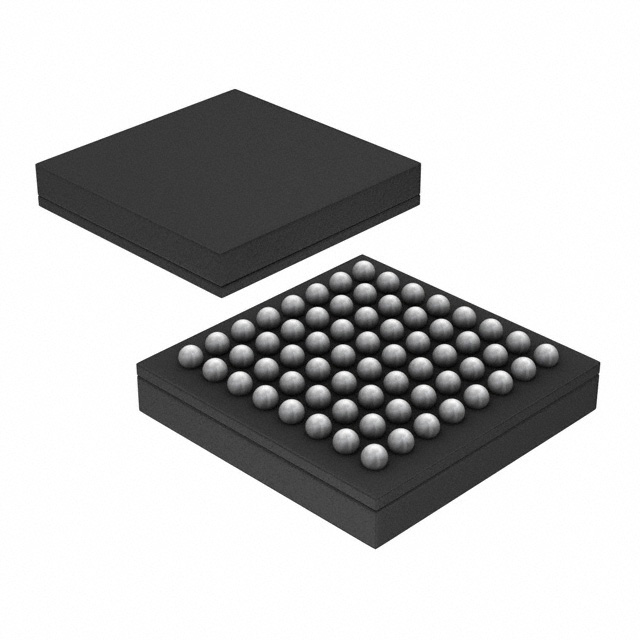
Overview of Intel 5M80ZE64I5N
The Intel 5M80ZE64I5N is a member of the Intel MAX 10 FPGA family, designed for a wide range of applications that require high performance, flexibility, and low power consumption. This FPGA (Field Programmable Gate Array) is particularly well-suited for applications in communications, automotive, industrial control, and consumer electronics. The 5M80ZE64I5N offers a combination of programmable logic, embedded memory, and digital signal processing capabilities, making it a versatile choice for engineers.
Key Specifications
- Logic Elements: The 5M80ZE64I5N features 80,000 logic elements (LEs), providing ample resources for implementing complex digital designs. Each logic element consists of a lookup table (LUT) and a flip-flop, allowing for efficient logic implementation.
- Embedded Memory: The device includes 4.5 Mbits of embedded memory, which can be configured as RAM or ROM. This memory can be used for data storage, buffering, and other applications requiring fast access to data.
- Digital Signal Processing (DSP): The FPGA is equipped with 36 DSP blocks, each capable of performing complex arithmetic operations. These blocks are optimized for high-speed signal processing tasks, making the 5M80ZE64I5N suitable for applications such as audio and video processing.
- I/O Pins: The device supports up to 64 I/O pins, which can be configured for various functions, including general-purpose I/O, high-speed serial communication, and other interfaces. The I/O pins support various voltage levels, making the FPGA adaptable to different system requirements.
- Power Supply: The 5M80ZE64I5N operates with a core voltage of 1.2 V, and the I/O voltage can be configured between 1.2 V and 3.3 V. This flexibility allows for compatibility with a wide range of external components and systems.
- Package Type: The device is available in a 64-pin TQFP (Thin Quad Flat Package), which provides a compact footprint suitable for space-constrained applications. The package design also aids in thermal management.
- Operating Temperature Range: The 5M80ZE64I5N is rated for operation over a temperature range of -40°C to +100°C, making it suitable for industrial and automotive applications that may experience extreme environmental conditions.
- Configuration: The FPGA can be configured using various methods, including JTAG, passive serial, and active serial modes. This flexibility allows for easy integration into existing designs and systems.
Applications
The Intel 5M80ZE64I5N is ideal for a variety of applications, including:
- Communications: The FPGA can be used in networking equipment, enabling high-speed data processing and protocol handling.
- Automotive Systems: Its robust performance and reliability make it suitable for automotive applications, such as advanced driver-assistance systems (ADAS) and infotainment systems.
- Industrial Control: The device can be employed in industrial automation systems, providing flexible control and monitoring capabilities for machinery and processes.
- Consumer Electronics: The 5M80ZE64I5N is applicable in consumer devices, such as smart home products and multimedia systems, where programmable logic is essential for functionality.
Development Support
Intel provides extensive development support for the 5M80ZE64I5N, including:
- Development Kits: Evaluation boards and development kits are available to facilitate testing and prototyping, allowing engineers to assess the performance of the FPGA in real-world applications.
- Software Tools: Intel offers a range of software tools, including the Intel Quartus Prime design software, which provides a comprehensive environment for FPGA design, simulation, and programming.
- Documentation and Community Support: Comprehensive documentation, application notes, and community forums are available to help engineers leverage the full capabilities of the 5M80ZE64I5N.
In summary, the Intel 5M80ZE64I5N is a versatile and high-performance FPGA that combines a robust feature set with low power consumption, making it an excellent choice for a wide range of applications. Its extensive development support further enhances its usability for engineers and developers in the field.