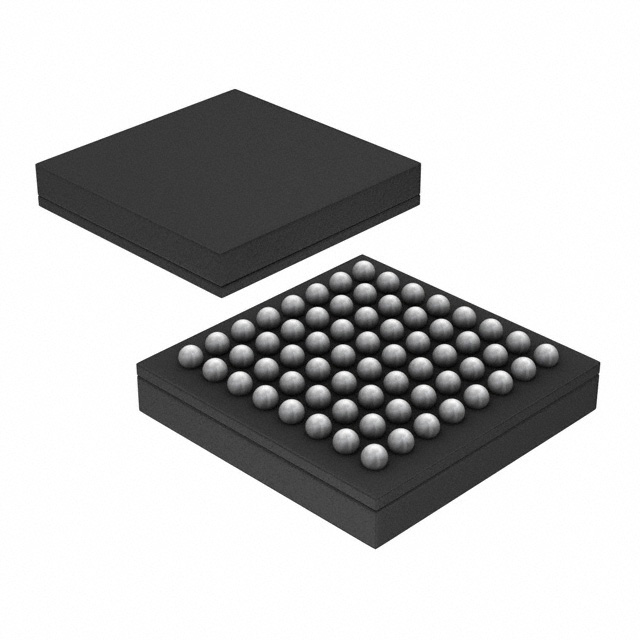
Q1: What is the Intel 5M80ZE64C5N?
A1: The Intel 5M80ZE64C5N is a member of the MAX V family of FPGAs, designed for low power consumption and small to medium logic density applications. It offers programmable logic resources for various embedded systems, communications, and control applications.
Q2: What is the logic capacity of the Intel 5M80ZE64C5N?
A2: The Intel 5M80ZE64C5N provides 80,000 logic elements, allowing users to implement complex logic designs while maintaining a low power footprint.
Q3: How many I/O pins are available on the Intel 5M80ZE64C5N?
A3: The Intel 5M80ZE64C5N is housed in a 64-pin package, providing a compact but efficient number of I/O pins for a variety of embedded and communication applications.
Q4: What is the maximum clock speed of the Intel 5M80ZE64C5N?
A4: The Intel 5M80ZE64C5N supports a maximum clock frequency of up to 100 MHz, suitable for medium-speed digital signal processing and control functions.
Q5: What is the package type of the Intel 5M80ZE64C5N?
A5: The Intel 5M80ZE64C5N is packaged in a 64-pin QFN (Quad Flat No-lead) package, offering a small form factor for space-constrained applications.
Q6: What is the operating voltage range of the Intel 5M80ZE64C5N?
A6: The Intel 5M80ZE64C5N operates with a supply voltage range of 1.8V to 3.3V, making it compatible with a variety of low-voltage logic systems.
Q7: What is the temperature range of the Intel 5M80ZE64C5N?
A7: The Intel 5M80ZE64C5N operates within an industrial temperature range of -40°C to +100°C, making it suitable for applications in harsh environments.
Q8: Does the Intel 5M80ZE64C5N include embedded memory?
A8: Yes, the Intel 5M80ZE64C5N includes embedded RAM blocks, enabling users to implement internal memory for buffering, caching, or small data storage applications.
Q9: Can the Intel 5M80ZE64C5N be used in low-power applications?
A9: Yes, the Intel 5M80ZE64C5N is designed with low power consumption in mind, offering efficient logic processing for power-sensitive applications such as portable devices and battery-powered systems.
Q10: Does the Intel 5M80ZE64C5N support high-speed communication interfaces?
A10: Yes, the Intel 5M80ZE64C5N supports various high-speed interfaces like SPI, I2C, and UART, making it suitable for applications that require fast communication with external components.
Q11: What kind of logic functions can be implemented with the Intel 5M80ZE64C5N?
A11: The Intel 5M80ZE64C5N is capable of implementing various digital logic functions such as state machines, signal processing algorithms, custom control systems, and more.
Q12: Can the Intel 5M80ZE64C5N be used in automotive applications?
A12: Yes, the Intel 5M80ZE64C5N is suitable for automotive applications due to its wide operating temperature range and reliable performance in challenging environments.
Q13: How does the Intel 5M80ZE64C5N support system development?
A13: The Intel 5M80ZE64C5N is supported by Intel's Quartus Prime software, which provides design entry, simulation, and programming tools for creating custom FPGA designs.
Q14: What are the I/O voltage standards supported by the Intel 5M80ZE64C5N?
A14: The Intel 5M80ZE64C5N supports a wide range of I/O voltage standards, including LVCMOS, LVTTL, and other common interface levels, ensuring compatibility with various logic families.
Q15: Does the Intel 5M80ZE64C5N have built-in digital signal processing (DSP) capabilities?
A15: While the Intel 5M80ZE64C5N is not specifically designed for high-performance DSP, it can still handle moderate DSP tasks like filtering, modulation, and simple data transformations using its configurable logic elements.
Q16: Can the Intel 5M80ZE64C5N be used for signal processing applications?
A16: Yes, the Intel 5M80ZE64C5N can be used in signal processing applications where lower-density FPGAs are required for handling tasks such as audio or video processing, filtering, and data conversion.
Q17: How does the Intel 5M80ZE64C5N handle power management?
A17: The Intel 5M80ZE64C5N is designed to operate with low power consumption and offers multiple power-saving features, including power-down modes, making it suitable for energy-efficient designs.
Q18: Is the Intel 5M80ZE64C5N suitable for industrial automation systems?
A18: Yes, the Intel 5M80ZE64C5N is well-suited for industrial automation applications, thanks to its reliable performance, wide temperature range, and the ability to implement custom control logic.
Q19: What are the digital logic resources in the Intel 5M80ZE64C5N?
A19: The Intel 5M80ZE64C5N features configurable logic blocks (CLBs), multiplexers, and other digital resources, allowing designers to implement custom logic circuits for various applications.
Q20: Can the Intel 5M80ZE64C5N be used in communication systems?
A20: Yes, the Intel 5M80ZE64C5N is suitable for communication systems that require moderate-speed processing and can be used for tasks like protocol conversion, signal encoding, and decoding, among other functions.