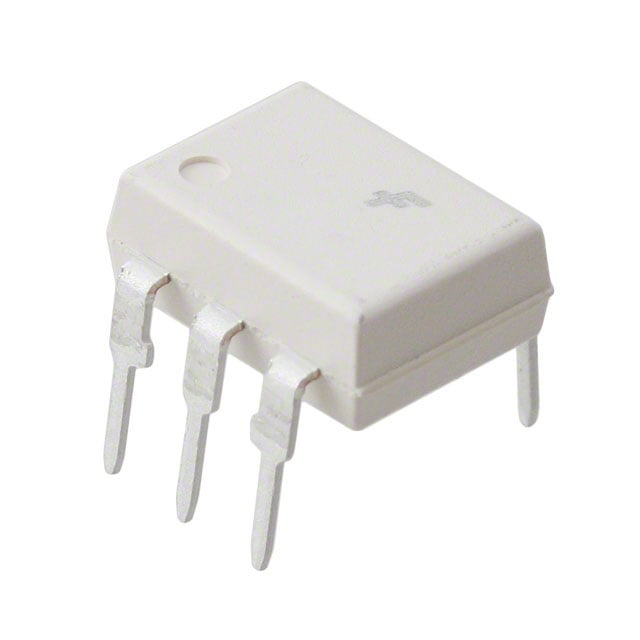
The H11F1TVM is an optocoupler (also known as an opto-isolator) manufactured by Fairchild Semiconductor, specifically designed for applications requiring electrical isolation between input and output circuits. This device integrates a light-emitting diode (LED) and a phototransistor in a single package, providing high reliability and performance in various electronic systems.
## Key Features
- High Isolation Voltage: The H11F1TVM provides excellent isolation between the input and output, making it suitable for high-voltage applications.
- High Speed: Fast switching speeds ensure that the optocoupler can operate efficiently in high-frequency applications.
- Low Input Current: The device requires minimal input current, which improves energy efficiency and reduces power consumption.
- Wide Operating Temperature Range: The H11F1TVM operates effectively across a broad temperature range, making it versatile for different environmental conditions.
- Compact Package: The optocoupler is housed in a standard DIP-8 package, allowing for easy integration into various circuit designs.
## Specifications
Here are the detailed specifications for the Fairchild Semiconductor H11F1TVM:
| Parameter | Value |
|------------------------------------------|--------------------------------------|
| Input Structure | LED + Phototransistor |
| Isolation Voltage | 5000 Vrms (min) |
| Output Type | Phototransistor |
| Input Forward Current (IF) | 10 mA (max) |
| Input Reverse Voltage (VR) | 5 V (max) |
| Collector-Emitter Voltage (VCE) | 80 V (max) |
| Current Transfer Ratio (CTR) | 50% to 600% (at IF = 10 mA) |
| Operating Temperature Range | -40°C to +100°C |
| Storage Temperature Range | -40°C to +125°C |
| Rise Time (tr) | 3 μs (typ at VCE = 5 V) |
| Fall Time (tf) | 3 μs (typ at VCE = 5 V) |
| Total Device Dissipation | 300 mW (max) |
| Package Type | DIP-8 |
## Functional Description
The H11F1TVM operates by converting the electrical signal at its input side (LED) into an optical signal, which is then detected by the phototransistor on the output side. The main operational modes include:
- Input Mode: When current flows through the LED, it emits infrared light. The amount of current flowing through the LED determines the intensity of the emitted light.
- Output Mode: The emitted light is received by the phototransistor, which responds by allowing current to flow from the collector to the emitter, effectively closing the circuit on the output side.
## Applications
The H11F1TVM is well-suited for a wide range of applications, including:
- Signal Isolation: Used in microcontroller interfaces to protect sensitive components from high voltages.
- Switching Power Supplies: Provides feedback isolation in power supply circuits to ensure stable operation.
- Data Communication: Utilized in communication systems where signal integrity and isolation are essential.
- Industrial Control Systems: Commonly found in automated machinery, where electrical isolation can prevent damage to control circuits.
## Advantages
- Electrical Isolation: The high isolation voltage protects sensitive components from voltage spikes and surges.
- Fast Response Times: The low rise and fall times allow for rapid signal transmission, making it suitable for high-speed applications.
- Versatility: With a wide operating temperature range, the H11F1TVM can be used in diverse environments, from industrial settings to consumer electronics.
- Low Power Consumption: The minimal input current requirement leads to lower power usage, enhancing overall system efficiency.
## Conclusion
The Fairchild Semiconductor H11F1TVM is a reliable and efficient optocoupler that offers excellent performance in isolating electrical signals. Its combination of high isolation voltage, fast switching speeds, and low power requirements makes it an ideal choice for a variety of applications, ranging from industrial automation to communication systems. By leveraging the advanced capabilities of this optocoupler, engineers can design robust and safe electronic systems that meet the demands of modern technology.