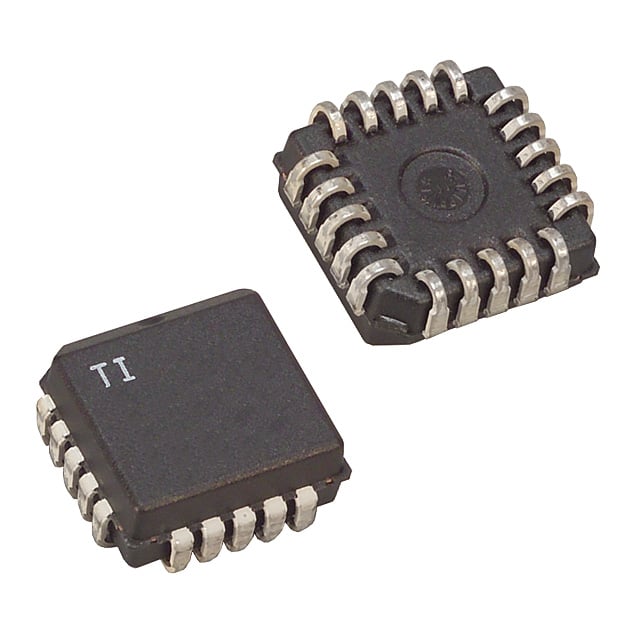
The Texas Instruments UC3907DW is a highly integrated battery management controller specifically designed for lead-acid battery charging applications. This device is part of the UC390x family, which is known for its efficiency, reliability, and versatility in managing various battery chemistries. The UC3907DW is particularly well-suited for applications requiring precise control over the charging process to ensure optimal battery performance and longevity. Below is a detailed overview of the UC3907DW, including its specifications, features, and typical applications.
## Overview
The UC3907DW is designed to provide a complete solution for lead-acid battery management, incorporating features for both constant voltage (CV) and constant current (CC) charging. It is capable of managing multiple charging profiles, making it ideal for various battery types, including sealed lead-acid (SLA) and flooded lead-acid batteries. The device operates over a wide input voltage range and includes several built-in protection features to enhance safety and reliability.
## Key Features
1. Integrated Battery Management: The UC3907DW integrates multiple functions necessary for effective battery management, including voltage regulation, current regulation, and temperature monitoring.
2. Constant Voltage and Constant Current Charging: The device supports both CV and CC charging modes, allowing for efficient charging of lead-acid batteries while preventing overcharging.
3. Wide Input Voltage Range: It operates with an input voltage range of 8V to 30V, making it versatile for different power supply configurations.
4. Temperature Compensation: The UC3907DW includes temperature compensation features that adjust the charging voltage based on the battery temperature, enhancing safety and performance.
5. Low Quiescent Current: The device features low quiescent current consumption, which is beneficial for battery-powered applications where efficiency is critical.
6. Fault Protection: The UC3907DW includes built-in protection features such as over-voltage protection, over-current protection, and thermal shutdown to ensure safe operation.
7. Adjustable Charging Parameters: Users can easily adjust the charging parameters, such as the charging voltage and current, to suit specific battery requirements.
8. PWM Control: The device utilizes pulse-width modulation (PWM) control for precise regulation of output voltage and current, ensuring efficient charging.
## Specifications
- Input Voltage Range (Vin): 8V to 30V
- Output Voltage (Vout): Adjustable, typically set for lead-acid batteries (e.g., 13.8V for 12V batteries)
- Output Current (Iout): Up to 2A (depending on external components)
- Quiescent Current (Iq): Typically 50µA
- Operating Temperature Range: -40°C to +125°C
- Package Type: TSSOP (16-pin)
- Efficiency: High efficiency in both charging modes, typically greater than 85%
- Control Method: PWM control for precise regulation of output voltage and current
- Battery Types Supported: Sealed lead-acid (SLA), flooded lead-acid, and other compatible chemistries
## Applications
The UC3907DW is suitable for a wide range of applications, including:
- Lead-Acid Battery Chargers: Ideal for charging lead-acid batteries in automotive, industrial, and consumer applications.
- Uninterruptible Power Supplies (UPS): Used in UPS systems to manage battery charging and ensure reliable power backup.
- Solar Battery Charging Systems: Suitable for solar applications where efficient battery management is essential for maximizing energy storage.
- Portable Battery-Powered Devices: Its low quiescent current makes it suitable for portable devices that require efficient battery management.
- Electric Vehicles: Can be used in electric vehicle charging systems to manage lead-acid battery packs.
## Conclusion
The Texas Instruments UC3907DW is a versatile and efficient battery management controller that provides a comprehensive solution for charging lead-acid and other compatible battery types. With its integrated features for constant voltage and constant current charging, temperature compensation, and fault protection, it ensures safe and reliable battery operation. The wide input voltage range and adjustable charging parameters make it suitable for various applications, from automotive to renewable energy systems. Its compact TSSOP package further enhances its usability in space-constrained designs, making it a popular choice among engineers and designers in the field of battery management.