The Texas Instruments TXS0102DCUR is a bidirectional voltage-level translator designed to provide seamless voltage translation between devices operating at different voltage levels. It is commonly used to interface logic devices operating at different supply voltages, such as between 2.5 V, 3.3 V, and 5 V systems. This device is especially useful in situations where different voltage logic families need to communicate, such as in mixed-voltage systems or bus systems that require level shifting. The TXS0102DCUR is part of the TXS0102 family of voltage translators from Texas Instruments, known for its reliability, performance, and ease of use.
## Key Features
* Bidirectional Voltage-Level Translation: The TXS0102DCUR supports bidirectional voltage-level translation, which means it can handle signal translations in both directions. This makes it ideal for systems where signals may need to be transmitted or received in both directions between devices operating at different voltage levels.
* Wide Voltage Range: The TXS0102DCUR supports a wide voltage range of 1.65 V to 5.5 V on the A-side (input side) and 1.65 V to 5.5 V on the B-side (output side). This allows it to be used in systems with devices operating at a variety of voltage levels, from low-power 1.8 V devices to higher voltage 5 V logic systems.
* Fast Data Rate: The device is designed to support high-speed data transmission, with data rates of up to 100 Mbps (megabits per second). This makes the TXS0102DCUR suitable for applications that require fast communication between devices, such as in high-speed logic interfaces, memory systems, or communications systems.
* Low Propagation Delay: The device offers low propagation delay, typically around 4 ns, which is critical for maintaining signal integrity and speed in high-speed communication systems. This ensures minimal signal distortion during the voltage translation process.
* Automatic Direction Sensing: One of the standout features of the TXS0102DCUR is its automatic direction sensing, which allows it to automatically detect and switch between bidirectional communication without the need for external control signals. This reduces design complexity and eliminates the need for additional control logic.
* No Need for External Components: The TXS0102DCUR is designed to operate without the need for external components like pull-up or pull-down resistors. This simplifies circuit design and reduces the component count in the system, contributing to a more compact and reliable design.
* Low Power Consumption: The device operates with low power consumption, typically consuming less than 1 µA when inactive. This makes it suitable for low-power systems where energy efficiency is a critical design requirement, such as battery-powered applications.
* Wide Operating Temperature Range: The TXS0102DCUR operates within a temperature range of -40°C to +125°C, making it suitable for both commercial and industrial applications that require reliability across a wide range of environmental conditions.
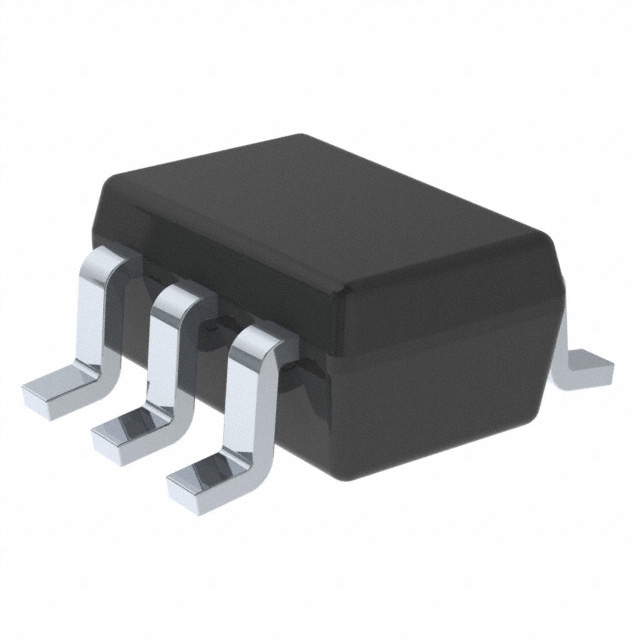
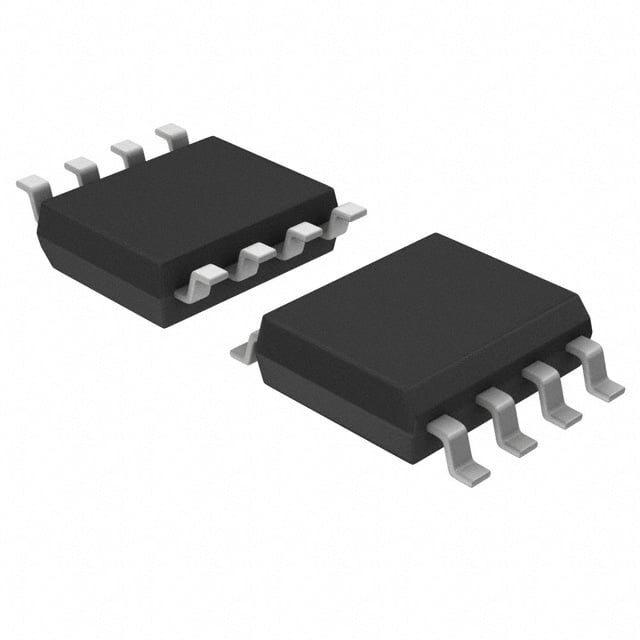
* Small Package: The TXS0102DCUR is available in a small, space-saving package such as the DBV (SOT-23-6) package, making it ideal for compact applications and systems with size constraints.
## Electrical Characteristics
## Absolute Maximum Ratings
* Supply Voltage (Vcc): The maximum supply voltage is 6.5 V, which defines the upper limit for the operating voltage of both sides (A-side and B-side) of the translator.
* Input Voltage (V\_in): The maximum input voltage is 6.5 V for the A-side and B-side pins, meaning that voltages beyond this limit may damage the device.
* Storage Temperature: The storage temperature range for the device is -65°C to +150°C, allowing the device to be safely stored and operated in a wide range of conditions.
* Output Voltage (V\_out): The output voltage on the A-side and B-side pins should not exceed Vcc + 0.3 V, which ensures proper operation without causing damage to the device.
## Typical Electrical Characteristics
* Operating Voltage (Vcc): The operating voltage range for both sides (A and B) is typically 1.65 V to 5.5 V, allowing for seamless translation between logic levels across a wide range of systems.
* High-Level Input Voltage (V\_IH): The minimum high-level input voltage for the A-side and B-side is typically 0.7 × Vcc, ensuring reliable high logic level detection at different supply voltages.
* Low-Level Input Voltage (V\_IL): The maximum low-level input voltage for both sides is typically 0.3 × Vcc, ensuring reliable low logic level detection at different supply voltages.
* High-Level Output Voltage (V\_OH): The high-level output voltage on the A-side and B-side is typically Vcc - 0.4 V, which ensures proper high output voltage when driving external logic devices.
* Low-Level Output Voltage (V\_OL): The low-level output voltage on both sides is typically 0.4 V, which ensures proper low output voltage levels when communicating with other logic circuits.
* Propagation Delay (t\_PD): The typical propagation delay for the TXS0102DCUR is 4 ns, making it suitable for high-speed communication without introducing significant signal delays.
* Power Consumption: The TXS0102DCUR consumes less than 1 µA when idle, making it highly efficient and suitable for low-power applications.
* Data Rate: The maximum data rate supported by the device is 100 Mbps, allowing it to handle high-speed communication between devices.
## Typical Application Conditions
* Vcc = 3.3 V
* A-side: 1.65 V to 3.3 V
* B-side: 1.65 V to 3.3 V
* Vcc = 5 V
* A-side: 1.65 V to 5 V
* B-side: 1.65 V to 5 V
## Application Circuit
The TXS0102DCUR is used in systems where voltage-level translation between different logic families is required. Some common application circuits include:
1. Microcontroller Interfacing: The device can be used to interface microcontrollers that operate at different logic voltages, such as a 3.3 V microcontroller with a 5 V peripheral device, ensuring proper communication between components.
2. I2C Bus Translation: The TXS0102DCUR is ideal for I2C bus translation, where two devices with different supply voltages (such as a 3.3 V microcontroller and a 5 V EEPROM) need to communicate over the same bus.
3. SPI Bus Translation: In systems using the SPI (Serial Peripheral Interface) protocol, the TXS0102DCUR can translate signals between devices operating at different voltages, ensuring reliable data transfer in systems where different logic families are used.
4. UART Signal Translation: The device is used to translate signals in Universal Asynchronous Receiver/Transmitter (UART) communication systems between devices operating at different logic voltage levels.
5. Bus Systems: It is also suitable for high-speed data buses where voltage-level translation is required to maintain signal integrity and reliability between components with different voltage levels.
6. FPGA and Logic Interface: The TXS0102DCUR is useful for interfacing FPGAs with logic devices that require different voltage levels, allowing for smooth communication without signal degradation.
## Thermal and Mechanical Characteristics
* Thermal Resistance (Junction-to-Ambient, R\_θJA): The thermal resistance for the TXS0102DCUR in the SOT-23-6 package is typically 250°C/W. This low thermal resistance ensures effective heat dissipation during operation.
* Package Type: The device comes in the SOT-23-6 package, a small, compact form factor that makes it suitable for space-constrained applications.
* Operating Temperature Range: The TXS0102DCUR operates within the temperature range of -40°C to +125°C, making it suitable for industrial and automotive applications, as well as other environments that require high reliability under temperature extremes.
## Conclusion
The Texas Instruments TXS0102DCUR is a versatile and efficient bidirectional voltage-level translator that allows for seamless communication between devices operating at different voltage levels, such as 3.3 V and 5 V systems. With its wide voltage range, fast data rates, low power consumption, and automatic direction sensing, it simplifies the design of mixed-voltage systems, making it an ideal solution for applications in microcontroller interfacing, I2C/SPI/UART communication, FPGA integration, and bus systems. Its compact size, low thermal resistance, and wide operating temperature range further enhance its suitability for use in space-constrained and industrial environments.