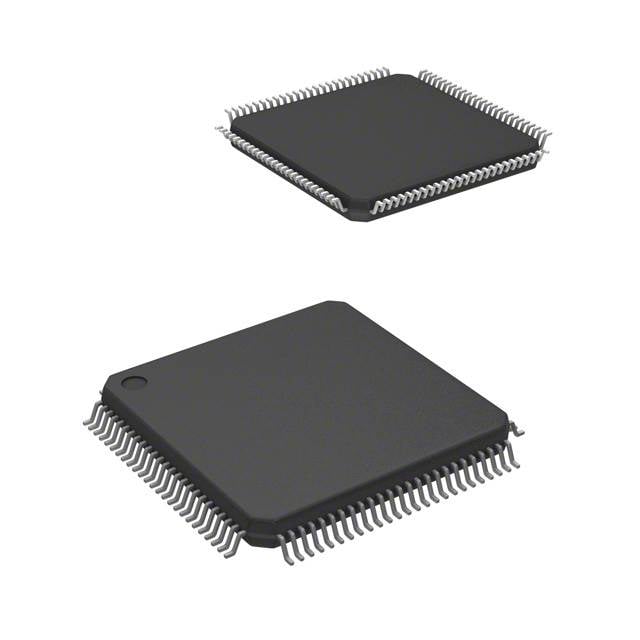
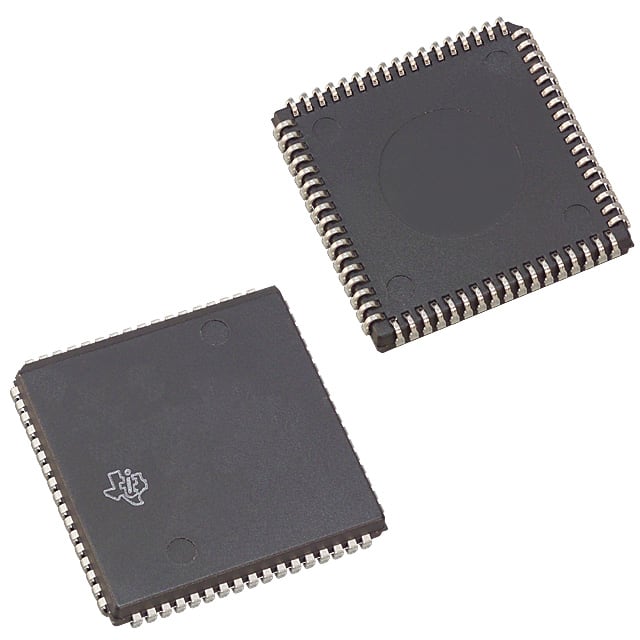
TMS320F241PG from Texas Instruments is a fixed-point digital signal processor (DSP) belonging to the TMS320F24x family, optimized for control-oriented applications requiring precise real-time processing, deterministic execution, and efficient peripheral integration. The device is engineered to deliver high-speed arithmetic operations, particularly in multiply-accumulate (MAC) computations, while providing deterministic control over system timing through integrated timers, event managers, and interrupt controllers. Its architecture is tailored for embedded control applications, including motor control, power conversion, and industrial automation, where low-latency signal processing and high-reliability operation are essential. The TMS320F241PG combines a dedicated DSP core with versatile memory and peripheral resources, enabling complex control algorithms to be executed efficiently in real-time environments.
## Functional positioning and device classification
The TMS320F241PG is classified as a 16-bit fixed-point DSP designed for real-time control and signal processing tasks. Its primary function is to execute arithmetic-intensive operations with deterministic timing while interfacing with analog and digital peripherals for closed-loop system control. The device integrates computational capability, memory architecture, and peripheral control in a single IC, positioning it as a solution for embedded applications that require both signal processing and supervisory control. It serves as a bridge between sensor inputs, actuator outputs, and high-speed processing algorithms, allowing engineers to implement sophisticated control strategies with minimal external components.
## CPU core and execution architecture
The TMS320F241PG employs a Harvard architecture with separate program and data memory spaces, enabling simultaneous fetch and execution operations for optimized instruction throughput. The core features a 16-bit fixed-point arithmetic unit with a single-cycle multiply-accumulate (MAC) capability, which is critical for implementing high-speed control loops and digital filters. The instruction set includes specialized control and arithmetic instructions, such as bit manipulation, block moves, and circular addressing, facilitating efficient implementation of control algorithms and repetitive signal processing operations. Program memory is directly addressable, allowing low-latency instruction execution and predictable real-time behavior. The processor also supports pipeline execution, where instruction fetch, decode, and execution stages overlap to enhance throughput without compromising determinism.
## Memory organization and interface
The device incorporates internal RAM for data storage and provides an on-chip ROM or boot memory for program code, depending on specific package and variant configuration. The memory architecture is designed to minimize access latency for critical control loops and enable fast context switching during interrupt handling. Circular buffering and dual-port memory access features support efficient data management for real-time digital signal processing. The TMS320F241PG also supports external memory expansion via its address and data bus interfaces, enabling larger program and data storage requirements for complex control systems. Memory access timing is tightly coupled with the CPU pipeline to maintain deterministic execution and predictable response under varying workloads.
## Timer and event management subsystem
A key feature of the TMS320F241PG is its integrated timer and event management module, which provides precise control over timing-critical operations. The timers are programmable for a variety of modes, including up/down counting, compare, and capture functionality. Event management modules allow synchronization of input/output events with internal timers, facilitating implementation of pulse-width modulation (PWM), motor commutation sequences, and other time-sensitive control operations. This subsystem enables the device to maintain tight control over real-time processes without imposing significant software overhead on the CPU core.
## Peripheral interfaces
The TMS320F241PG includes a variety of peripheral modules for interfacing with external sensors, actuators, and communication systems. General-purpose I/O pins are configurable for input, output, or alternate functions, supporting both digital and analog interfacing requirements. Serial interfaces such as SPI, McBSP, or UART (depending on specific variant) enable communication with other processors, external memory, or sensor modules. Analog interface support, such as ADC input lines, allows direct digitization of sensor signals for immediate processing by the DSP core. The combination of high-speed I/O and integrated peripheral modules reduces the need for additional external components and ensures low-latency system response.
## Interrupt system and real-time responsiveness
The device provides a vectored interrupt system with multiple priority levels, enabling immediate response to critical events while maintaining overall system determinism. Interrupt sources include timers, peripheral modules, and external input pins. The architecture ensures minimal interrupt latency, allowing time-critical routines to preempt background processing and maintain high control loop performance. The integration of hardware prioritization and vectored interrupt vectors allows predictable context switching and rapid task servicing, which is essential in industrial and motor control applications.
## Electrical characteristics and operational parameters
The TMS320F241PG operates from a single supply voltage consistent with industrial and embedded system requirements. It is characterized by defined input and output voltage thresholds, current sourcing and sinking capability, and maximum operating frequency, ensuring reliable operation under specified environmental conditions. Power consumption scales with clock frequency and peripheral utilization, and the device supports low-power operating modes suitable for energy-conscious applications. Temperature ranges, voltage tolerances, and I/O drive strength are specified to ensure compliance with industrial-grade reliability standards.
## Package and mechanical characteristics
The “PG” package denotes a specific leaded configuration, suitable for through-hole or surface-mount assembly depending on design requirements. Mechanical parameters, including pin pitch, package dimensions, and thermal resistance, are specified to facilitate accurate PCB layout, thermal management, and assembly integration. The package design ensures minimal parasitic inductance and capacitance on signal lines, supporting high-speed operation and signal integrity in complex embedded systems.
## Typical application scenarios
The TMS320F241PG is primarily deployed in industrial and automotive control applications, such as motor drive controllers, digital power converters, servo systems, and real-time signal acquisition modules. Its deterministic real-time performance, integrated timers, and high-speed arithmetic capability make it suitable for closed-loop control of electrical machines, power factor correction systems, and precision instrumentation. The device is also applicable in communication interface processing where rapid signal sampling and deterministic response are critical.
## System-level design considerations
When integrating the TMS320F241PG, designers must ensure proper synchronization between CPU execution, timer events, and peripheral I/O. PCB layout should minimize parasitic effects on high-speed data and clock lines to maintain signal integrity. Proper decoupling of power supply rails is required to reduce noise and voltage transients. Memory mapping, interrupt vector allocation, and context switching strategies must be carefully designed to maintain real-time deterministic behavior. Thermal management strategies, including heat sinking and airflow design, should be considered to sustain continuous high-speed operation.
## Conclusion
The TMS320F241PG is a high-performance fixed-point digital signal processor optimized for real-time control and industrial signal processing applications. It combines a deterministic 16-bit DSP core, integrated timers, event management modules, versatile peripheral interfaces, and vectored interrupts to provide a comprehensive embedded processing platform. Its deterministic execution, high-speed arithmetic capability, and rich peripheral set enable precise control in motor drives, power electronics, and industrial automation systems, delivering reliable and predictable performance in demanding real-time environments.