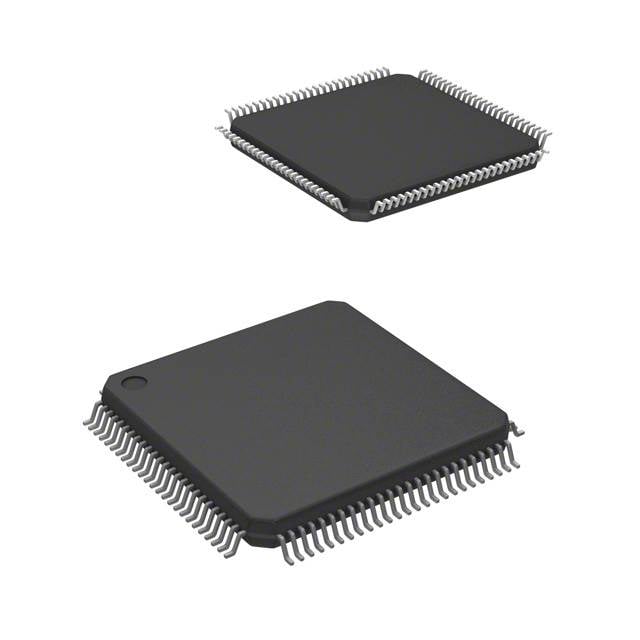
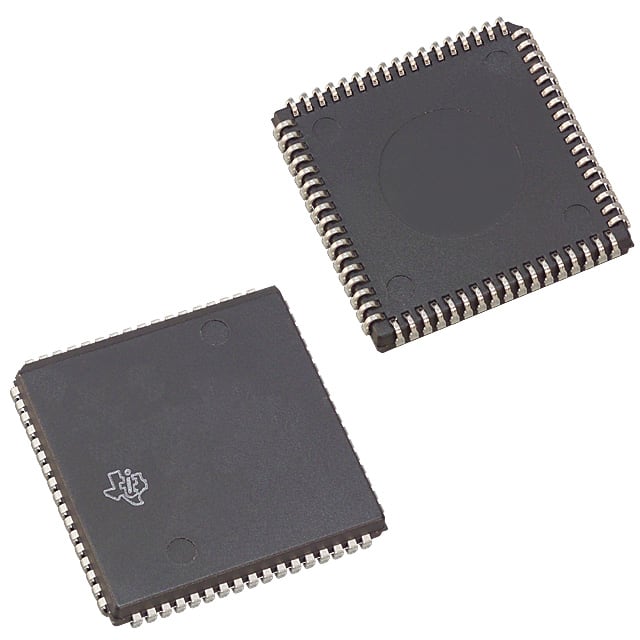
The Texas Instruments TMS320F240PQA is a fixed-point digital signal processor (DSP) from the TMS320C2xx family, engineered to deliver high-performance real-time control in embedded systems. It integrates a 16-bit DSP core with specialized peripherals to facilitate deterministic execution of control algorithms. The device is designed for industrial automation, motor control, and power electronics applications where precise timing, low-latency analog measurement, and tightly synchronized actuation are critical. The "PQA" suffix indicates a specific package and temperature grade variant, providing a qualified solution for industrial-grade environments with extended operational temperature ranges. Its architecture combines computational efficiency, peripheral integration, and reliability suitable for deterministic closed-loop control tasks.
## Core Architecture and Digital Signal Processing
The TMS320F240PQA utilizes a 16-bit fixed-point Harvard architecture DSP core, allowing simultaneous access to program and data memory via independent buses. This separation ensures high instruction throughput and deterministic execution timing. The processor includes a single-cycle 16×16-bit multiply-accumulate (MAC) unit optimized for common control tasks such as PID regulation, vector control of AC motors, and real-time digital filtering. The instruction set includes arithmetic, logic, bit manipulation, and branching operations tailored to embedded control, enabling efficient algorithm implementation with minimal cycle latency. Internal program and data memory provide rapid access to critical control variables, supporting deterministic loop execution without excessive wait states.
## Electrical Characteristics and Operating Parameters
The device operates from a single 5 V supply and incorporates internal clock and voltage management circuits to ensure stable operation in electrically noisy industrial environments. Typical system clock frequencies range in the tens of megahertz, providing sufficient computational bandwidth to execute control loops with microsecond-level timing. The TMS320F240PQA is rated for industrial temperature operation, generally spanning from -40°C to +85°C, with package-dependent electrical characteristics that ensure reliable function under harsh thermal and electrical stress. Power consumption is a function of clock frequency, peripheral activity, and switching load, and the device is optimized to balance performance with low energy dissipation for embedded applications.
## Analog-to-Digital Conversion Capabilities
A distinguishing feature of the TMS320F240PQA is its integrated 10-bit analog-to-digital converter (ADC) subsystem. The ADC supports multiple input channels through a multiplexed input architecture, enabling acquisition of motor currents, DC bus voltages, temperature sensor signals, and other analog process variables. The ADC includes sample-and-hold circuitry to ensure stable signal capture, with deterministic conversion timing that can be synchronized to internal timers or PWM events. This capability allows precise alignment between analog measurements and control computations, supporting accurate closed-loop control. The 10-bit resolution provides adequate dynamic range for industrial motor and power control applications where deterministic response and signal fidelity are more critical than ultra-high resolution.
## Pulse-Width Modulation and Timing Peripherals
The TMS320F240PQA features multiple pulse-width modulation (PWM) modules designed for controlling power electronic devices such as MOSFETs and IGBTs in inverter topologies. Each PWM channel supports programmable frequency, duty cycle, and dead-band insertion, allowing safe operation of half-bridge and full-bridge power stages. The PWM modules are tightly coupled with the CPU and timer units, providing precise waveform generation synchronized to control loops. Capture and compare units enhance system versatility by enabling accurate measurement of external signal timing and event-triggered output generation, supporting encoder interfacing and real-time feedback control.
## Communication Interfaces and Digital I/O
The device integrates serial communication interfaces that support synchronous and asynchronous modes, allowing connection to microcontrollers, host systems, or industrial networks. These interfaces facilitate monitoring, control, and data exchange between the DSP and other system components. General-purpose digital I/Os are programmable for standard logic or peripheral functions, providing flexible interfacing with sensors, switches, and auxiliary devices. Hardware interrupt management enables prioritized real-time responses to both internal and external events, ensuring deterministic reaction to overcurrent, fault detection, or other critical conditions.
## Real-Time Control Capabilities
The architecture of the TMS320F240PQA is optimized for predictable, low-latency control. The combination of a fast MAC unit, low-latency memory, and tightly integrated peripherals allows closed-loop control cycles in the microsecond range. Typical real-time applications include field-oriented control (FOC) for AC motors, where precise current and voltage measurements are processed to generate PWM outputs for three-phase inverters. Timer modules ensure consistent sampling intervals and deterministic execution, which are critical for stability in high-performance embedded control systems.
## Application Domains
The TMS320F240PQA is widely used in industrial motor control systems for brushless DC (BLDC), permanent magnet synchronous (PMSM), and induction motors. Its integrated ADC and PWM peripherals allow complete motor control implementation on a single device. It is also applicable in power electronics systems such as uninterruptible power supplies (UPS), solar inverters, and DC-DC converters, where accurate real-time regulation of voltage and current is required. Additional applications include robotic actuation, servo control, and multi-axis motion control in industrial automation systems, all benefiting from deterministic timing and real-time responsiveness.
## Package and System-Level Considerations
The device is available in a PQFP (Plastic Quad Flat Package) configuration, providing high pin count necessary for multiple ADC channels, PWM outputs, and communication interfaces. PCB layout requires separation of analog and digital ground planes to minimize noise injection into sensitive ADC inputs. Adequate decoupling close to supply pins stabilizes transient currents from internal switching. Thermal considerations are important for sustained high-duty-cycle PWM operation, although CMOS efficiency minimizes overall power dissipation. Careful routing of high-speed PWM and analog signals reduces electromagnetic interference and preserves measurement fidelity.
## Conclusion
The TMS320F240PQA is a robust, fixed-point DSP specifically designed for deterministic real-time control in embedded industrial applications. Its 16-bit core, integrated ADC subsystem, PWM modules, timers, and communication interfaces provide a comprehensive platform for motor control, power electronics, and automation systems. The combination of predictable execution, tight peripheral integration, and industrial-grade electrical specifications makes the device well suited for high-reliability applications requiring precise closed-loop control and real-time performance.