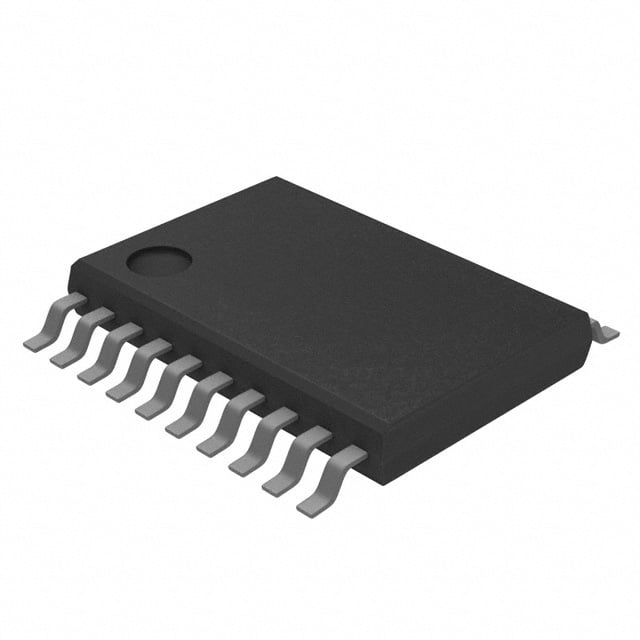
The PGA116AIPWR is a high-performance programmable gain amplifier (PGA) designed by Texas Instruments. This device provides flexible gain configurations and features that make it suitable for a wide range of applications, including medical instrumentation, sensor signal conditioning, and industrial control systems. The PGA116 is known for its low noise, high linearity, and versatility.
## Key Specifications
Here are the detailed specifications of the PGA116AIPWR:
- Gain Configuration: Programmable gain options from 1 to 128 in 1 dB increments.
- Supply Voltage: Dual supply voltage range from ±2.5 V to ±15 V.
- Input Voltage Range: Common mode voltage range from -2 V to +2 V (for dual supply).
- Output Voltage Swing: Typically ±1.5 V (under a load of 10 kΩ to ground).
- Bandwidth: -3 dB bandwidth of approximately 1 MHz at a gain of 1.
- Noise Performance: Input-referred voltage noise of 7 nV/√Hz at 1 kHz.
- THD + N (Total Harmonic Distortion + Noise): Typically 0.02% at 1 kHz and gain of 10.
- Power Consumption: Approximately 6 mA per channel at ±5 V supply.
- Package Type: TSSOP-16 (Thin Shrink Small Outline Package), allowing for compact designs.
- Temperature Range: Operating temperature range of -40°C to +85°C.
## Features
1. Programmable Gain: The PGA116 offers a unique programmability feature, allowing designers to set the gain through external resistors. This flexibility makes it ideal for applications requiring different gain settings without changing the hardware configuration.
2. Low Noise: With a low input-referred noise specification, the PGA116 ensures that it can maintain the integrity of low-level signals, making it suitable for sensitive applications like medical instrumentation.
3. Wide Bandwidth: The device’s bandwidth allows it to handle a variety of signal types with minimal distortion, which is crucial for accurate signal processing.
4. High Linearity: The PGA116 provides excellent linearity, ensuring that signal distortions are kept to a minimum even at higher gain settings.
5. Easy Integration: The TSSOP package enables easy integration into a wide range of circuit designs, contributing to space-saving PCB layout.
6. Dual Supply Operation: The capability to operate with dual supplies provides greater flexibility in circuit design, especially when interfacing with other analog components.
## Typical Applications
The PGA116AIPWR is suitable for various applications, including but not limited to:
- Medical Devices: Used in applications such as electrocardiograms (ECGs) and other diagnostic equipment where accurate signal amplification is critical.
- Sensor Signal Conditioning: Ideal for amplifying output from sensors like thermocouples and strain gauges in industrial and automotive applications.
- Audio Processing: Can be utilized in audio applications requiring precise gain control and low noise performance.
- Instrumentation Amplifiers: Acts as a building block for more complex instrumentation systems that require high accuracy and precision.
## Example Application Circuit
In a typical application circuit, the PGA116 can be configured with external resistors to set the desired gain. The input is connected to a sensor output, and the amplified output can be fed into an ADC (Analog-to-Digital Converter) for further processing. Proper bypass capacitors should be included near the power supply pins to ensure stability and minimize noise.
## Conclusion
The Texas Instruments PGA116AIPWR is a versatile and high-performance programmable gain amplifier that meets the demands of modern electronic applications. Its combination of low noise, wide bandwidth, and flexible gain options makes it an excellent choice for engineers looking to enhance signal processing in their designs. Whether in medical devices, industrial automation, or consumer electronics, the PGA116 delivers reliable performance and adaptability.