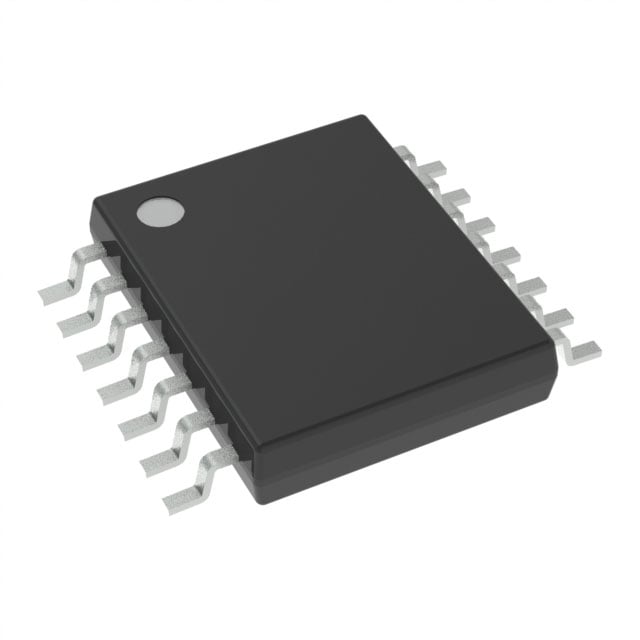
The Texas Instruments CD4078BPWR is a high-performance CMOS logic gate device designed for use in digital logic circuits. It features a 4-input AND gate, which performs a logical AND operation on four input signals, producing a high output only when all input signals are high. The device is widely used in a variety of electronic applications, including signal processing, control systems, and digital computing, due to its low power consumption, high noise immunity, and wide voltage operating range.
## Key Features
* Quad 2-Input AND Gate: The CD4078BPWR contains four independent AND gates, each with two inputs, making it versatile for various logic operations in complex circuits.
* Wide Operating Voltage Range: The device operates over a broad voltage range from 3V to 18V, making it suitable for both low-voltage and high-voltage logic systems.
* Low Power Consumption: As a CMOS device, it offers extremely low static power consumption, making it ideal for battery-operated devices or low-power applications.
* High Noise Immunity: The CD4078BPWR is designed with high noise immunity, ensuring reliable operation even in electrically noisy environments.
* High Fan-Out Capability: The device can drive multiple inputs with its high fan-out capability, allowing it to interface with other logic devices in large-scale systems.
* Standard Logic Levels: It complies with standard logic voltage levels, ensuring compatibility with other TTL and CMOS logic devices.
## Specifications
* Input Voltage Range (V\_IH and V\_IL):
* High-level input voltage (V\_IH): 3V to 18V, depending on the supply voltage.
* Low-level input voltage (V\_IL): 0V to 1.5V (at 5V supply).
* Supply Voltage (Vcc): The CD4078BPWR operates within a supply voltage range of 3V to 18V, allowing it to function in both low-voltage and standard voltage circuits.
* Output Voltage: The output voltage levels are determined by the supply voltage, with a high-level output voltage (V\_OH) typically close to Vcc and a low-level output voltage (V\_OL) close to 0V.
* Propagation Delay: The typical propagation delay time (tpd) between the input and the output for this device is around 50 ns at 5V, making it suitable for high-speed digital circuits.
* Input Capacitance (C\_in): The input capacitance for each gate is typically around 5 pF, which is low enough to ensure high-speed switching and minimal signal distortion in digital applications.
* Output Capacitance (C\_out): The output capacitance is typically 15 pF, which is moderate, contributing to the overall switching speed and output drive strength.
* Power Supply Current (Icc): The typical supply current (Icc) is very low, typically around 0.01 mA for a 5V supply, which is a key benefit of using CMOS technology.
* Temperature Range: The device operates in a wide temperature range of -55°C to 125°C, making it suitable for use in a variety of environments, including industrial and automotive applications.
## Applications
* Digital Logic Circuits: The CD4078BPWR is widely used in digital logic circuits where AND operations are required, such as in counters, registers, and multiplexers.
* Signal Processing: It is used in digital signal processing systems to combine signals based on logic conditions.
* Control Systems: The device is suitable for control systems that require multiple input signals to be logically combined before triggering specific actions.
* Timing Applications: It is used in timing circuits to combine multiple timing signals or to create complex timing sequences in sequential logic circuits.
* Microcontroller Interfacing: The CD4078BPWR is commonly used to interface with microcontrollers in applications that need multiple input conditions to be checked before an action is taken.
## Protection Features
* ESD Protection: The device includes built-in electrostatic discharge (ESD) protection to safeguard the internal components from static electricity damage during handling and use.
* Latch-Up Protection: As a CMOS device, it is designed to be resistant to latch-up, which can occur under extreme conditions of voltage or current.
## Package and Pin Configuration
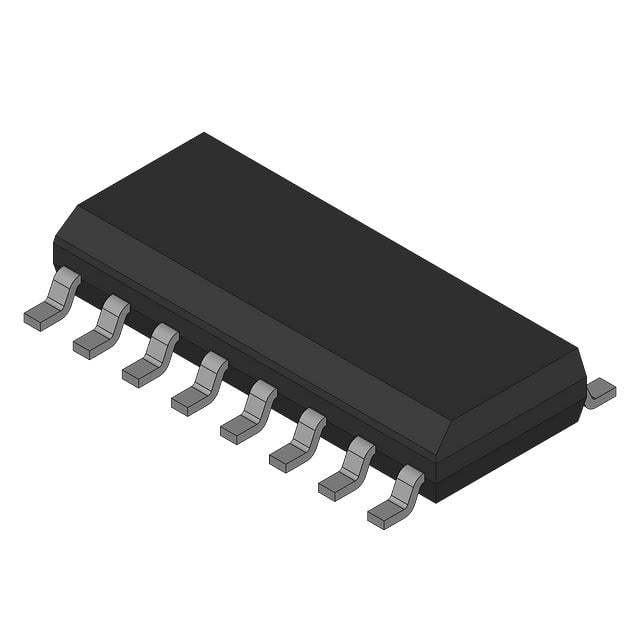
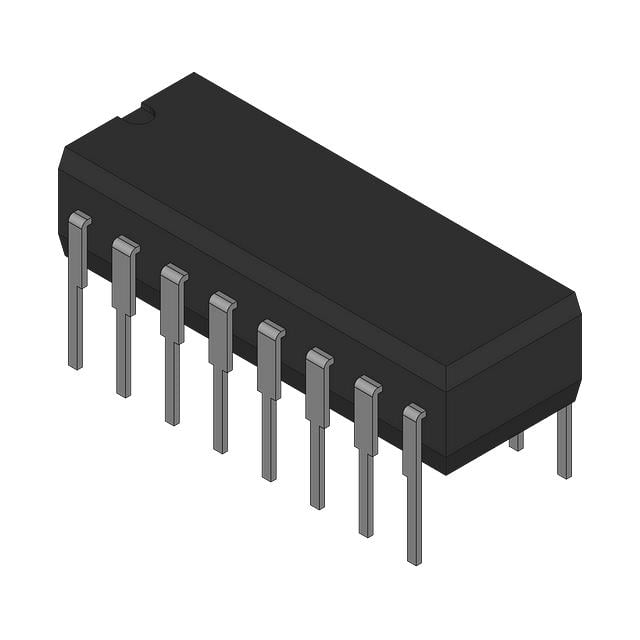
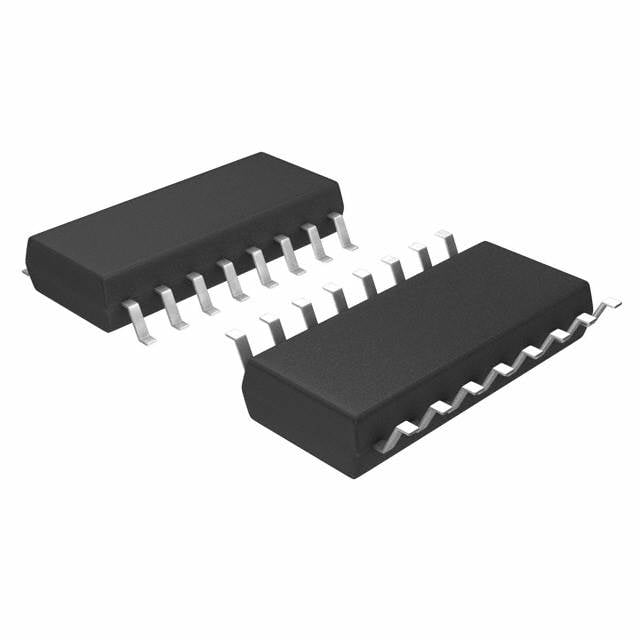
* Package Type: The CD4078BPWR is housed in a 16-pin SOIC (Small Outline Integrated Circuit) package, which is compact and ideal for surface-mount applications.
* Pin Configuration: The device contains 16 pins, with the four AND gates distributed across the pins for easy access to each input and output. The pin configuration includes power supply pins (Vcc and GND), input pins for each gate, and output pins.
* Pin 1-2: Input pins for Gate 1
* Pin 3: Output pin for Gate 1
* Pin 4-5: Input pins for Gate 2
* Pin 6: Output pin for Gate 2
* Pin 7-8: Input pins for Gate 3
* Pin 9: Output pin for Gate 3
* Pin 10-11: Input pins for Gate 4
* Pin 12: Output pin for Gate 4
* Thermal Management: The SOIC package allows for efficient thermal dissipation, making the device suitable for use in applications where heat management is critical.
## Environmental and Reliability Characteristics
* Operating Temperature Range: The CD4078BPWR operates effectively in a temperature range from -55°C to 125°C, allowing it to be used in a wide range of environments, from consumer electronics to harsh industrial conditions.
* Storage Temperature Range: The device can be safely stored in environments with temperatures ranging from -65°C to 150°C, ensuring it remains functional over a long period.
* Moisture Sensitivity Level (MSL): The CD4078BPWR is classified as MSL 1, meaning it is not sensitive to moisture and can be used without concern for special handling procedures.
## Conclusion
The Texas Instruments CD4078BPWR is a versatile, low-power, high-performance CMOS logic gate device that provides a reliable solution for implementing 4-input AND operations in digital circuits. With its wide operating voltage range, low power consumption, high noise immunity, and ability to operate across a broad temperature range, the CD4078BPWR is ideal for a variety of applications, including logic circuits, signal processing, control systems, and microcontroller interfacing. Its compact packaging and efficient thermal management ensure that it can be integrated into space-constrained designs without compromising performance.