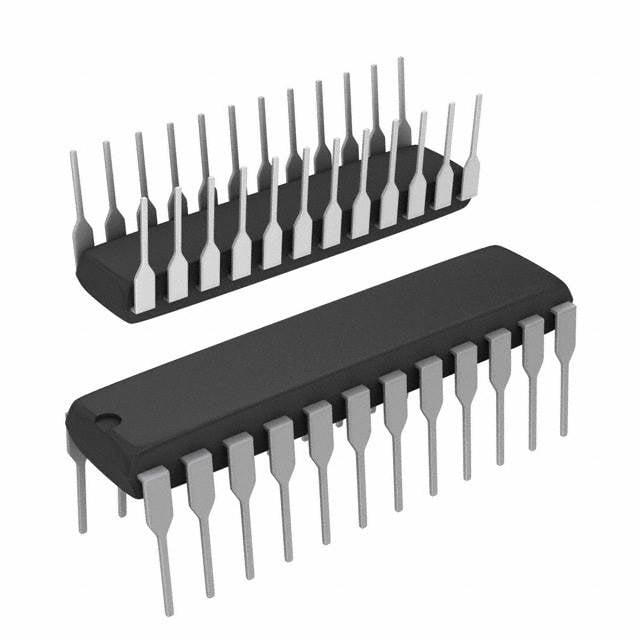
Q1: What type of device is the onsemi MC14514BCP?
A: The MC14514BCP is a 4-bit synchronous up/down binary counter with serial input and parallel output, designed for digital counting applications.
Q2: What is the primary function of the MC14514BCP?
A: Its main function is to count binary events in both up and down directions and provide a parallel output for digital systems.
Q3: How is the MC14514BCP configured for counting direction?
A: The counting direction is controlled via a dedicated UP/DOWN input pin, allowing seamless switching between increment and decrement operations.
Q4: What type of logic levels does the MC14514BCP support?
A: It is compatible with standard CMOS logic levels, making it easy to interface with other digital ICs.
Q5: What is the supply voltage range for the MC14514BCP?
A: The device operates over a wide voltage range of 3V to 15V, supporting both low-voltage and standard CMOS applications.
Q6: What is the output type of the MC14514BCP?
A: It provides a 4-bit parallel output in standard CMOS format, allowing direct connection to digital circuits and display drivers.
Q7: Does the MC14514BCP support synchronous operation?
A: Yes, it features fully synchronous counting controlled by the clock input, ensuring accurate counting without timing skew.
Q8: What is the typical maximum counting frequency of the MC14514BCP?
A: The typical maximum clock frequency is around 8 MHz at 10V, enabling use in moderate-speed digital counting applications.
Q9: Can the MC14514BCP be reset asynchronously?
A: Yes, it includes an asynchronous master reset input to clear the counter to zero immediately, independent of the clock.
Q10: What is the application of serial input in the MC14514BCP?
A: The serial input allows for direct loading of data or cascading multiple counters to achieve higher-bit counting sequences.
Q11: Can multiple MC14514BCP devices be cascaded?
A: Yes, cascading is supported via the serial input/output and carry pins to extend counting beyond 4 bits.
Q12: How does the MC14514BCP handle carry and borrow?
A: It provides dedicated carry and borrow outputs to indicate overflow or underflow conditions for chained counting applications.
Q13: What is the operating temperature range of the MC14514BCP?
A: It functions reliably over a commercial temperature range of 0°C to 70°C, suitable for general-purpose digital circuits.
Q14: Is the MC14514BCP suitable for display driving applications?
A: Yes, its 4-bit parallel output makes it compatible with binary display systems and BCD-to-7-segment decoders.
Q15: How is the MC14514BCP initialized?
A: The device can be initialized via the asynchronous reset pin or by serially loading a specific 4-bit pattern through the serial input.
Q16: What makes the MC14514BCP suitable for digital event counting?
A: Its synchronous operation, bidirectional counting, and reliable carry/borrow outputs ensure precise counting in sequential digital systems.
Q17: Can the MC14514BCP operate at low voltages?
A: Yes, it can function down to 3V, making it compatible with battery-operated and low-power digital systems.
Q18: What is the typical power consumption of the MC14514BCP?
A: Being a CMOS device, it has very low quiescent current, typically in the microampere range, optimizing it for energy-efficient designs.
Q19: How does the MC14514BCP ensure glitch-free output transitions?
A: Synchronous clocking ensures all output bits change simultaneously on the active clock edge, minimizing timing errors and glitches.
Q20: Why is the onsemi MC14514BCP widely used in digital circuits?
A: Its versatility in up/down counting, low-power CMOS design, synchronous operation, and easy interfacing with other digital components make it an ideal choice for event counting, sequencing, and display control applications.