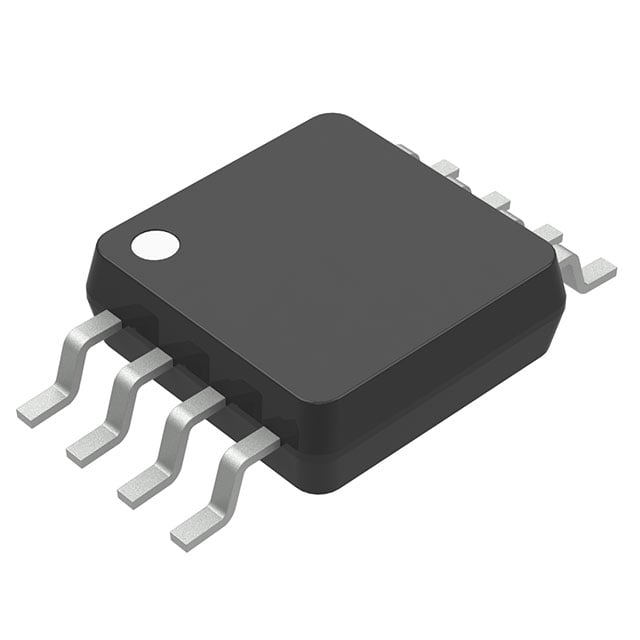
The Microchip Technology TC1121COA713 is a precision real-time clock (RTC) integrated circuit designed for low-power timekeeping applications. It combines a highly accurate quartz crystal oscillator with a real-time clock/calendar module and backup power support, making it suitable for systems requiring reliable timekeeping even during main power loss. The device is particularly suitable for battery-backed applications, embedded systems, and industrial, consumer, and automotive electronics. Its compact package, low operating current, and integrated alarm functionality allow system designers to implement precise and autonomous timekeeping with minimal external components.
## Key Features
* Device Type: Real-time clock with calendar function
* Timekeeping Accuracy: ±2 minutes per month at 25°C typical; highly stable over temperature variations
* Supply Voltage Range: 2.0 V to 5.5 V, supporting both primary and backup power sources
* Backup Battery Support: Maintains accurate timekeeping during main power loss with very low standby current
* Operating Current: Typically 100 µA during active operation; standby current in sub-µA range
* Timebase: 32.768 kHz crystal-based oscillator
* Time and Date Functionality: Supports seconds, minutes, hours, day, date, month, and year with automatic leap year adjustment
* Alarm and Timer Features: Programmable alarm outputs with selectable repeat intervals, one-shot alarm, and periodic timers
* Oscillator Failure Detection: Monitors crystal oscillator functionality and flags failures to system controller
* Package Type: 8-lead SOIC or similar compact surface-mount package
* Operating Temperature Range: Typically -40°C to +85°C, suitable for industrial applications
* Interface: I²C compatible for communication with microcontrollers or system processors
* Applications: Embedded systems, industrial automation, consumer electronics, automotive dashboards, networked devices
## Electrical Characteristics
* VDD Supply Voltage: 2.0 V to 5.5 V
* Backup Voltage Range (VBAT): Typically 1.2 V to 3.6 V
* Active Mode Current Consumption: 100 µA typical at 3.3 V and 25°C
* Standby Mode Current Consumption: 0.5 µA typical with battery backup active
* Clock Accuracy: ±2 minutes per month typical at 25°C
* Alarm Output Drive Capability: 2 mA source/sink capability, sufficient for driving small load or microcontroller input
* I²C Clock Rate: Supports standard mode (100 kHz) and fast mode (400 kHz)
* Logic Input Levels: CMOS compatible inputs with VIH and VIL thresholds suitable for 3.3 V and 5 V systems
## Functional Description
* Real-Time Clock and Calendar: Tracks seconds, minutes, hours, day of the week, date, month, and year automatically, including leap year compensation up to 2100
* Integrated Quartz Oscillator: Provides a stable 32.768 kHz timebase; minimal external components required
* Alarm and Timer Functions:
* Programmable alarm output with one-time or repeating event
* Selectable intervals including seconds, minutes, hours, and day-of-week alarms
* Periodic timer output for system wake-up events
* Backup and Power-Fail Handling:
* Switches seamlessly to backup power in case of main power failure
* Maintains timekeeping with low standby current, preserving battery life
* Oscillator Stop Flag: Indicates if the crystal oscillator has stopped, allowing system firmware to correct time after restart
* Temperature Compensation Consideration: Timekeeping remains within ±2 minutes per month across operating temperature range
## Applications
* Embedded Systems: Microcontroller-based devices requiring precise timekeeping, alarms, or event scheduling
* Consumer Electronics: Devices like clocks, cameras, and home appliances with battery-backed RTC functionality
* Automotive: Dashboard systems, infotainment units, and vehicle telematics requiring stable time reference
* Industrial Automation: Data loggers, process controllers, and networked sensors needing autonomous timekeeping
* Networking Equipment: Routers, switches, and IoT devices with timestamping or scheduled operations
## Design Considerations
* Crystal Selection: Use a 32.768 kHz quartz crystal with recommended load capacitance for optimal accuracy
* Backup Capacitor/Battery: Select a low-leakage battery or supercapacitor to maintain timekeeping during power loss
* I²C Pull-Up Resistors: Proper selection of pull-up resistors for SDA and SCL lines ensures reliable communication
* PCB Layout: Minimize trace length between crystal pins and IC to reduce noise pickup and frequency drift
* Alarm Load: Ensure alarm output load does not exceed specified source/sink current to maintain voltage levels
* Power Supply Decoupling: Place bypass capacitors close to VDD and VBAT pins to suppress transient noise and stabilize operation
## Performance Considerations
* Low Power Operation: Extremely low standby current extends battery life in portable and embedded systems
* High Accuracy: Maintains precise time over extended periods with minimal drift
* Autonomous Operation: RTC continues operation independently from main processor, reducing software overhead
* Integrated Features: Programmable alarms, timers, and oscillator failure detection improve system reliability
* Compact Integration: Minimal external components required, saving PCB space and reducing BOM complexity
## Summary
The Microchip TC1121COA713 is a compact, highly accurate real-time clock with integrated crystal oscillator and battery backup support. Its low power consumption, robust timekeeping, and programmable alarm features make it ideal for a wide range of embedded, industrial, automotive, and consumer applications. The device simplifies system design by providing reliable autonomous timekeeping with minimal external components while maintaining accuracy over temperature variations and power interruptions.