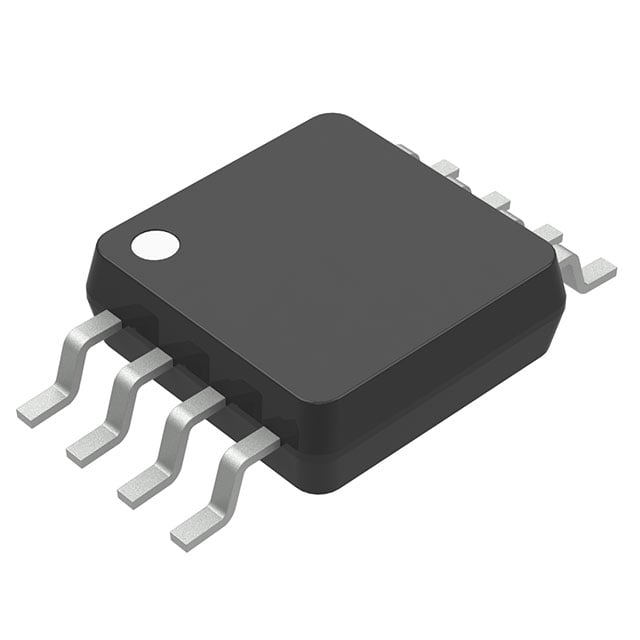
Q1: What is the Microchip Technology MCP41010-E/SN?
A1: The MCP41010-E/SN is an 8-bit digital potentiometer produced by Microchip Technology. It allows precise adjustment of resistance values via digital control, making it ideal for replacing mechanical potentiometers in various electronic applications.
Q2: What resistance value does the MCP41010-E/SN offer?
A2: The MCP41010-E/SN offers a total resistance of 10 kΩ, which can be adjusted digitally in 256 steps due to its 8-bit resolution.
Q3: How is the MCP41010-E/SN controlled?
A3: The MCP41010-E/SN is controlled through a Serial Peripheral Interface (SPI) bus, enabling fast and accurate programming of the wiper position from a microcontroller or other SPI master device.
Q4: What are the power supply requirements for the MCP41010-E/SN?
A4: The device operates with a single supply voltage ranging from 2.7 V to 5.5 V, making it compatible with most modern low-voltage digital systems.
Q5: What package type does the MCP41010-E/SN come in?
A5: The MCP41010-E/SN is typically available in an 8-pin SOIC package, allowing easy integration into compact circuit boards.
Q6: Can multiple MCP41010-E/SN devices be connected on the same SPI bus?
A6: Yes, multiple MCP41010-E/SN devices can be daisy-chained or connected with separate chip-select lines to the same SPI bus, allowing control of several digital potentiometers from a single microcontroller.
Q7: Does the MCP41010-E/SN retain its wiper position after power down?
A7: No, the MCP41010-E/SN is a volatile digital potentiometer, meaning it loses its programmed wiper position when power is removed and requires reprogramming on power-up.
Q8: What is the typical temperature range for the MCP41010-E/SN?
A8: The device operates reliably over a temperature range of -40°C to +85°C, suitable for most industrial and commercial applications.
Q9: What is the resolution of the MCP41010-E/SN?
A9: The MCP41010-E/SN features an 8-bit resolution, enabling 256 discrete resistance steps between 0 and the total resistance value.
Q10: How fast can the MCP41010-E/SN update its resistance?
A10: The device can update its wiper position with SPI clock frequencies up to several MHz, enabling rapid resistance changes in real-time applications.
Q11: What are typical applications for the MCP41010-E/SN?
A11: Common applications include audio volume control, signal attenuation, tuning circuits, programmable filters, and calibration circuits where mechanical potentiometers are less practical.
Q12: What is the typical power consumption of the MCP41010-E/SN?
A12: The MCP41010-E/SN features very low quiescent current, typically in the microampere range, making it suitable for battery-powered and low-power devices.
Q13: Can the MCP41010-E/SN be used in audio circuits?
A13: Yes, the MCP41010-E/SN is widely used for digitally controlled volume adjustment and tone control in audio amplifiers and mixers due to its smooth resistance stepping and low noise.
Q14: What are the electrical characteristics of the wiper resistance?
A14: The wiper resistance is typically low, around 75 ohms, ensuring minimal impact on signal integrity when adjusting resistance.
Q15: Does the MCP41010-E/SN require external calibration?
A15: The device is factory calibrated; however, system-level calibration may be necessary depending on application-specific accuracy requirements.
Q16: Is the MCP41010-E/SN immune to electrostatic discharge (ESD)?
A16: The MCP41010-E/SN includes internal ESD protection circuitry but should still be handled with proper ESD precautions to prevent damage.
Q17: What is the endurance of the MCP41010-E/SN in terms of write cycles?
A17: The device is rated for at least 1 million write cycles, providing long-term reliability for most applications requiring frequent resistance adjustments.
Q18: How does the MCP41010-E/SN perform in terms of temperature stability?
A18: The resistance values remain stable across the operating temperature range, with typical temperature coefficients around 50 ppm/°C, suitable for precision applications.
Q19: Can the MCP41010-E/SN be used in medical equipment?
A19: Yes, its high reliability and precision make it suitable for various medical devices that require digitally adjustable resistance components.
Q20: What design considerations should be made when using the MCP41010-E/SN?
A20: Designers should ensure proper SPI timing and voltage levels, account for the volatile nature of the device by reprogramming at startup, and consider the wiper resistance and total resistance tolerance in their circuit calculations to achieve the desired performance.