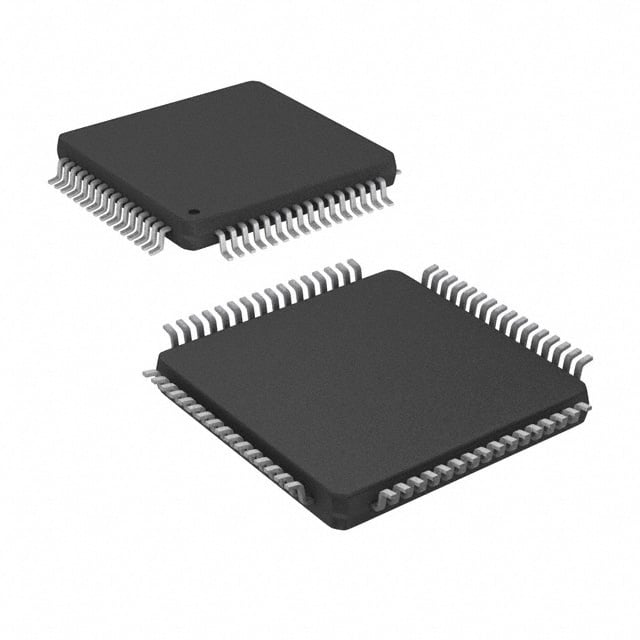
Certainly! The AT91SAM7X512B-AU is a highly integrated microcontroller from Atmel%27s AT91SAM series, designed for a range of applications requiring robust performance and extensive peripheral support. Here’s a detailed overview:
## Overview
The AT91SAM7X512B-AU is an ARM7-based microcontroller, which is part of Atmel’s SAM7 series, featuring a 32-bit ARM7TDMI core. It is designed for high-performance embedded applications that require a combination of processing power, versatile connectivity, and efficient power consumption.
## Key Features
1. ARM7TDMI Core:
- The AT91SAM7X512B-AU is powered by the ARM7TDMI processor core, which provides a balance of performance and power efficiency. The ARM7TDMI core runs at a clock speed of up to 55 MHz, allowing for fast execution of instructions and efficient processing of tasks.
2. Flash Memory:
- It includes 512 KB of Flash memory, providing ample space for application code and firmware. This memory can be programmed and erased in blocks, making it suitable for applications that require frequent updates.
3. SRAM:
- The microcontroller is equipped with 64 KB of SRAM. This volatile memory is used for storing variables and runtime data, offering quick access and modification during execution.
4. Peripheral Set:
- The AT91SAM7X512B-AU features a comprehensive set of peripherals, including:
- USARTs (Universal Synchronous/Asynchronous Receiver/Transmitters): Up to 2 USARTs for serial communication.
- SPI (Serial Peripheral Interface): Up to 2 SPI interfaces for high-speed data exchange.
- I²C (Inter-Integrated Circuit): Up to 2 I²C interfaces for communication with other I²C-compatible devices.
- Timer/Counters: Several timers and counters for managing time-based operations.
- PWM (Pulse Width Modulation): For generating precise control signals.
- ADC (Analog-to-Digital Converter): A 10-bit ADC for converting analog signals to digital data.
- DAC (Digital-to-Analog Converter): A 10-bit DAC for converting digital signals back to analog.
5. GPIO (General Purpose Input/Output):
- It includes multiple GPIO pins, which can be configured as input or output for various digital signal processing tasks.
6. Communication Interfaces:
- CAN (Controller Area Network): Provides robust communication in automotive and industrial environments.
- USB: Integrated USB interface for high-speed data transfer and peripheral connectivity.
7. Clock Management:
- The microcontroller supports various clock sources, including an internal RC oscillator and external crystal or oscillator inputs. This flexibility allows for precise clock configuration to meet application needs.
8. Power Management:
- The AT91SAM7X512B-AU offers multiple power-saving modes, including sleep and idle modes, to extend battery life in power-sensitive applications.
9. Security Features:
- Features such as a unique device ID and memory protection help safeguard application code and prevent unauthorized access or modification.
10. Package and Pinout:
- The microcontroller is available in a 100-pin LQFP (Low-profile Quad Flat Package), which provides a robust physical interface for mounting on PCBs and offers a balance of performance and ease of use.
## Applications
1. Consumer Electronics:
- Used in devices requiring efficient processing and versatile connectivity, such as handheld devices and smart home appliances.
2. Industrial Control:
- Ideal for managing industrial automation systems, including PLCs (Programmable Logic Controllers) and process control equipment, thanks to its reliable I/O and communication interfaces.
3. Automotive Systems:
- Applied in automotive electronics for tasks such as diagnostics, control systems, and in-vehicle communication networks.
4. Networking Equipment:
- Suitable for routers, switches, and other networking devices that benefit from its high-speed communication capabilities and peripheral support.
5. Medical Devices:
- Utilized in medical equipment requiring reliable performance and precise control, such as diagnostic tools and patient monitoring systems.
6. Point-of-Sale Systems:
- Employed in POS systems where high-speed processing and reliable communication with peripherals are essential.
## Design Considerations
1. Power Supply:
- Ensure proper power supply management and decoupling to maintain stable operation. The microcontroller’s power supply pins should be adequately filtered to minimize noise.
2. Thermal Management:
- In applications with high processing demands, consider thermal management strategies to prevent overheating and maintain optimal performance.
3. PCB Layout:
- Proper PCB layout is crucial for signal integrity. Minimize trace lengths and use proper grounding techniques to reduce noise and interference.
4. Peripheral Configuration:
- Carefully configure and manage peripherals to maximize their utility and ensure reliable operation.
5. Firmware Development:
- Utilize Atmel’s development tools and libraries to streamline firmware development and leverage the microcontroller’s capabilities effectively.
## Conclusion
The AT91SAM7X512B-AU is a powerful and versatile microcontroller that offers a blend of high performance, extensive peripheral support, and efficient power management. Its ARM7TDMI core and rich feature set make it suitable for a wide range of applications, from consumer electronics to industrial control systems. With its large memory capacity, diverse peripherals, and robust design, the AT91SAM7X512B-AU is well-suited for demanding embedded applications requiring reliability and efficiency.