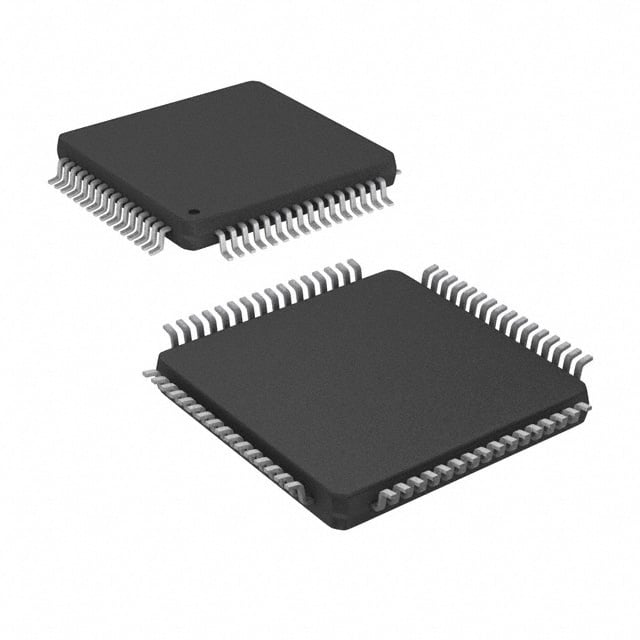
The AT91SAM7X256C-AU is a microcontroller from Atmel (now part of Microchip Technology) that belongs to the AT91SAM7 family. It is designed for applications requiring high performance, robust connectivity, and efficient power management. Here’s a comprehensive overview of this microcontroller:
## 1. Overview
The AT91SAM7X256C-AU is a member of the ARM7-based AT91SAM7 family, leveraging the ARM7TDMI core. It is renowned for its high performance, extensive peripheral set, and versatility. This microcontroller is suitable for a broad range of applications, including industrial control, automotive, consumer electronics, and communication systems.
## 2. Core Features
- Processor: The microcontroller features an ARM7TDMI processor core, which is known for its balance of performance and power efficiency. It operates at a maximum clock speed of 55 MHz, allowing for robust computation and efficient data processing.
- Flash Memory: The AT91SAM7X256C-AU includes 256 KB of Flash memory. This ample storage capacity allows for extensive firmware development, including the ability to perform in-application programming and over-the-air updates.
- SRAM: It is equipped with 64 KB of SRAM. This fast-access memory supports the execution of complex algorithms and data manipulation, enhancing overall system performance.
- Clock Speed: The maximum clock frequency of 55 MHz provides a good balance between processing power and energy consumption, making it suitable for various real-time applications.
## 3. Peripherals and I/O
- Communication Interfaces: The AT91SAM7X256C-AU includes a rich set of communication peripherals:
- USART: 2 USARTs (Universal Synchronous/Asynchronous Receiver Transmitters) for serial communication.
- SPI: 2 SPI (Serial Peripheral Interface) interfaces for high-speed data transfer with external devices.
- I2C: 2 I2C (Inter-Integrated Circuit) interfaces for communication with sensors and peripherals.
- CAN: 1 CAN (Controller Area Network) interface for robust communication in industrial and automotive applications.
- Timers: It features several timers, including:
- PWM: Pulse Width Modulation (PWM) channels for motor control and signal generation.
- General-Purpose Timers: For various timing and counting operations.
- Real-Time Clock (RTC): To maintain accurate time and date, even when the microcontroller is in low-power modes.
- Analog Interfaces: The AT91SAM7X256C-AU includes multiple Analog-to-Digital Converters (ADC) for high-resolution analog signal processing, making it suitable for applications that require precise measurement of physical quantities.
- External Interrupts: The microcontroller provides a range of external interrupts for handling asynchronous events, enhancing its ability to respond promptly to external signals.
## 4. Memory and Data Management
- Flash Memory: With 256 KB of Flash memory, the AT91SAM7X256C-AU supports the storage of large programs and data, enabling more complex applications and user features.
- SRAM: The 64 KB SRAM is used for fast data access and temporary storage, which is crucial for high-speed data manipulation and execution of time-sensitive tasks.
- Memory Protection Unit (MPU): It includes an MPU for enhancing system security and protection by controlling access to different memory regions.
## 5. Power Management
- Operating Voltage: The microcontroller operates within a voltage range of 1.8V to 3.6V, which makes it suitable for battery-powered and low-voltage applications.
- Power Modes: The AT91SAM7X256C-AU supports various power-saving modes, including Sleep and Standby modes, to conserve energy during periods of inactivity.
## 6. Development and Support
- Development Tools: The AT91SAM7X256C-AU is supported by a range of development tools, including Atmel’s Studio, which offers a comprehensive development environment. Additionally, it is compatible with various third-party IDEs (Integrated Development Environments) and development kits.
- Software Libraries: Atmel provides a suite of software libraries and middleware, including the Atmel Software Framework (ASF), which simplifies development by offering drivers, middleware, and examples.
- Documentation and Community: Extensive documentation, including datasheets, reference manuals, and application notes, is available to assist developers. The AT91SAM7 community and forums provide additional resources and support.
## 7. Applications
- Industrial Control: The microcontroller’s robust set of peripherals and real-time capabilities make it suitable for industrial automation and control systems.
- Automotive: With its CAN interface and high-performance processing, the AT91SAM7X256C-AU can be used in automotive applications for control and monitoring.
- Consumer Electronics: Its flexibility and connectivity options are ideal for consumer devices such as home appliances and entertainment systems.
- Communication Systems: The rich set of communication peripherals supports various communication protocols, making it suitable for network and communication applications.
## 8. Summary
The AT91SAM7X256C-AU is a versatile and high-performance microcontroller that combines the power of the ARM7TDMI core with a broad range of peripherals and memory options. Its features make it well-suited for demanding applications across various industries, providing both performance and flexibility. With strong development support and a comprehensive set of features, the AT91SAM7X256C-AU is a robust choice for complex and high-performance embedded systems.