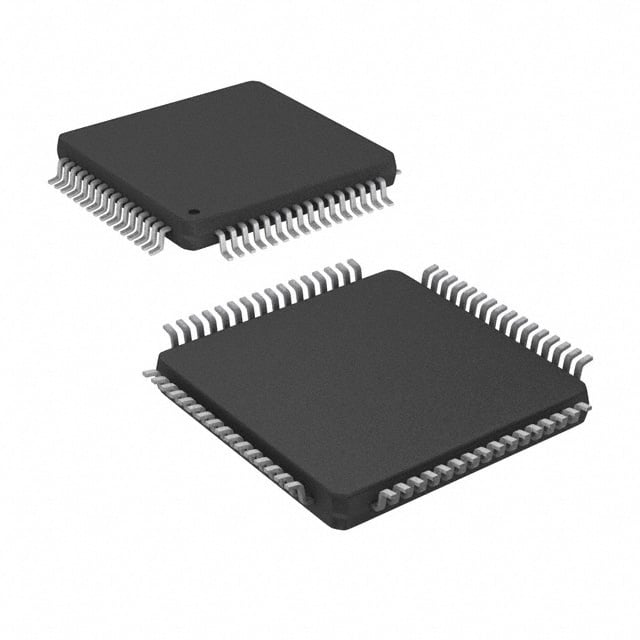
The Atmel AT91SAM7S256D-MU is a high-performance microcontroller designed for a range of embedded applications. This microcontroller is part of the AT91SAM7 family, which is based on the ARM7TDMI core, providing a solid foundation for various types of electronic projects and products. Below is a detailed technical specification of the AT91SAM7S256D-MU:
## AT91SAM7S256D-MU Detailed Specifications
## 1. Core Architecture:
- Processor Core: ARM7TDMI
- CPU Clock Speed: Up to 55 MHz
- Instruction Set: ARM7TDMI supports both ARM and Thumb instruction sets, providing a balance between performance and code density.
- Performance: The ARM7TDMI core is known for its efficient processing capabilities, suitable for tasks requiring high computational performance with minimal power consumption.
## 2. Memory:
- Flash Memory:
- Size: 256 KB
- Type: Embedded Flash
- Features: The flash memory is used for storing the program code and can be erased and reprogrammed electrically.
- RAM:
- Size: 64 KB
- Type: SRAM (Static RAM)
- Features: Provides fast access to data and variables, essential for real-time processing and application execution.
- EEPROM:
- Size: 4 KB
- Type: EEPROM (Electrically Erasable Programmable Read-Only Memory)
- Features: Used for storing non-volatile data, such as configuration settings and calibration data.
## 3. Peripherals:
- General-Purpose I/O (GPIO):
- Number of Pins: 48 I/O pins
- Features: Configurable as input or output, with support for various functions such as timers, interrupts, and alternate functions.
- Timers:
- Number of Timers: 6
- Types: Includes basic timers, PWM (Pulse Width Modulation) timers, and Real-Time Clock (RTC)
- Features: Can be used for generating time delays, event counting, and pulse width modulation.
- Serial Communication:
- USART (Universal Synchronous/Asynchronous Receiver/Transmitter): 2
- Features: Support for asynchronous and synchronous communication, including RS-232, RS-485, and other serial protocols.
- SPI (Serial Peripheral Interface): 2
- Features: High-speed synchronous serial communication for interfacing with peripherals such as sensors, memory devices, and other microcontrollers.
- I²C (Inter-Integrated Circuit): 2
- Features: Multi-master, multi-slave, and multi-speed support for interfacing with a range of I²C devices.
- Analog Interfaces:
- ADC (Analog-to-Digital Converter): 10-bit, 8 channels
- Features: Converts analog signals to digital form for processing by the microcontroller.
- DAC (Digital-to-Analog Converter): 1, 10-bit
- Features: Converts digital values to analog signals for driving analog devices.
- External Memory Interface:
- Support: For interfacing with external memory devices such as SRAM, NAND flash, and other memory types through a multiplexed or demultiplexed bus.
## 4. Power Management:
- Operating Voltage:
- Range: 1.8V to 3.6V
- Features: Supports a wide range of operating voltages, providing flexibility in power supply choices.
- Power Consumption:
- Typical Consumption: Low power consumption in various operating modes, including a low-power sleep mode to extend battery life in portable applications.
- Sleep Modes:
- Features: Multiple sleep modes for reducing power consumption during idle periods, including idle, sleep, and deep sleep modes.
## 5. Packaging and Physical Characteristics:
- Package Type: LQFP (Low-profile Quad Flat Package)
- Package Size: 64-pin LQFP
- Dimensions: 10 mm x 10 mm
- Pitch: 0.8 mm
- Temperature Range:
- Operating Temperature: -40°C to +85°C
- Features: Suitable for industrial applications with a wide operating temperature range.
## 6. Development and Debugging:
- Debugging Support:
- Interface: JTAG (Joint Test Action Group) for debugging and programming.
- Features: Provides access to internal registers, memory, and peripheral configurations for development and troubleshooting.
- Development Tools:
- Support: Compatible with a range of development tools, including Atmel Studio and third-party IDEs. Software libraries and example codes are available to assist in rapid development.
## 7. Security and Protection:
- Watchdog Timer: Integrated watchdog timer to reset the microcontroller in case of software malfunctions.
- Brown-Out Detector: Monitors the supply voltage and provides reset signals if the voltage drops below a certain threshold.
## Summary
The Atmel AT91SAM7S256D-MU is a versatile microcontroller featuring the ARM7TDMI core with 256 KB of flash memory, 64 KB of SRAM, and 4 KB of EEPROM. It provides a rich set of peripherals, including GPIO, timers, serial communication interfaces (USART, SPI, I²C), and analog interfaces (ADC and DAC). Its wide operating voltage range, low power consumption, and industrial temperature range make it suitable for a variety of embedded applications. With support for JTAG debugging and compatibility with development tools, it offers a robust platform for developing complex and reliable systems.