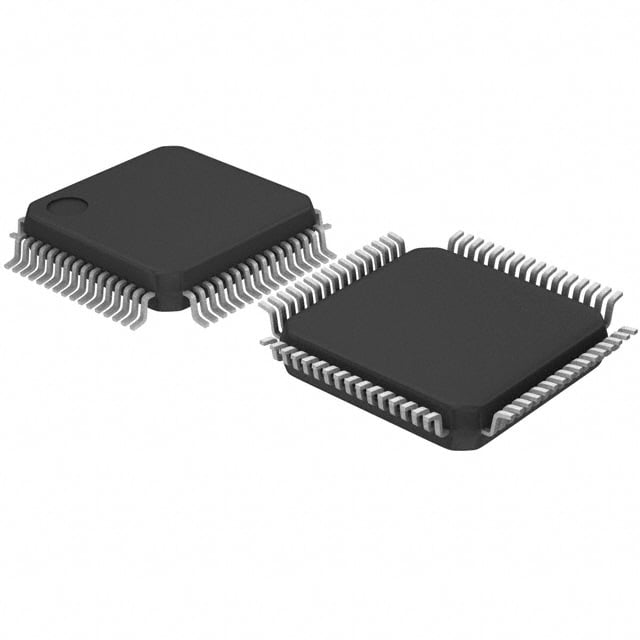
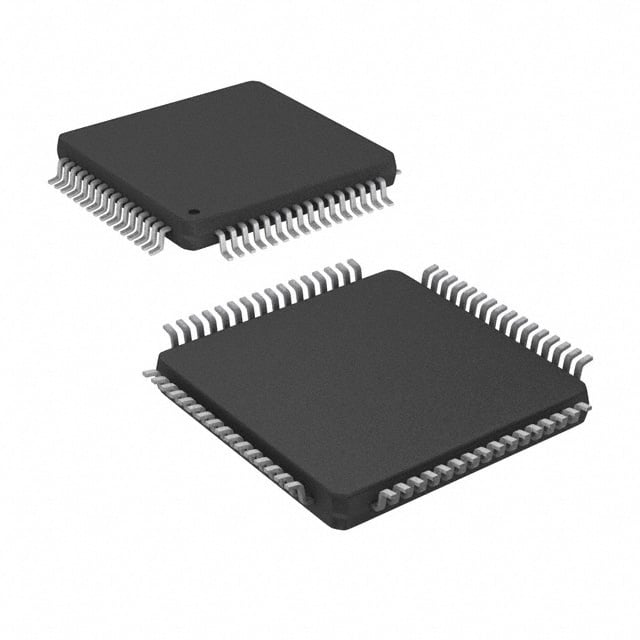
The AT91SAM7S256D-AU is a microcontroller from the AT91SAM series produced by Microchip Technology, formerly Atmel. It is a member of the ARM7TDMI core family and is known for its robust features tailored to a wide range of applications, including industrial control, consumer electronics, and communication systems. Here’s an in-depth look at the AT91SAM7S256D-AU:
## Overview
- Manufacturer: Microchip Technology (formerly Atmel)
- Product Line: AT91SAM7 Series
- Core Architecture: ARM7TDMI
- Package Type: 64-pin LQFP (Low-Profile Quad Flat Package)
- Flash Memory Size: 256 KB
- RAM Size: 64 KB
- Operating Voltage: 1.8V to 3.6V
## Key Features
1. ARM7TDMI Core:
- The AT91SAM7S256D-AU is based on the ARM7TDMI core, which is a 32-bit RISC microprocessor that offers high performance and efficiency. It supports both 32-bit and 16-bit instructions and is known for its balance of performance and power consumption.
2. Flash Memory:
- The microcontroller includes 256 KB of Flash memory, which is used to store the program code. This amount of Flash memory provides ample space for complex applications and firmware.
3. SRAM:
- The device is equipped with 64 KB of SRAM (Static Random Access Memory), which is used for data storage and provides fast, reliable access to data during execution.
4. Peripheral Set:
- The AT91SAM7S256D-AU includes a rich set of peripherals to support various functionalities:
- USART: Up to 3 USARTs (Universal Synchronous/Asynchronous Receiver/Transmitter) for serial communication.
- SPI: 2 SPI (Serial Peripheral Interface) controllers for high-speed data transfer.
- I2C: 2 I2C (Inter-Integrated Circuit) controllers for communication with other I2C devices.
- PWM: 6 PWM (Pulse Width Modulation) channels for generating precise pulse signals.
- ADC: 10-bit Analog-to-Digital Converter with up to 8 channels for analog input.
- Timers: Multiple timers for scheduling and time-related functions.
- GPIO: General Purpose Input/Output pins for interfacing with external hardware.
5. Low Power Modes:
- The AT91SAM7S256D-AU supports various low-power modes to optimize energy consumption, including sleep and standby modes. This feature is critical for battery-powered and energy-efficient applications.
6. Clock Management:
- The microcontroller has an internal clock system that can be configured to operate at frequencies up to 55 MHz. It also supports external crystal oscillators for accurate timing.
7. Bootloader Support:
- The AT91SAM7S256D-AU supports a bootloader function that allows for in-field firmware updates. This capability is essential for maintaining and upgrading software without needing physical access to the device.
8. Enhanced Debugging Capabilities:
- It includes debugging features such as JTAG (Joint Test Action Group) and SWD (Serial Wire Debug), which provide advanced debugging and development support.
9. Memory Protection Unit (MPU):
- The device includes an MPU that helps in protecting memory regions, enhancing the security and stability of the application by controlling access rights.
## Specifications
1. Core: ARM7TDMI
2. Clock Speed: Up to 55 MHz
3. Flash Memory: 256 KB
4. SRAM: 64 KB
5. I/O Ports: 44 I/O pins
6. Analog-to-Digital Converter: 10-bit, 8 channels
7. PWM Channels: 6
8. USART: 3 channels
9. SPI: 2 channels
10. I2C: 2 channels
11. Timers: Multiple timers including 16-bit and 32-bit options
12. Power Supply: 1.8V to 3.6V
13. Operating Temperature Range: -40°C to +85°C
## Applications
1. Industrial Control:
- The AT91SAM7S256D-AU is well-suited for industrial control systems due to its robust peripheral set and reliable performance. It can be used in applications such as automation, process control, and instrumentation.
2. Consumer Electronics:
- Its low power consumption and versatile peripherals make it ideal for consumer electronics applications, including handheld devices, home appliances, and smart gadgets.
3. Communication Systems:
- The microcontroller’s communication peripherals (USART, SPI, I2C) enable it to interface with various communication modules, making it suitable for data acquisition systems, communication protocols, and networked devices.
4. Medical Devices:
- With its high precision and reliability, the AT91SAM7S256D-AU can be employed in medical devices that require accurate data processing and control, such as diagnostic equipment and monitoring systems.
5. Automotive:
- The microcontroller’s robust performance and wide temperature range make it applicable in automotive systems for control and monitoring functions.
## Advantages
1. High Performance:
- The ARM7TDMI core provides efficient processing power for complex tasks while maintaining low power consumption.
2. Versatile Peripherals:
- The extensive range of peripherals allows for flexibility in design and easy integration with other components and systems.
3. Low Power Operation:
- The various low-power modes extend battery life and enhance energy efficiency in portable and battery-operated devices.
4. Development Support:
- The inclusion of debugging features and bootloader support simplifies development and firmware updates.
5. Reliability:
- With a wide operating temperature range and robust performance, the AT91SAM7S256D-AU is suitable for demanding environments and applications.
## Summary
The AT91SAM7S256D-AU by Microchip Technology is a powerful and versatile microcontroller based on the ARM7TDMI core. It offers a comprehensive set of features, including substantial Flash and SRAM memory, a broad array of peripherals, and support for low-power operation. Its robust performance and flexibility make it an excellent choice for a variety of applications, from industrial control and consumer electronics to communication systems and automotive solutions. The microcontroller’s high performance, combined with its extensive peripheral set and advanced debugging capabilities, ensures that it meets the needs of complex and demanding applications.