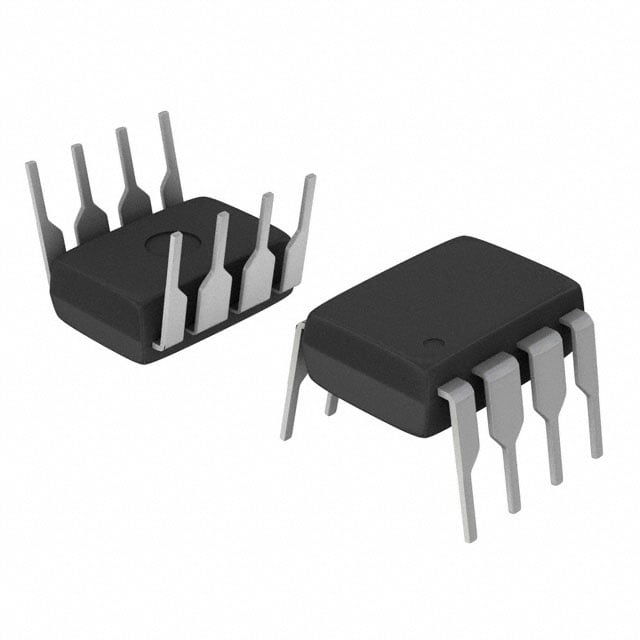
Q1: What is the Vishay SFH6705?
A1: The Vishay SFH6705 is an infrared light-emitting diode (LED) designed for optical sensing and data transmission applications, providing reliable performance in high-speed circuits.
Q2: What is the wavelength of the Vishay SFH6705?
A2: The Vishay SFH6705 has a typical wavelength of 850 nm, which is commonly used for infrared communication and sensing applications.
Q3: What is the maximum forward current for the Vishay SFH6705?
A3: The maximum forward current for the Vishay SFH6705 is 100mA, which ensures it delivers sufficient infrared light output for most sensing tasks.
Q4: What is the typical forward voltage of the Vishay SFH6705?
A4: The typical forward voltage of the Vishay SFH6705 is 1.2V, which ensures efficient operation at typical operating currents.
Q5: What package type does the Vishay SFH6705 come in?
A5: The Vishay SFH6705 comes in a compact 3mm x 4mm surface-mount package, making it ideal for use in space-constrained electronic designs.
Q6: What are the key applications for the Vishay SFH6705?
A6: The Vishay SFH6705 is commonly used in optical sensors, infrared communication systems, remote control devices, and optical encoders.
Q7: What is the emission angle of the Vishay SFH6705?
A7: The typical emission angle of the Vishay SFH6705 is 60 degrees, providing a broad range of infrared light for optimal performance in sensing and communication applications.
Q8: What is the operating temperature range of the Vishay SFH6705?
A8: The Vishay SFH6705 operates within a temperature range of -40°C to +85°C, ensuring reliable performance in various environmental conditions.
Q9: What is the maximum power dissipation of the Vishay SFH6705?
A9: The maximum power dissipation for the Vishay SFH6705 is 100mW, ensuring the device operates efficiently with minimal heat generation.
Q10: Is the Vishay SFH6705 RoHS compliant?
A10: Yes, the Vishay SFH6705 is RoHS compliant, meaning it is free from hazardous substances such as lead, meeting international environmental standards.
Q11: What is the rise and fall time of the Vishay SFH6705?
A11: The Vishay SFH6705 has fast rise and fall times, making it suitable for high-speed data transmission and optical sensing applications.
Q12: What is the radiant intensity of the Vishay SFH6705?
A12: The Vishay SFH6705 has a high radiant intensity, which ensures a strong infrared output suitable for a wide range of optical sensing and communication tasks.
Q13: Can the Vishay SFH6705 be used for remote control applications?
A13: Yes, the Vishay SFH6705 is ideal for remote control applications, where infrared light emission is used for communication between devices.
Q14: What is the half-intensity angle of the Vishay SFH6705?
A14: The half-intensity angle of the Vishay SFH6705 is 60 degrees, which provides an optimal angle for emitting infrared light in various applications.
Q15: How does the Vishay SFH6705 perform in high-speed circuits?
A15: The Vishay SFH6705 performs excellently in high-speed circuits, with fast rise and fall times, making it suitable for high-frequency applications.
Q16: Can the Vishay SFH6705 be used in automotive systems?
A16: Yes, the Vishay SFH6705 is suitable for automotive applications, including sensor systems and infrared communication for keyless entry and other functions.
Q17: What is the typical response time of the Vishay SFH6705?
A17: The Vishay SFH6705 has a very fast response time, which is ideal for quick signaling in optical communication and sensor applications.
Q18: How does the Vishay SFH6705 compare to other infrared LEDs?
A18: The Vishay SFH6705 stands out with its high radiant intensity, broad emission angle, and efficient energy usage, making it an excellent choice for optical and communication systems.
Q19: What are the electrical characteristics of the Vishay SFH6705?
A19: The Vishay SFH6705 features low forward voltage (typically 1.2V) and a maximum forward current of 100mA, making it highly efficient for optical applications.
Q20: Where can I buy the Vishay SFH6705?
A20: The Vishay SFH6705 can be purchased through authorized electronic component distributors, online platforms, or directly from Vishay’s official website.