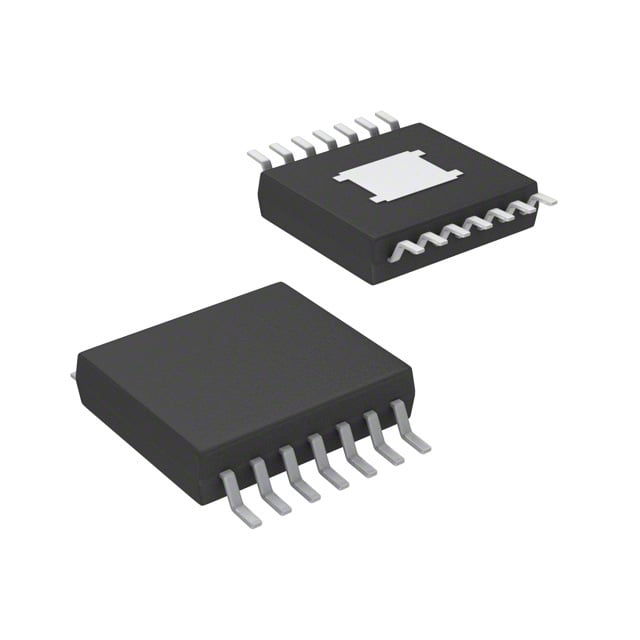
The Texas Instruments UCD7201PWPR is a highly integrated digital power controller designed for use in power management applications, particularly in DC-DC converters. This device is part of the UCD family of digital power controllers, which are known for their flexibility, precision, and ease of use in managing power systems. The UCD7201 is particularly suitable for applications requiring high efficiency, reliability, and advanced control features.
## Overview
The UCD7201PWPR is designed to provide comprehensive control and monitoring capabilities for power supply systems. It features a digital control architecture that allows for precise regulation of output voltage and current, as well as advanced features such as telemetry, fault management, and system diagnostics. This makes it an ideal choice for applications in telecommunications, data centers, industrial equipment, and automotive systems.
## Key Features
1. Digital Control Architecture: The UCD7201 utilizes a digital control loop, which allows for precise regulation of output voltage and current. This architecture enables advanced control algorithms that can improve system performance and efficiency.
2. Multi-Phase Control: The device supports multi-phase operation, allowing for the control of multiple power stages in parallel. This feature is essential for high-current applications, as it helps to distribute the load and improve thermal performance.
3. Integrated Voltage and Current Sensing: The UCD7201 includes integrated sensing capabilities for both output voltage and current, enabling real-time monitoring and control. This feature enhances system reliability and allows for accurate feedback in control loops.
4. Flexible Configuration: The device can be configured for various topologies and applications, including buck, boost, and buck-boost converters. This flexibility makes it suitable for a wide range of power management scenarios.
5. Fault Management: The UCD7201 includes built-in fault detection and management features, such as over-voltage protection (OVP), under-voltage protection (UVP), over-current protection (OCP), and thermal shutdown. These features help to protect the power supply and connected loads from damage.
6. Telemetry and Diagnostics: The device supports telemetry features that allow for remote monitoring of key parameters, such as output voltage, current, and temperature. This capability is essential for system diagnostics and performance optimization.
7. I2C Interface: The UCD7201 communicates with external devices via an I2C interface, allowing for easy integration into larger systems and enabling configuration and monitoring from a host controller.
8. Low Power Consumption: The device is designed for low power operation, making it suitable for energy-efficient applications.
## Specifications
- Input Voltage Range: 4.5V to 15V
- Output Voltage Range: Configurable (typically 0.8V to 5V)
- Maximum Output Current: Up to 30A (depending on external components)
- Control Loop Type: Digital control with compensation
- Switching Frequency: Configurable (up to 1 MHz)
- Temperature Range: -40°C to 125°C
- Package Type: HTQFP (HTQFP-48)
- Pin Count: 48
- I2C Interface Speed: Up to 1 MHz
## Applications
The UCD7201PWPR is suitable for a variety of applications, including:
- Telecommunications Equipment: Used in power supplies for networking and communication devices.
- Data Centers: Ideal for managing power in servers and storage systems, where efficiency and reliability are critical.
- Industrial Equipment: Suitable for powering industrial automation systems and control equipment.
- Automotive Systems: Can be used in automotive power management applications, including battery management systems and electric vehicle chargers.
## Conclusion
The Texas Instruments UCD7201PWPR is a versatile and powerful digital power controller that offers advanced features for managing DC-DC converters. With its digital control architecture, multi-phase capability, integrated sensing, and robust fault management, it provides an excellent solution for a wide range of power management applications. Its flexibility and ease of integration make it an attractive choice for engineers looking to design efficient and reliable power systems in various industries.