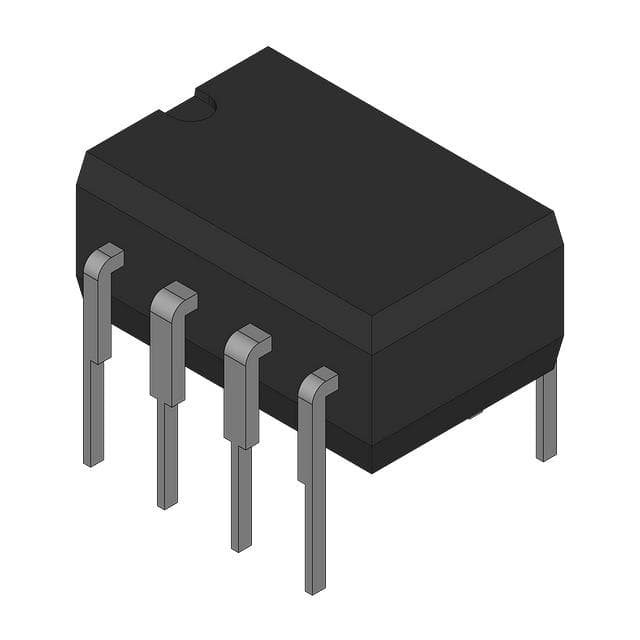
The Texas Instruments TLC274ACD is a quad JFET-input operational amplifier that combines high performance with low power consumption. Designed for applications requiring precision, the TLC274ACD is ideal for signal conditioning, active filters, and data acquisition systems.
## Key Features
1. Quad Configuration: The device includes four independent, high-gain operational amplifiers in a single package, allowing for multi-channel applications.
2. Low Power Consumption: The TLC274ACD operates with a low supply current of 200 µA per amplifier, making it suitable for battery-operated and portable devices.
3. Wide Supply Voltage Range: It can operate on a supply voltage range from ±2.5 V to ±15 V, providing flexibility for various circuit designs.
4. High Input Impedance: The JFET-input design ensures high input impedance (up to 10^12 ohms), minimizing loading on the preceding stage.
5. Low Offset Voltage: The device features a low input offset voltage of 1 mV (maximum), enhancing accuracy in precision applications.
6. Rail-to-Rail Output: The output can swing close to the supply rails, enabling maximum output voltage range, which is beneficial for single-supply applications.
7. Temperature Range: The operational amplifier is rated for operation from -40°C to 85°C, making it suitable for a wide range of industrial and commercial applications.
## Specifications
Here are the key specifications of the TLC274ACD:
- Supply Voltage (VCC): ±2.5 V to ±15 V
- Input Voltage Range: -0.3 V to VCC + 0.3 V
- Input Offset Voltage: 1 mV (max)
- Input Bias Current: 20 pA (typical)
- Input Impedance: 10^12 ohms (typical)
- Gain-Bandwidth Product: 1 MHz (typical)
- Slew Rate: 0.5 V/µs (typical)
- Common Mode Rejection Ratio (CMRR): 100 dB (typical)
- Power Supply Rejection Ratio (PSRR): 100 dB (typical)
- Output Voltage Swing: Within 10 mV of either supply rail (typical)
- Output Current: 50 mA (min)
- Power Supply Current: 200 µA per amplifier (typical)
- Temperature Range: -40°C to 85°C (commercial)
## Pin Configuration
The TLC274ACD is available in a 14-pin TSSOP package. The pin configuration is as follows:
1. V+: Positive supply voltage.
2. V-: Negative supply voltage.
3. OUT1: Output of amplifier 1.
4. IN+1: Non-inverting input of amplifier 1.
5. IN-1: Inverting input of amplifier 1.
6. OUT2: Output of amplifier 2.
7. IN+2: Non-inverting input of amplifier 2.
8. IN-2: Inverting input of amplifier 2.
9. OUT3: Output of amplifier 3.
10. IN+3: Non-inverting input of amplifier 3.
11. IN-3: Inverting input of amplifier 3.
12. OUT4: Output of amplifier 4.
13. IN+4: Non-inverting input of amplifier 4.
14. IN-4: Inverting input of amplifier 4.
## Applications
The TLC274ACD is suitable for a wide range of applications, including:
- Signal Conditioning: Ideal for amplifying weak signals in sensor applications.
- Active Filters: Can be used in designing active filter circuits for audio and signal processing.
- Instrumentation: Suitable for use in precision measurement systems.
- Data Acquisition Systems: Commonly utilized in analog front-ends for data converters.
## Advantages
1. High Performance: The TLC274ACD offers excellent accuracy with low noise and low offset voltage.
2. Low Power Consumption: Its low supply current makes it ideal for low-power applications, especially in portable devices.
3. Flexible Power Supply Options: The wide supply voltage range accommodates various application needs.
4. Robust Design: With a high input impedance and rail-to-rail output, it ensures compatibility with diverse circuit configurations.
## Conclusion
The Texas Instruments TLC274ACD is a highly versatile and efficient quad operational amplifier, suitable for a variety of precision applications. Its combination of low power consumption, high input impedance, and low offset voltage makes it an excellent choice for engineers looking to implement high-performance amplification solutions in their designs. Whether used in battery-powered devices or sophisticated instrumentation systems, the TLC274ACD delivers reliability and efficiency across a wide range of applications.