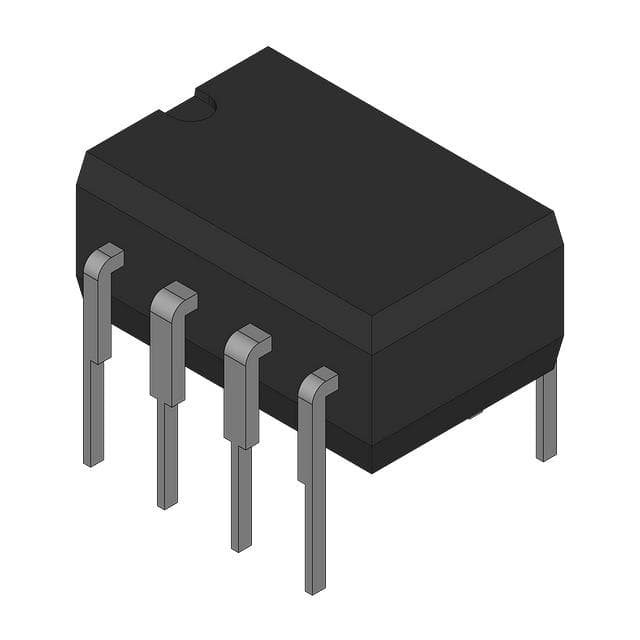
The Texas Instruments TL103WIDR is a precision low-noise operational amplifier that is widely used in various analog applications. Known for its high performance, the TL103WIDR is suitable for applications in signal conditioning, audio processing, and instrumentation. This op-amp features a unique combination of low offset voltage, low noise, and wide bandwidth, making it ideal for high-performance systems.
## Key Features
1. Low Offset Voltage: The TL103WIDR provides a maximum input offset voltage of just 0.5 mV, ensuring accurate signal amplification with minimal error.
2. Low Noise: With a low voltage noise density of 15 nV/√Hz, this op-amp is suitable for applications requiring high fidelity and low noise interference.
3. Wide Bandwidth: The device boasts a gain bandwidth product of 10 MHz, allowing it to handle a broad range of frequencies effectively.
4. High Slew Rate: The TL103WIDR has a slew rate of 6 V/µs, which facilitates fast signal changes and ensures minimal distortion.
5. Single-Supply Operation: It can operate from a single supply voltage of +3 V to +36 V, providing versatility in circuit design.
6. Rail-to-Rail Output: The output can swing within 20 mV of the positive and negative supply rails, maximizing the dynamic range of the output signal.
7. Temperature Range: It operates over a temperature range of -40°C to +85°C, making it suitable for industrial and automotive applications.
8. Package Type: The TL103WIDR comes in an 8-pin SOIC (Small Outline Integrated Circuit) package, facilitating easy integration into various PCB designs.
## Electrical Specifications
## Absolute Maximum Ratings
- Supply Voltage (VCC): ±18 V or 36 V (single supply)
- Input Voltage (VIN): -0.3 V to VCC + 0.3 V
- Output Short-Circuit Duration: Continuous
- Operating Temperature (TA): -40°C to +85°C
- Storage Temperature (TSTG): -65°C to +150°C
## Recommended Operating Conditions
- Supply Voltage (VCC): +3 V to +36 V (single supply)
- Input Common Mode Voltage Range: -0.2 V to VCC - 1.5 V
## Electrical Characteristics
- Input Offset Voltage (VOS):
- Max: 0.5 mV
- Typ: 0.1 mV
- Input Bias Current (IB):
- Max: 100 nA
- Typ: 30 nA
- Input Offset Current (IOS):
- Max: 100 nA
- Typ: 10 nA
- Open-Loop Gain (AOL):
- Min: 100 dB
- Typ: 120 dB
- Common Mode Rejection Ratio (CMRR):
- Min: 70 dB
- Typ: 90 dB
- Power Supply Rejection Ratio (PSRR):
- Min: 70 dB
- Typ: 80 dB
- Voltage Noise Density: 15 nV/√Hz at 1 kHz
- Slew Rate (SR): 6 V/µs
- Gain Bandwidth Product (GBW): 10 MHz
- Output Voltage Swing:
- High: VCC - 20 mV
- Low: -20 mV
- Total Harmonic Distortion (THD):
- Typ: 0.001% at 1 kHz
## Pin Configuration
The TL103WIDR is available in an 8-pin SOIC package, with the following pin configuration:
```
+-------------------+
| |
1 | Offset Null | 8
2 | Inverting Input | 7
3 | Non-Inverting Input| 6
4 | V- | 5
+-------------------+
```
- Pin 1: Offset Null – Connect to a potentiometer for offset adjustment.
- Pin 2: Inverting Input (−) – The input where the signal is inverted.
- Pin 3: Non-Inverting Input (+) – The input where the signal is added.
- Pin 4: Negative Supply (V-) – Connect to the negative power supply.
- Pin 5: Positive Supply (V+) – Connect to the positive power supply.
- Pin 6: Output – The output of the amplifier.
- Pin 7: NC (No Connect) – Not connected internally.
- Pin 8: Offset Null – For adjusting output offset.
## Applications
The TL103WIDR is used in a variety of applications, including:
1. Signal Conditioning: Amplifying weak signals from sensors before further processing.
2. Audio Processing: Used in high-fidelity audio equipment for preamplification and tone control.
3. Instrumentation: Employed in measurement systems where accurate amplification of small signals is critical.
4. Active Filters: Commonly utilized in designing active filter circuits due to its low noise characteristics.
5. Data Acquisition Systems: Integrates well in systems that require precise signal measurements.
## Conclusion
The Texas Instruments TL103WIDR operational amplifier is a versatile, high-performance device that excels in various analog applications. Its low noise, low offset voltage, and wide bandwidth make it an excellent choice for engineers looking to design reliable and accurate circuitry. For detailed information and application guidelines, consult the official Texas Instruments datasheet.