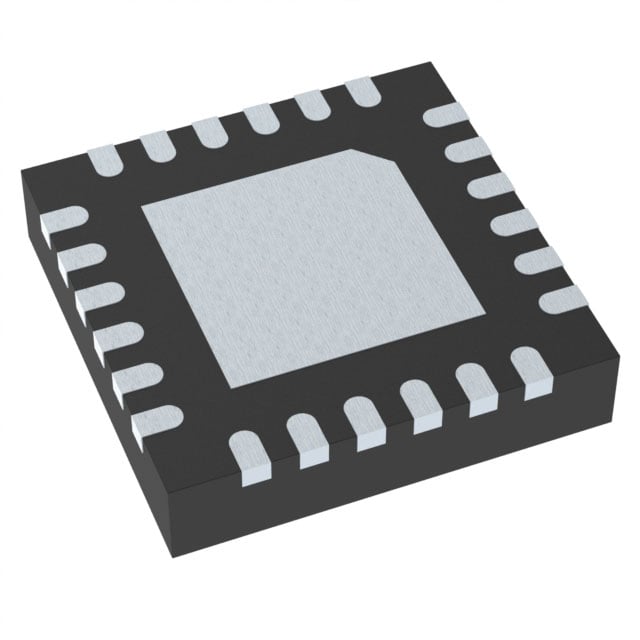
Introduction to Texas Instruments PCA9539RGER
The Texas Instruments PCA9539RGER is an I²C-bus I/O port expander designed to provide additional GPIO (General Purpose Input/Output) pins for microcontrollers and processors. This device is particularly useful in applications where the number of available GPIO pins is limited, allowing designers to expand the input/output capabilities of their systems easily. The PCA9539RGER features a flexible architecture, enabling both input and output configurations, making it suitable for various embedded applications.
Key Features
1. I²C Interface: The PCA9539RGER communicates over the I²C bus, allowing for easy integration with microcontrollers that support this protocol. It can operate in standard mode (up to 100 kHz) and fast mode (up to 400 kHz).
2. 16 GPIO Pins: The device provides 16 GPIO pins that can be configured individually as either inputs or outputs, offering significant flexibility for controlling peripherals such as LEDs, switches, and sensors.
3. Interrupt Capability: The PCA9539RGER includes an interrupt output pin (INT), which alerts the host controller when there are changes in the input states. This feature helps reduce polling overhead and enhances system responsiveness.
4. Configurable I/O Direction: Each GPIO pin can be independently set as an input or output via the configuration registers, allowing for dynamic control based on application requirements.
5. Low Power Consumption: The device is designed for low power operation, making it suitable for battery-powered applications. The typical operating current is around 200 µA.
6. Wide Supply Voltage Range: It operates from a supply voltage range of 2.3V to 5.5V, providing compatibility with various logic levels and making it versatile for different system designs.
7. Power-On Reset: The PCA9539RGER features an internal power-on reset circuit that initializes the device to a known state upon power-up, ensuring predictable behavior immediately after power is applied.
Electrical Specifications
- Supply Voltage (VCC): 2.3V to 5.5V
- I/O Voltage Levels (VIH/VIL):
- High-level input voltage (VIH): Minimum 0.7 × VCC
- Low-level input voltage (VIL): Maximum 0.3 × VCC
- Maximum I/O Current: ±25 mA per pin
- Total Maximum I/O Current: 100 mA
- Operating Temperature Range: -40°C to +85°C
- I²C Bus Speed: Up to 400 kHz in fast mode
- Typical Operating Current (ICC): ~200 µA
Pin Configuration
The PCA9539RGER is packaged in a TSSOP (Thin Shrink Small Outline Package) with a pin configuration as follows:
- Pin 1: INT
- Pin 2: A0
- Pin 3: A1
- Pin 4: A2
- Pin 5: SCL
- Pin 6: SDA
- Pins 7-22: GPIO0-GPIO15
- Pin 23: GND
- Pin 24: VCC
Applications
The versatility of the PCA9539RGER makes it suitable for various applications including:
1. Consumer Electronics: Used in remote controls, home appliances, and other devices requiring additional control inputs/outputs.
2. Industrial Automation: Provides expanded I/O capabilities for sensors and actuators in industrial control systems.
3. Embedded Systems: Ideal for microcontroller-based systems needing more GPIOs than available on-chip.
4. Communication Equipment: Enhances connectivity options in devices such as routers and switches by providing extra control lines.
5. Automotive Applications: Suitable for controlling lights, sensors, and other peripherals within automotive electronics.
Conclusion
The Texas Instruments PCA9539RGER is a robust I²C-bus I/O port expander that effectively addresses the need for additional GPIOs in various electronic applications. With its flexible configuration options, interrupt capability, and low power consumption characteristics, it stands out as a valuable component for designers looking to enhance their systems' functionality without increasing complexity or cost significantly. Its wide supply voltage range and compatibility with different logic levels further contribute to its utility across diverse application domains, making it an excellent choice for modern embedded designs seeking efficient expansion solutions.