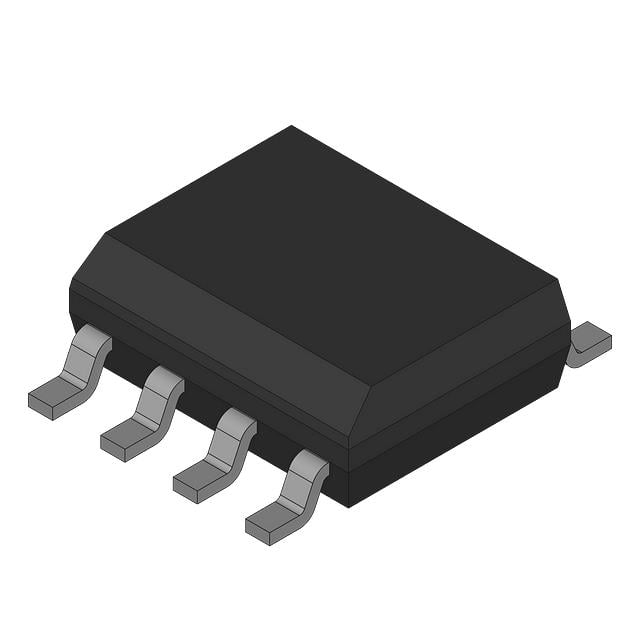
The Texas Instruments OPA1013CN8 is a precision dual operational amplifier designed for general-purpose analog signal conditioning applications requiring low offset voltage, stable DC performance, and reliable operation across industrial and commercial temperature ranges. It belongs to a family of bipolar-input operational amplifiers optimized for moderate-speed analog processing with improved accuracy compared to general-purpose amplifiers. The device is intended for applications such as instrumentation front ends, active filtering, signal amplification, and analog computation circuits where DC precision and predictable behavior are more critical than ultra-high bandwidth performance.
## Device Function and Positioning
The OPA1013CN8 is a dual-channel operational amplifier integrated circuit, providing two independent op-amp units within a single package. Each amplifier is internally compensated for unity-gain stability, allowing flexible configuration in inverting, non-inverting, summing, and buffering topologies without additional external compensation components.
The device is positioned in the precision analog amplifier segment rather than high-speed or low-noise specialized amplifier families. Its design emphasizes low input offset voltage, low offset drift, and stable bias current characteristics, making it suitable for DC-coupled signal chains and precision analog processing. The CN8 suffix corresponds to a dual op-amp configuration in an 8-pin DIP package, typically used in through-hole prototyping and industrial systems.
## Electrical Characteristics and Key Parameters
The OPA1013CN8 is characterized by a low input offset voltage, typically in the range of a few millivolts or lower depending on grade, ensuring accurate signal amplification in DC-sensitive circuits. Input bias current is specified in the low nanoampere range, reflecting the bipolar input stage design optimized for improved DC accuracy over FET-input amplifiers in certain operating conditions.
The device operates from dual supply voltages typically ranging from ±5 V to ±18 V, or from single-supply configurations up to 36 V total supply voltage. This wide supply range allows integration into both legacy analog systems and modern single-supply industrial electronics.
The gain-bandwidth product is specified in the low MHz range, typically around 1 MHz class performance, indicating that the device is optimized for low- to mid-frequency analog processing rather than high-speed signal amplification. Slew rate is typically in the sub-volt per microsecond range, consistent with precision amplifier architecture rather than high-speed video or RF applications.
Output voltage swing is capable of approaching the supply rails under light load conditions, but full rail-to-rail operation is not a defining characteristic of this device. Output current drive capability is sufficient for interfacing with ADC inputs, moderate load resistances, and feedback networks in analog control systems.
Noise performance is optimized for low-frequency applications, with voltage noise density specified in the tens of nanovolts per square root hertz range at midband frequencies, making it suitable for instrumentation and sensor signal conditioning.
## Input Stage and Analog Behavior
The OPA1013CN8 uses a bipolar input stage architecture, which provides low offset voltage and stable bias characteristics over temperature. Input common-mode voltage range is typically narrower than rail-to-rail amplifiers and requires operation within defined supply-dependent limits to maintain linear behavior.
The input stage is designed to maintain predictable offset drift across temperature, making it suitable for precision DC amplification tasks such as bridge sensor amplification, thermocouple conditioning, and low-level analog measurement systems. Input protection structures are included to prevent damage from transient overvoltage conditions within specified limits.
## Stability and Frequency Response
The device is internally frequency compensated for unity-gain stability, eliminating the need for external compensation components in most configurations. This simplifies circuit design and improves repeatability across production units.
Phase margin and gain margin characteristics are optimized for closed-loop stability in standard feedback configurations. The amplifier exhibits predictable single-pole dominant response behavior, resulting in smooth roll-off characteristics suitable for analog filtering and control loop applications.
## Power Supply and Operating Conditions
The OPA1013CN8 supports dual-supply operation and single-supply operation within its rated voltage range. Power supply rejection ratio (PSRR) is designed to minimize output variation due to supply fluctuations, which is important in mixed-signal environments where supply noise may be present.
Quiescent current is relatively low for a precision bipolar amplifier, enabling continuous operation in industrial systems without excessive power dissipation. Thermal stability is ensured across the full operating temperature range, typically spanning industrial-grade conditions.
## Package and Mechanical Characteristics
The CN8 designation indicates an 8-pin plastic dual in-line package (PDIP), which is widely used in through-hole PCB designs and prototyping environments. This package offers good thermal dissipation through PCB copper planes and mechanical robustness for industrial assemblies.
The pin configuration follows standard dual op-amp layout conventions, with separate inputs, outputs, and power supply pins for each amplifier channel. The package supports easy replacement and testing in laboratory and field environments.
## Typical Applications
The OPA1013CN8 is used in precision analog signal conditioning systems, including sensor amplification for strain gauges, pressure sensors, and temperature measurement circuits. It is also suitable for active filtering applications such as low-pass and band-pass filters in instrumentation systems.
Additional applications include analog summing amplifiers, integrators, voltage reference buffering, and control system error amplification stages. Its stability and DC accuracy make it suitable for industrial automation systems, data acquisition front ends, and general-purpose precision analog circuitry.
## Conclusion
The Texas Instruments OPA1013CN8 is a dual precision operational amplifier optimized for accurate low-frequency analog signal processing with stable DC performance and moderate bandwidth characteristics. Its low input offset voltage, controlled bias currents, unity-gain stability, and wide supply voltage range make it suitable for instrumentation, sensor conditioning, and industrial analog control applications. The device’s architecture prioritizes precision and stability over speed, positioning it as a reliable general-purpose precision op-amp for robust analog system design.