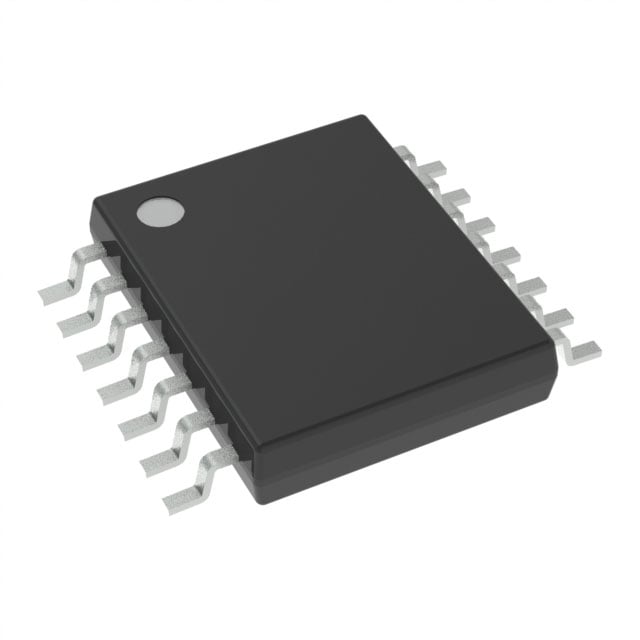
The Texas Instruments DRV600RTJR is a high-performance, low-noise operational amplifier specifically designed for driving low-resistance loads like photodiodes or capacitive sensors. It features a wide bandwidth and high slew rate, making it ideal for applications in audio, instrumentation, and sensor interfacing. The DRV600RTJR is particularly suited for systems that require precise signal amplification with minimal distortion.
## Key Features
1. High Output Current:
- Capable of delivering output currents up to 600 mA, allowing it to drive heavy loads effectively.
2. Low Noise:
- The device exhibits very low noise characteristics, making it suitable for high-fidelity audio and sensitive measurement applications.
3. Wide Bandwidth:
- The DRV600 has a gain bandwidth product (GBW) of approximately 40 MHz, providing flexibility for various application requirements.
4. High Slew Rate:
- A typical slew rate of 50 V/µs ensures that the amplifier can respond quickly to fast-changing signals, reducing distortion.
5. Low Total Harmonic Distortion (THD):
- The device maintains low THD at high output levels, ensuring signal integrity for audio applications.
6. Thermal Protection:
- Built-in thermal shutdown and current limiting features protect the device from damage under excessive load conditions.
7. Wide Supply Voltage Range:
- The operating supply voltage range is from ±4.5 V to ±15 V, providing versatility in design.
8. Compact Package:
- Available in a small 8-pin SOIC package, optimizing space in PCB layouts.
## Electrical Specifications
Here are the detailed electrical specifications for the DRV600RTJR:
| Parameter | Value |
|----------------------------------------|---------------------------------------|
| Supply Voltage Range | ±4.5 V to ±15 V |
| Output Current | 600 mA (max) |
| Gain Bandwidth Product | 40 MHz (typical) |
| Slew Rate | 50 V/µs (typical) |
| Input Voltage Range | ±2.5 V to ±13 V |
| Low Noise | 5 nV/√Hz (at 1 kHz) |
| Total Harmonic Distortion (THD) | <0.01% (at 1 kHz, 10 Vpp) |
| Common-Mode Rejection Ratio (CMRR)| 100 dB (typical) |
| Power Supply Rejection Ratio (PSRR)| 80 dB (typical) |
| Operating Temperature Range | -40°C to +85°C |
| Package Type | 8-Pin SOIC |
## Functional Block Diagram
The functional block diagram of the DRV600 includes:
- Differential Input Stage: Ensures high common-mode rejection and accurate signal amplification.
- Output Stage: Designed to deliver high current while maintaining low distortion.
- Feedback Network: Allows for setting gain configurations as needed in application circuits.
## Application Circuits
The DRV600RTJR is versatile and can be used in a variety of applications, including:
1. Audio Amplifiers: Ideal for driving speakers or headphones in high-fidelity audio systems.
2. Photodiode Amplification: Suitable for converting the current from photodiodes into a usable voltage signal.
3. Instrumentation: Used in medical equipment, sensors, and data acquisition systems requiring precise amplification.
4. Signal Conditioning: Effective in preparing signals for analog-to-digital conversion.
## Thermal Considerations
When integrating the DRV600RTJR into your design, it's essential to consider thermal management:
- Adequate Heat Dissipation: Ensure the PCB layout allows for heat to dissipate efficiently, especially under high output conditions.
- Thermal Modeling: Use thermal simulation tools to predict and mitigate potential overheating issues in your application.
## Conclusion
The Texas Instruments DRV600RTJR is an excellent choice for applications requiring high output current, low noise, and high bandwidth. Its robust performance and protective features make it suitable for a wide range of uses, from audio amplification to precision instrumentation. For more information on design considerations, application notes, and usage guidelines, refer to the official Texas Instruments website and the DRV600RTJR datasheet.