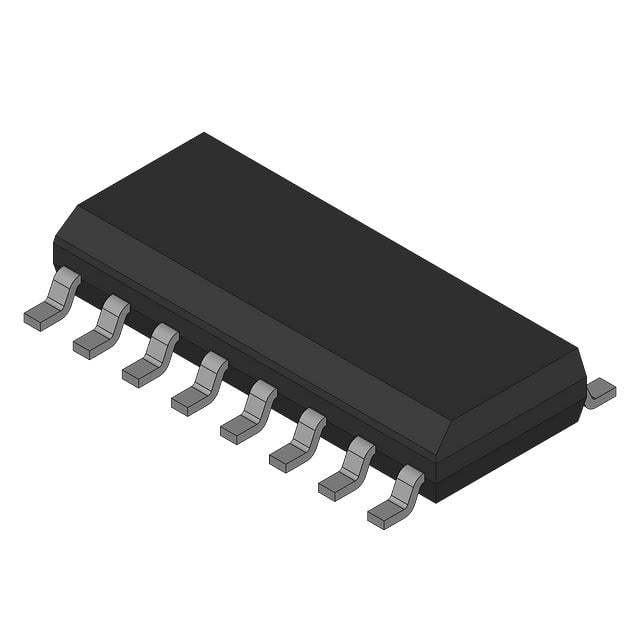
Q1: What is the Texas Instruments CD4051BM?
A1: The Texas Instruments CD4051BM is an 8-channel analog multiplexer designed for selecting between multiple analog input signals and routing them to a single output.
Q2: What is the function of the CD4051BM?
A2: The CD4051BM functions as an analog multiplexer, allowing users to switch between multiple input signals to one output, making it ideal for signal routing applications.
Q3: How many channels does the CD4051BM have?
A3: The CD4051BM has 8 channels, meaning it can select one of eight input signals and route it to the output.
Q4: What is the supply voltage range for the CD4051BM?
A4: The CD4051BM operates within a supply voltage range of 3V to 18V, providing flexibility for use in various systems.
Q5: What is the maximum current that the CD4051BM can handle at its output?
A5: The CD4051BM can handle a maximum output current of 10mA, making it suitable for low-power analog signal applications.
Q6: What is the logic family of the CD4051BM?
A6: The CD4051BM belongs to the CD4000 series of CMOS logic devices, known for their low power consumption and high noise immunity.
Q7: What is the operating temperature range of the CD4051BM?
A7: The CD4051BM has an operating temperature range of -55°C to 125°C, allowing it to be used in a wide range of industrial and automotive applications.
Q8: How does the CD4051BM perform with high-speed signals?
A8: The CD4051BM can handle moderate-speed analog signals, but may not be suitable for very high-frequency applications due to the switch's relatively slow response time.
Q9: Is the CD4051BM suitable for digital signal applications?
A9: While the CD4051BM is designed for analog signal routing, it can be used for digital signals in certain applications where low-speed switching is acceptable.
Q10: What is the power consumption of the CD4051BM?
A10: The CD4051BM has low power consumption typical of CMOS devices, making it efficient for use in portable and battery-powered applications.
Q11: Can the CD4051BM be used to multiplex audio signals?
A11: Yes, the CD4051BM can be used to multiplex audio signals, provided the frequency range and signal strength are within the specifications for the device.
Q12: How are the channels selected on the CD4051BM?
A12: The channels on the CD4051BM are selected through three control inputs (S1, S2, and S3), which determine which of the 8 channels is connected to the output.
Q13: What is the on-resistance (R(on)) of the CD4051BM?
A13: The on-resistance of the CD4051BM is typically low, helping to minimize signal distortion when switching between channels.
Q14: Does the CD4051BM support bidirectional signal switching?
A14: Yes, the CD4051BM supports bidirectional signal switching, making it suitable for applications where the signal flow needs to be reversible.
Q15: What is the package type for the CD4051BM?
A15: The CD4051BM is available in a variety of packages, including a 16-pin dual in-line package (DIP) and surface-mount options, suitable for different design needs.
Q16: Can the CD4051BM handle signals outside the supply voltage range?
A16: No, the signals applied to the CD4051BM should be within the supply voltage range. Applying signals outside this range could damage the device.
Q17: What is the typical switching time of the CD4051BM?
A17: The CD4051BM has a typical switching time of around 40ns, making it suitable for applications where moderate-speed switching is needed.
Q18: Can the CD4051BM be used in high-speed data acquisition systems?
A18: While the CD4051BM is suitable for general-purpose analog multiplexing, it may not be ideal for high-speed data acquisition systems due to its moderate switching speed.
Q19: How is the CD4051BM controlled?
A19: The CD4051BM is controlled through three binary select inputs (S1, S2, and S3), which determine which of the 8 channels is connected to the output.
Q20: Is the CD4051BM suitable for use in automotive applications?
A20: Yes, the CD4051BM is suitable for automotive applications, especially for signal routing in systems such as audio processing, sensors, and communication circuits.