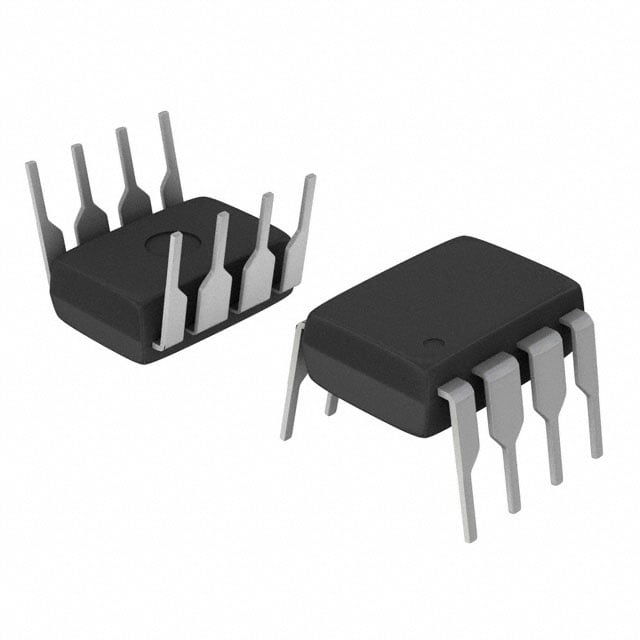
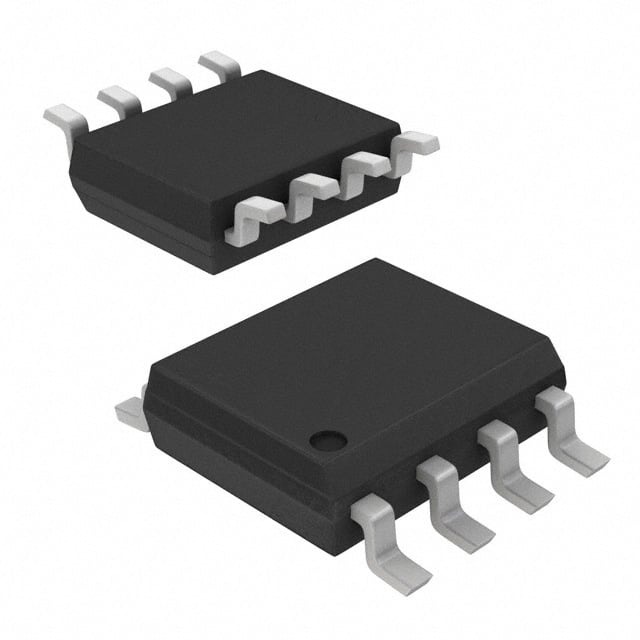
The STMicroelectronics SA555N is a highly versatile and reliable timer IC widely used in a range of electronic circuits. As part of the popular 555 timer family, the SA555N is an integrated circuit designed to generate precise time delays or produce oscillation in various analog and digital circuits. This timer IC is renowned for its stability, ease of use, and flexibility, making it a staple in both educational and industrial applications.
## Key Specifications and Features
1. IC Type and Functionality
The SA555N is a monostable/astable multivibrator timer IC, capable of operating in either monostable or astable mode. In monostable mode, the IC generates a single pulse of a specific duration in response to a triggering signal. In astable mode, the IC oscillates continuously, producing a square wave output with adjustable frequency and duty cycle. This makes the SA555N useful for a variety of timing and pulse generation applications, such as generating clock pulses, LED flashers, tone generators, and PWM signals.
2. Voltage Range
The SA555N is designed to operate with a wide supply voltage range, from 4.5V to 15V, which makes it compatible with a variety of system voltages. This flexibility allows it to be used in both low and high-voltage circuits, and it can easily interface with different types of digital logic systems, sensors, and actuators. Its wide operating voltage range also contributes to its versatility in applications requiring stable performance across varying input conditions.
3. Output Configuration
The output of the SA555N is typically a digital signal, capable of sinking or sourcing up to 200 mA of current, depending on the supply voltage and load conditions. The output can drive a variety of loads directly, such as LEDs, small motors, or relays, making the SA555N ideal for use in control applications where simple switching or signal generation is needed. The output is either high (logic level “1”) or low (logic level “0”), making it easy to interface with other digital components in a system.
4. Timing Accuracy and Stability
The timing accuracy of the SA555N is largely determined by the external resistor and capacitor connected to the IC. The timing period is given by the formula $T = 1.1 cdot R cdot C$ (in monostable mode) or $T = 0.693 cdot (R1 + 2 cdot R2) cdot C$ (in astable mode), where $R$ represents resistance in ohms, and $C$ represents capacitance in farads. The IC provides a stable output with a typical timing tolerance of about ±1% to ±5%, depending on the quality of the external components and environmental factors like temperature and supply voltage fluctuations.
5. Triggering and Control
The SA555N features multiple triggering options. In monostable mode, the timer is triggered by a low pulse on the trigger input (pin 2). A pulse at this input starts the timing period, and the output returns to low once the period is complete. In astable mode, the IC continuously oscillates, and the frequency can be controlled by adjusting the external resistors and capacitors.
The IC also includes a control voltage input (pin 5) that allows for modulation of the threshold voltage, enabling adjustments to the timing cycle without modifying external components. This feature makes it easier to fine-tune timing intervals in real-time or dynamically control pulse width modulation (PWM) applications.
6. Temperature Range
The SA555N is designed to operate within a temperature range of -55°C to +125°C, which makes it suitable for both commercial and industrial applications. This wide temperature tolerance ensures that the IC can function reliably in a variety of environments, including those that experience extreme temperature fluctuations. The device's stability over a broad temperature range is a key feature for automotive, aerospace, and industrial systems that must perform consistently under harsh conditions.
7. Power Consumption
The power consumption of the SA555N is relatively low, making it suitable for battery-powered or energy-efficient applications. In standby mode, the IC consumes only a small amount of current, typically in the range of microamperes. During active operation, the typical current draw is around 10 to 15 mA, depending on the supply voltage and load. This low power consumption helps to extend battery life in portable devices, such as timing circuits in consumer electronics.
8. Package and Pin Configuration
The SA555N is available in a variety of package types, including the standard 8-pin dual in-line package (DIP-8) and surface-mount packages. This makes it compatible with different PCB designs and mounting options. The 8-pin package provides the following pinout:
* Pin 1: Ground (GND)
* Pin 2: Trigger (input)
* Pin 3: Output
* Pin 4: Reset (input, active low)
* Pin 5: Control voltage (input)
* Pin 6: Threshold (input)
* Pin 7: Discharge (output)
* Pin 8: VCC (power supply)
This straightforward pin configuration allows for easy integration into a wide range of circuits.
9. Applications
The SA555N timer IC is widely used in both analog and digital systems. Its versatile functionality makes it ideal for the following applications:
* Pulse Width Modulation (PWM): The IC can generate PWM signals for motor control, dimming LEDs, and power regulation applications.
* Tone Generation: It can be used as a tone generator in audio circuits, such as alarms, beeps, and other sound-based applications.
* Time Delay Circuits: In monostable mode, it can generate a precise time delay for triggering other components, such as switches or actuators.
* Oscillator Circuits: In astable mode, the SA555N can generate a continuous oscillation, making it useful in clock generation for frequency generators, tone generators, and other oscillatory systems.
* Pulse Generation: The IC is often used to produce precise, repeatable pulses for triggering other devices in systems like frequency counters, pulse-width modulation (PWM) controllers, and event-based timing applications.
* Sequencing and Control: The 555 timer can be used in control systems where sequential operations or timed delays are necessary, such as in automation, robotics, and signal sequencing.
10. Advantages and Benefits
The SA555N offers several advantages that make it a popular choice for a wide range of applications:
* Low Cost: It is an inexpensive IC, making it an economical solution for timing and signal generation.
* Versatility: The SA555N can operate in both monostable and astable modes, providing flexibility for a variety of timing and oscillation applications.
* Wide Supply Voltage Range: With a supply voltage range from 4.5V to 15V, the IC is compatible with most standard power supplies.
* Ease of Use: The IC is simple to implement in circuits, with minimal external components required to set timing intervals or frequencies.
* Durability: The IC is designed for reliable operation in a wide range of temperatures, ensuring long-term performance in both commercial and industrial environments.
## Conclusion
The STMicroelectronics SA555N is a highly reliable and versatile timer IC with a wide range of applications in various electronic systems. Its ability to operate in both monostable and astable modes, along with its low power consumption, adjustable timing, and wide voltage range, makes it ideal for generating time delays, oscillations, and pulses. The SA555N is commonly used in everything from simple consumer electronics to complex industrial control systems, where precise and reliable timing is required. Whether for signal generation, PWM, tone generation, or timing control, the SA555N offers a flexible, cost-effective solution for many electronic design projects.