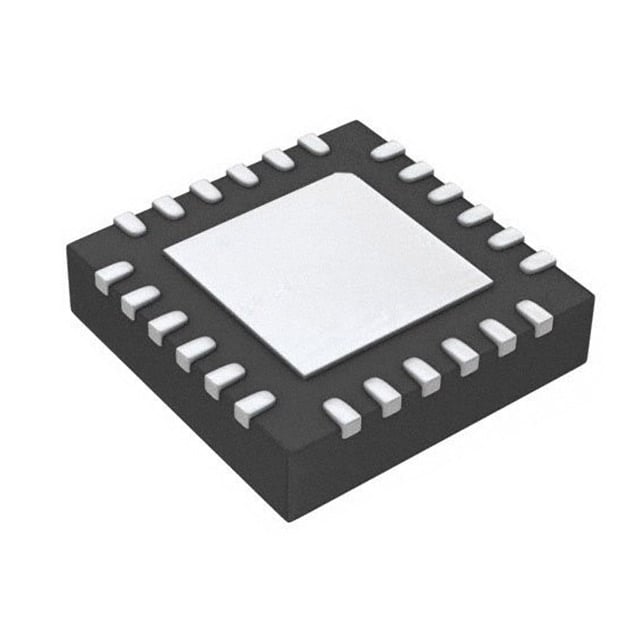
The Silicon Labs CP2101 is a highly integrated USB-to-UART (Universal Asynchronous Receiver-Transmitter) bridge designed to facilitate communication between USB devices and serial devices. This device is particularly useful in applications where a USB interface is required for legacy serial devices, enabling seamless connectivity and data transfer. Below is a detailed overview of the specifications, features, and applications of the CP2101.
## Overview
The CP2101 is a single-chip solution that converts USB signals to UART signals, allowing for easy integration into various electronic systems. It is designed to support a wide range of baud rates and provides a simple interface for connecting USB-enabled devices to serial communication systems. The CP2101 is available in a compact 28-pin QFN package, making it suitable for space-constrained applications.
## Key Specifications
1. USB Specification:
- The CP2101 complies with USB 2.0 specifications, supporting full-speed USB (12 Mbps) communication.
2. UART Interface:
- The device supports standard UART communication with configurable baud rates ranging from 300 bps to 1 Mbps, allowing for flexibility in various applications.
3. Data Format:
- The CP2101 supports 5, 6, 7, or 8 data bits, along with configurable parity (none, even, odd) and stop bits (1 or 2), providing versatility for different serial communication protocols.
4. Power Supply:
- The device operates from a single 3.0V to 5.5V power supply, making it compatible with a wide range of systems.
5. Low Power Consumption:
- The CP2101 features low power consumption, with a typical operating current of 15 mA and a USB suspend current of less than 1 mA, which is beneficial for battery-powered applications.
6. Integrated EEPROM:
- The device includes an integrated EEPROM that allows for customization of the USB VID (Vendor ID), PID (Product ID), and serial number, enabling unique identification of the device.
7. GPIO Pins:
- The CP2101 provides several general-purpose input/output (GPIO) pins that can be configured for various functions, such as flow control or status indication.
8. Operating Temperature Range:
- The device operates over a temperature range of -40°C to +85°C, making it suitable for industrial and automotive applications.
## Features
- Easy Integration:
The CP2101 is designed for easy integration into existing systems, with minimal external components required for operation.
- Driver Support:
Silicon Labs provides comprehensive driver support for various operating systems, including Windows, macOS, and Linux, simplifying the development process.
- Robust Communication:
The device supports hardware flow control (RTS/CTS) and software flow control (XON/XOFF), ensuring reliable data transmission.
- Compact Package:
The 28-pin QFN package allows for a small footprint, making it ideal for space-constrained designs.
- Customizable USB Descriptors:
The integrated EEPROM allows users to customize USB descriptors, enabling tailored functionality for specific applications.
## Applications
The Silicon Labs CP2101 is suitable for a wide range of applications, including:
- USB connectivity for legacy serial devices
- Industrial automation and control systems
- Point-of-sale (POS) terminals
- Medical devices
- Consumer electronics
- Development boards and prototyping
## Conclusion
The Silicon Labs CP2101 is a versatile and efficient USB-to-UART bridge that provides a reliable solution for connecting USB devices to serial communication systems. With its wide range of supported baud rates, low power consumption, and easy integration, the CP2101 is an excellent choice for engineers and designers looking to implement USB connectivity in their applications. Its robust features and compact design make it suitable for various industries, including industrial automation, medical devices, and consumer electronics.