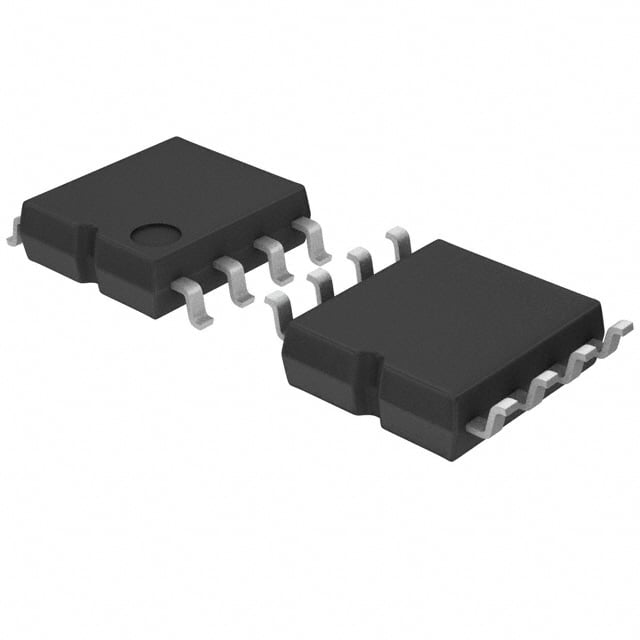
BM2P139TF-E2 from ROHM Semiconductor is an offline AC/DC switching power supply controller IC belonging to the BM2Pxxx series, designed for isolated and non-isolated low-power flyback converter topologies. The device integrates a primary-side PWM controller with a built-in high-voltage startup circuit, power MOSFET gate driver, and multiple protection functions, enabling compact and energy-efficient SMPS designs without requiring a secondary-side feedback IC in basic configurations. It is optimized for cost-sensitive, low-standby-power applications such as household appliances and industrial auxiliary power supplies, where high efficiency and low no-load consumption are required.
## Device Function and Electrical Positioning
BM2P139TF-E2 functions as a quasi-resonant or fixed-frequency flyback converter controller depending on system configuration and operating mode. It is designed for offline AC input operation, directly interfacing with rectified high-voltage DC bus rails. The device integrates a high-voltage startup circuit that eliminates the need for external startup resistors in many configurations, reducing standby power loss. The internal PWM controller regulates output voltage through primary-side feedback techniques or optocoupler-based secondary feedback depending on system design requirements.
The IC is positioned in ROHM’s low-power AC/DC controller family and targets compact power supplies typically below several tens of watts. It supports energy-efficient operation modes, including burst mode or light-load skip control, to reduce switching losses under low output load conditions.
## Electrical Characteristics
BM2P139TF-E2 is specified with a set of electrical parameters that define its operational limits and control behavior. The device operates from a rectified high-voltage DC input, with an integrated startup circuit capable of sustaining initial bias until auxiliary winding or supply takeover occurs.
Key datasheet-defined electrical characteristics include:
The maximum rated high-voltage startup pin tolerance, ensuring safe direct connection to rectified AC mains-derived DC bus voltage.
Operating supply voltage range for the control IC VCC pin, which defines stable PWM operation and gate drive functionality.
Switching frequency characteristics, which are internally set or externally influenced depending on configuration, typically optimized for efficiency and transformer size trade-offs.
Current sense threshold voltage, which defines the peak primary current regulation point through an external sense resistor.
Duty cycle limitation and soft-start behavior, which control inrush current and transformer magnetization stress during startup.
Quiescent current and burst-mode operating current, which are optimized for low standby power consumption in compliance-oriented power supply designs.
Protection thresholds including overcurrent protection (OCP), undervoltage lockout (UVLO), and thermal shutdown (TSD), ensuring robust operation under fault conditions.
All these parameters are defined in the datasheet as boundary conditions for safe and stable operation rather than application-dependent estimates.
## Package and Mechanical Construction
The BM2P139TF-E2 is supplied in a surface-mount package designed for compact AC/DC power supply implementations. The package supports automated PCB assembly and is optimized for thermal conduction into PCB copper areas rather than discrete heat sinking.
Thermal performance is characterized by junction-to-ambient thermal resistance, which is strongly dependent on PCB layout, copper area, and via structures. The package design includes sufficient creepage and clearance considerations for offline voltage operation, ensuring compliance with safety requirements when properly implemented on the PCB.
Pin configuration includes high-voltage startup input, VCC supply pin, current sense input, gate drive output, ground reference, and feedback-related pins depending on control mode implementation.
## Functional Architecture
Internally, BM2P139TF-E2 integrates several functional blocks required for complete primary-side power control. The high-voltage startup circuit charges the VCC capacitor at power-on, enabling system startup without external bias supply. Once operational, the IC transitions to self-supply via an auxiliary transformer winding.
The PWM controller regulates output power by sensing primary current through a dedicated sense resistor, converting this signal into a peak current control loop. The internal oscillator defines switching timing, while slope compensation or adaptive control mechanisms stabilize operation under varying duty cycles.
The gate driver stage provides controlled drive to an external power MOSFET, ensuring appropriate switching transitions and minimizing switching losses. Integrated protection logic continuously monitors operating conditions, including overcurrent, undervoltage, and thermal conditions, and forces shutdown or hiccup-mode restart in abnormal states.
Light-load operation is typically managed using burst or skip-cycle control, reducing switching frequency dynamically to improve efficiency at low output power levels.
## Typical Application Domains
BM2P139TF-E2 is designed for isolated flyback AC/DC power supplies in low-power ranges. It is commonly applied in standby power supplies, household appliance auxiliary power rails, industrial control power units, and compact adapter designs.
In consumer electronics, it is used for standby power generation in devices such as televisions, set-top boxes, and home appliances where ultra-low standby consumption is required. In industrial systems, it provides auxiliary bias power for control circuits, relays, and sensing modules.
The device is particularly suited for applications requiring compliance with low standby power regulations due to its integrated high-voltage startup and burst-mode efficiency optimization. Its primary-side regulation capability (when configured accordingly) reduces system complexity by minimizing secondary-side feedback components.
## Design Considerations
Design implementation requires careful selection of external MOSFET, current sense resistor, and transformer parameters to ensure stable operation within the control loop limits defined by the IC. Transformer design must ensure appropriate magnetizing inductance, energy transfer capability, and insulation requirements for offline safety compliance.
PCB layout must minimize noise coupling into the current sense and feedback paths, as these signals directly influence PWM regulation accuracy. Proper grounding separation between power and control sections is required to avoid instability.
Thermal design is critical, as power dissipation occurs both in the external MOSFET and within the controller IC during switching and startup phases. Protection thresholds should be validated under worst-case line and load conditions, including surge and transient scenarios.
## Conclusion
ROHM BM2P139TF-E2 is a highly integrated offline AC/DC flyback controller optimized for low-power, high-efficiency switching power supply designs. Its key technical features include high-voltage startup integration, primary-side PWM current-mode control, burst-mode light-load operation, and comprehensive protection functions. These characteristics make it suitable for compact auxiliary and standby power supplies in consumer and industrial systems. Proper adherence to datasheet-defined electrical limits, transformer design constraints, and thermal management requirements is essential to ensure stable, efficient, and reliable long-term operation.