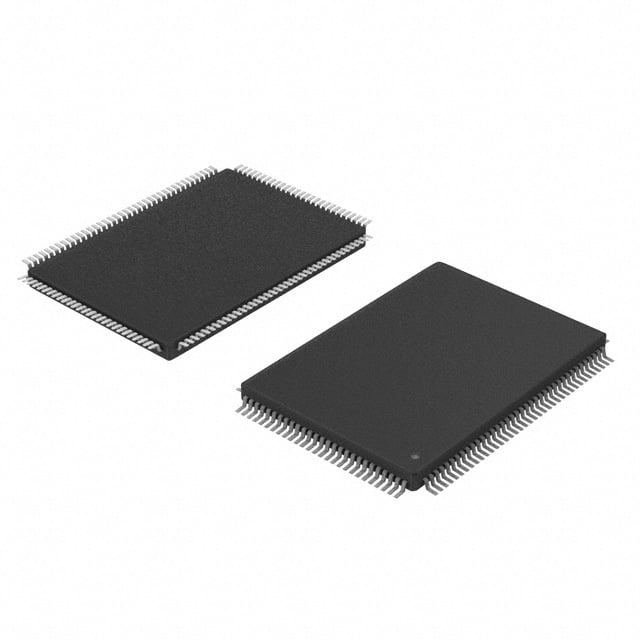
The Microchip Technology USB2228-NU-05 is a high-performance USB hub controller designed to expand a single upstream USB port into multiple downstream ports while maintaining full compliance with USB 2.0 specifications. It integrates a dual-port USB hub interface with advanced signal management, power distribution control, and status monitoring capabilities in a compact package suitable for embedded and peripheral device applications. The device supports high-speed (480 Mbps), full-speed (12 Mbps), and low-speed (1.5 Mbps) USB signaling, providing seamless connectivity for diverse USB peripherals while ensuring robust data integrity and power management. Its architecture includes an upstream USB port connected to a host system, internal hub logic, and two downstream USB ports, making it particularly suitable for applications requiring expansion of host connectivity with minimal external components and simplified PCB layout.
## Device Function and Positioning
The USB2228-NU-05 functions as a dual-port USB 2.0 hub controller, providing protocol handling, port switching, and hub-class functionality for connected USB devices. It is positioned as a low-power, embedded USB expansion solution, targeting applications in consumer electronics, embedded computing, and industrial control systems where space efficiency and low power consumption are critical. The device provides integrated hub logic, including transaction translators for full-speed and low-speed devices, hub descriptor management, and internal buffer management, enabling simultaneous data communication across both downstream ports without host intervention beyond standard USB hub enumeration procedures. The device supports per-port overcurrent detection and reporting, facilitating safe power delivery to connected peripherals in accordance with USB specification limits.
## Electrical Characteristics and Specified Parameters
The USB2228-NU-05 operates from a single supply voltage within the range specified for USB 2.0 hubs, typically 3.3 V or 5 V, as defined in the datasheet. The device is designed for low static power consumption, with quiescent current specified under both normal operating and suspended conditions. Each downstream port can source current according to USB specification limits, supporting up to 500 mA per port at high-speed operation in self-powered configurations. The device includes internal voltage regulators to manage downstream port signaling levels and to protect against voltage overdrive from external sources.
The data transfer capability is specified for each operational speed: high-speed signaling at 480 Mbps, full-speed signaling at 12 Mbps, and low-speed signaling at 1.5 Mbps. The device ensures full compliance with USB 2.0 electrical and protocol timing parameters, including setup and hold times, inter-packet delays, and handshaking requirements. Signal integrity is maintained through integrated termination resistors and noise reduction circuitry, and differential data lines are protected against electrostatic discharge within defined IEC limits.
The hub controller incorporates an internal transaction translator for each downstream port, enabling low-speed and full-speed devices to communicate with a high-speed host without affecting overall high-speed throughput. This allows mixed-speed peripheral environments to coexist on a single hub, optimizing host bandwidth allocation and ensuring deterministic behavior during high-speed data transfers.
## Port Control and Functional Behavior
The USB2228-NU-05 provides independent enable and suspend control for each downstream port. The device supports standard USB hub control requests such as port reset, port enable, suspend, and resume, which are managed through internal hub logic compliant with USB 2.0 specifications. Overcurrent conditions on downstream ports are detected via integrated current sensing, and status information is reported upstream to the host. The hub also includes internal pull-up resistors on downstream data lines to indicate port connection to the host during enumeration and supports hot-plug insertion and removal of peripheral devices without requiring host reset.
Downstream ports include overvoltage and short-circuit protection circuitry to safeguard both the hub and connected peripherals. The device’s internal hub firmware handles transaction scheduling, ensuring fair access to bus resources and proper hub descriptor reporting. Power switching for downstream ports is internally managed to limit inrush current during device connection, preventing voltage sag on the upstream bus.
## Thermal Characteristics and Reliability
The device’s thermal performance is determined by package thermal resistance, operating voltage, and power dissipation associated with active USB signaling and port power delivery. The datasheet specifies maximum junction temperature and ambient derating guidelines to ensure long-term reliability under typical operating conditions. Internal thermal management features include current limiting and duty-cycle control to prevent overheating during sustained high-load operation.
The USB2228-NU-05 is qualified for industrial and commercial temperature ranges, with defined operating temperature limits ensuring stable performance across the expected environmental conditions. Package design supports standard surface-mount reflow soldering processes, and moisture sensitivity level (MSL) is defined for proper handling during assembly.
## Packaging and Mechanical Characteristics
The device is supplied in a compact surface-mount package optimized for dual downstream port configurations, minimizing PCB footprint while maintaining adequate spacing for high-speed USB signal lines. Pin assignments are structured to separate power and signal pins, improving signal integrity and simplifying layout design. Mechanical tolerances, solder pad dimensions, and recommended footprint guidelines are specified to ensure reliable mounting and electrical connectivity.
The USB2228-NU-05 package is compatible with automated PCB assembly and rework processes, supporting high-volume manufacturing of embedded and peripheral systems.
## Typical Application Scenarios
The USB2228-NU-05 is used in embedded computing systems, consumer electronics, and industrial USB expansion modules where additional downstream USB ports are required from a single host interface. Typical applications include USB hub peripherals integrated into laptops, docking stations, network equipment, and industrial control panels. It is also suitable for point-of-sale terminals, medical devices, and other embedded systems that require reliable high-speed connectivity to multiple USB peripherals without increasing host controller complexity.
The device facilitates system designs where power management and overcurrent protection are critical, supporting both bus-powered and self-powered configurations while maintaining compliance with USB 2.0 signaling and timing standards. Its integration reduces the need for discrete logic and power components, enabling compact and cost-efficient system layouts.
## Conclusion
The Microchip USB2228-NU-05 is a dual-port USB 2.0 hub controller designed to provide high-speed, full-speed, and low-speed USB connectivity with integrated power management, overcurrent protection, and transaction translation. Its compact surface-mount package, low-power operation, and robust port control features make it suitable for embedded systems, peripheral expansion, and industrial USB applications requiring reliable multi-device connectivity. By integrating hub logic and protection circuitry, the device simplifies PCB design, reduces component count, and ensures USB compliance across a variety of operating conditions.