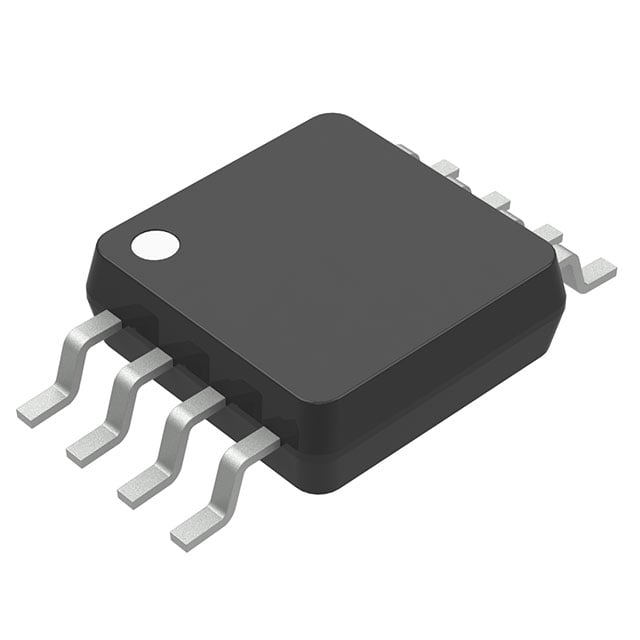
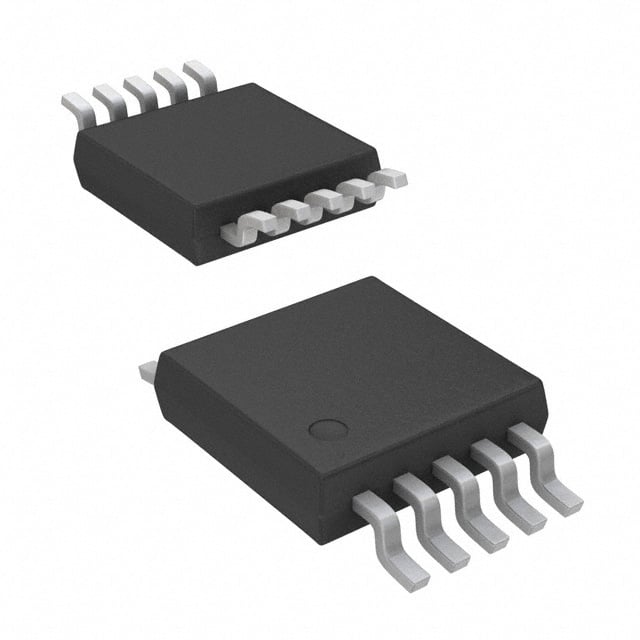
The Microchip MCP1640B-I/MC is a high-efficiency, synchronous step-up DC-DC converter designed for low-voltage energy harvesting and battery-powered applications. It is part of Microchip’s MCP1640 family, optimized for ultra-low start-up voltage operation, compact solution size, and high conversion efficiency under light-to-moderate load conditions. The device integrates internal power MOSFETs and control circuitry to provide a complete boost converter solution requiring minimal external components.
## Device Function and Classification
The MCP1640B-I/MC is classified as a synchronous boost (step-up) switching regulator.
Primary functional roles include:
* Boost conversion from low input voltages to regulated higher output voltages
* Power supply for single-cell alkaline, NiMH, or Li-ion systems
* Energy harvesting power management
* Portable and low-power embedded system voltage regulation
* Battery-operated sensor and IoT device power supply
The synchronous architecture eliminates the need for an external Schottky diode, improving efficiency and reducing BOM complexity.
## Internal Architecture and Operating Principle
The device integrates key power conversion elements into a single IC.
Core architectural features include:
* Internal low-side and high-side MOSFET switches for synchronous operation
* Peak current mode control architecture
* Fixed-frequency PWM operation with light-load power-saving modes
* Internal compensation network reducing external component count
* Integrated undervoltage lockout (UVLO) and soft-start functionality
The synchronous rectification mechanism improves efficiency, especially at low output currents.
## Electrical Characteristics and Key Parameters
The MCP1640B-I/MC datasheet specifies performance across a wide input voltage and load range.
Key electrical parameters include:
* Input voltage operating range suitable for single-cell operation (low-voltage start-up capability)
* Regulated output voltage range defined by fixed output version or external feedback configuration
* High-efficiency operation typically exceeding 90% under optimized load conditions
* Quiescent current in low-power operating modes designed for battery conservation
* Switching frequency in the MHz range to allow use of small external inductors and capacitors
* Internal switch current limit defining maximum deliverable output power
* Start-up voltage threshold enabling cold-start from deeply discharged cells
All parameters are defined under specific test conditions and depend on inductor selection, load, and layout design.
## Start-Up and Low-Voltage Operation
A critical feature of the MCP1640B family is its ability to start from very low input voltages.
Key characteristics include:
* Ultra-low start-up voltage enabling operation from near-depleted single-cell sources
* Automatic transition from start-up mode to normal PWM operation
* Controlled inrush current during start-up phase
* UVLO circuitry preventing unstable operation at insufficient input voltage
* Seamless mode transition to maintain output stability
This capability is essential for energy harvesting and battery-powered systems.
## Control Architecture and Regulation Behavior
The device uses a peak current mode PWM control scheme.
Key regulatory features include:
* Fixed-frequency switching regulation for predictable EMI profile
* Peak current control for fast transient response
* Internal slope compensation ensuring stability at high duty cycles
* Feedback-based output voltage regulation
* Light-load power-saving mode (PFM or similar burst operation depending on load conditions)
The control loop is internally compensated, reducing external design complexity.
## Switching Performance and Efficiency Behavior
The MCP1640B is optimized for high efficiency across a wide load range.
Key switching characteristics include:
* High switching frequency enabling small external passive components
* Synchronous rectification reducing diode conduction losses
* Low RDS(on) internal MOSFET implementation
* Optimized light-load efficiency via low-power operating modes
* Trade-off between switching losses and component size optimization
Efficiency is strongly dependent on inductor selection, output voltage, and load profile.
## Protection and Safety Features
The device includes multiple internal protection mechanisms.
Key protection functions include:
* Cycle-by-cycle peak current limiting
* Thermal shutdown protection to prevent over-temperature damage
* Input undervoltage lockout (UVLO)
* Soft-start control to limit inrush current
* Output overcurrent protection behavior via current limiting
These features ensure stable operation under fault and transient conditions.
## External Component Requirements
The MCP1640B requires minimal external components for operation.
Typical external elements include:
* One inductor for energy transfer
* Input and output capacitors for filtering and stability
* Feedback resistor network (for adjustable versions)
* Optional compensation or filtering components depending on layout
Component selection directly influences efficiency, ripple, and transient response.
## Package and Mechanical Characteristics
The MCP1640B-I/MC is provided in a compact surface-mount package suitable for space-constrained designs.
Mechanical characteristics include:
* Small-outline SMD package optimized for portable electronics
* Low thermal resistance path through PCB copper area
* Compatibility with high-density PCB assembly processes
* Minimal parasitic inductance for high-frequency switching operation
The package supports efficient thermal dissipation through board design.
## Typical Application Scenarios
The MCP1640B-I/MC is designed for ultra-low-power and battery-operated systems.
Typical applications include:
* Single-cell battery-powered devices
* Wireless sensor nodes and IoT endpoints
* Energy harvesting power systems (solar, vibration, thermal)
* Portable instrumentation and handheld devices
* Low-power RF modules requiring regulated supply rails
Its ability to operate from very low input voltages makes it suitable for extended battery life applications.
## Summary
The Microchip MCP1640B-I/MC is a synchronous step-up DC-DC converter optimized for low-voltage, high-efficiency power conversion in battery-powered and energy harvesting systems. It integrates internal switching MOSFETs, current-mode control, and comprehensive protection features to minimize external component count while maximizing efficiency and operational robustness. Its ultra-low start-up capability and compact design make it suitable for modern ultra-low-power embedded applications.